Dynamic Pricing for Vacation Rentals: Why Most Hosts Get It Wrong
What are the biggest pricing mistakes Airbnb hosts make? The biggest Airbnb pricing mistakes Sean Rakidzich sees are pricing off a competitor's nightly rate instead of a measured ADR target, leaving a new listing at a low launch price past its ramp-up window, and discounting into a slow season before testing minimum stay. Each is a rule failure, not a rate failure.
TL;DR
Dynamic pricing can significantly boost revenue. Key mistakes include setting one price, not knowing competitors, and ignoring demand signals. Adjust prices based on supply and demand, seasonality, and lead time. Use pricing software carefully to avoid overpricing. For more, read the full article.
Sean Rakidzich finds that most vacation rental hosts lose money by treating pricing like a light switch instead of a dial, as static pricing leads to missed revenue opportunities.
The article compares static pricing to dynamic pricing, showing that dynamic pricing tools can lead to a 36% revenue increase for listings across 34 countries.
Sean recommends using dynamic pricing strategies, including understanding comp sets, reading supply and demand signals, and adjusting prices based on lead time and seasonality. By Sean Rakidzich, 155-property operator. Strategy session at rakidzich.com/book.
Key Facts
| Property Type | Typical Lead Time | When to Start Discounting |
|---|---|---|
| Studio / 1BR | Same day to 5 days | Inside 4-5 days |
| 2BR | 5 to 10 days | Inside 7 days |
| 3-4BR House | 10 to 30+ days | Inside 10-14 days |
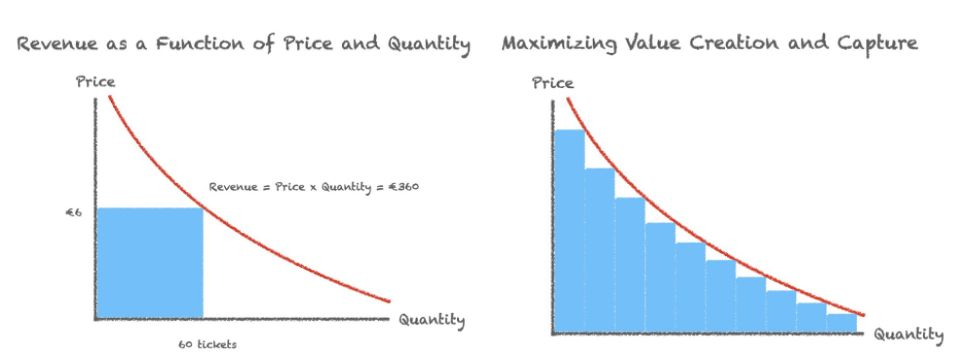
Image via Hostex
Key Takeaways
- Mistake 1: Setting One Price and Walking Away
- Mistake 2: Not Knowing Your Comp Set
- Mistake 3: Not Reading Supply and Demand Signals
- Mistake 4: Not Adjusting Prices for Adjacent Days
- Mistake 5: Ignoring Lead Time
- Mistake 6: Having No Seasonal Strategy
- Mistake 7: Doing the Same Thing as Every Other Host
Dynamic Pricing — Measured Revenue Impact
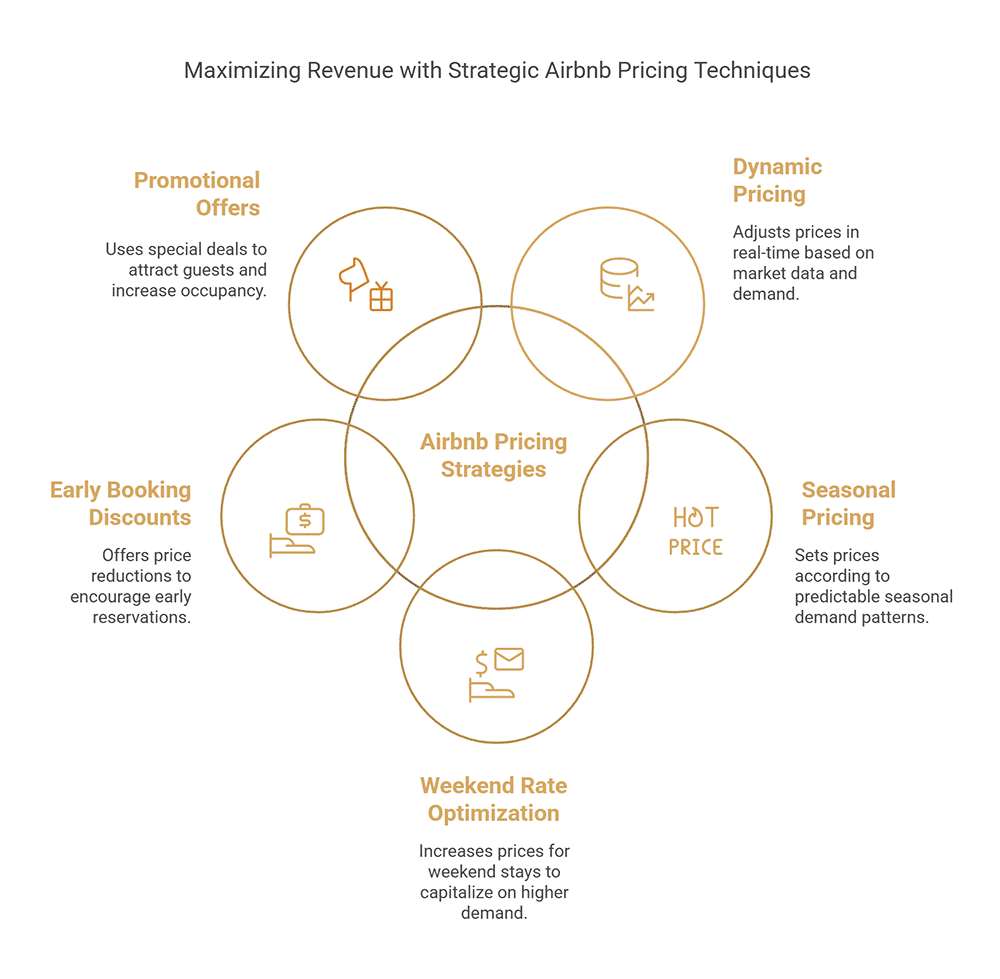
Image via Revfine.com
Peer-reviewed study data and industry benchmarks for dynamic pricing tools.
- A 2025 study tracking 541 vacation rental listings across 34 countries measured a 36% revenue increase after switching to dynamic pricing tools. — StaySTRA 2026 Dynamic Pricing Study
- Industry-wide benchmark: dynamic pricing delivers 20% to 40% annual revenue improvement, depending on market competition and property type. — StaySTRA Dynamic Pricing Head-to-Head 2026
- PriceLabs charges $19.99 per listing per month flat with 150+ PMS integrations. Beyond Pricing charges 1 to 1.25% of revenue. Wheelhouse offers a free plan with real-time pace tracking. — PriceLabs Official Pricing
- Cost-at-scale comparison: a $5,000 per month listing costs $50-$62 on Beyond Pricing versus $19.99 flat on PriceLabs — a ~3x price gap at volume. — Beyond vs Wheelhouse Comparison
That is how much an empty night earns you. It does not matter if your nightly rate is $200 or $500. An empty night pays zero. And right now, most hosts are losing money because they treat pricing like a light switch instead of a dial.
- Static pricing is the biggest money killer in vacation rentals. If you set one price and walk away, you leave money on the table every week.
- Pricing software does not replace your brain. It can double-cut your rates and lose you money if you are not watching.
- RevPAR matters more than your nightly rate. A booked night at $120 beats an empty night at $200. Every time.
- Your rivals are all chasing the same guest. The hosts who win go after a different booking pattern.
- Lead time, day of week, and season each need their own pricing rules. One flat rate cannot cover all three.
Mistake 1: Setting One Price and Walking Away
This is the most common mistake I see, and it is the most expensive one. Hosts pick a nightly rate, set it once, and forget about it. They might update it once a year. Maybe.
That is called static pricing. And it is the opposite of how you should run a vacation rental.
Dynamic pricing means your prices go up and down based on real factors. Not just weekday and weekend. I am talking about supply in your market, demand for certain dates, how far out the booking is, what day it falls on, and what your rivals are doing right now.
Think of it like Tetris. As bookings land on your calendar, the gaps between them get harder to fill. You need tools and rules to make sure every block fits. A flat price cannot do that.
I have been teaching pricing strategy for years, and this pattern shows up everywhere. A host sets their rate at $150 a night. Some nights, they could have charged $250. Other nights, they sit empty because $150 is too high for a Tuesday in slow season. Both directions cost real money.
Mistake 2: Not Knowing Your Comp Set
Your comp set is the group of listings that look like yours, in your area, that a guest would pick between. If you do not know who they are, you are guessing at your price.
Here is a rule I give every host I coach: price yourself 30 to 50 percent higher than your competition for a one-night stay.
That sounds crazy until you understand why. If you allow one-night stays, you show up in more search results. Showing up in search means more views. More views means better ranking. And a better ranking means more bookings over time.
You do not need the one-night guest to actually book at that price. You need them to see you. If they search for one night, click on your listing, and then end up booking three nights later, that first click still helped your search ranking.
A low booking rate from high prices does not hurt your Airbnb SEO. A lot of hosts believe this myth and it keeps them from pricing right. A high price for short stays does not ruin your ranking. But being hidden in search results does.
So start with your rival research. Find the top 10 listings that match your place type, bedroom count, and area. Note their nightly rate, their minimum stay, and their review count. Then set your one-night price 30 to 50 percent above the average. Build your discounts from there.
Mistake 3: Not Reading Supply and Demand Signals
Most hosts only lower prices. They see empty nights, they panic, and they drop the rate. But they never raise prices when demand goes up. That is half the equation missing.
Here is what I learned running units in Philly. Philly is a tourism market with very clear travel patterns. Some weekends, our $300 studios start getting booked up fast. When I see that, I do not sit on $300. I raise what is left to $400 or even $450.
The signal is simple. When your calendar starts filling up for a date range, and when you see other hosts in your area getting booked, that means demand is high. That is your cue to raise prices on whatever nights you still have open.
How to Spot Demand Signals
- Your own calendar fills faster than normal for a specific weekend or event period.
- Other listings show fewer open dates when you search your area on Airbnb.
- Local events are coming like concerts, fests, or sports games.
- Pricing tools show rate increases across your market for those dates.
The flip side matters too. Weekdays in a market like Philly are tough. There is so much supply that weekday bookings only come when prices drop. But you cannot drop too low. Cheap rates bring bad guests. I have seen it: parties, damage, and building complaints that put the whole thing at risk.
So raising prices is about reading forward signals. Lowering prices is about reading pace. That means how fast your calendar is filling versus where it should be. Hotel revenue managers call it trailing data. You can use the same thinking for your rental.
Mistake 4: Not Adjusting Prices for Adjacent Days
This one is subtle, but it costs hosts real money. Here is how it works.
Say someone books your place for five nights, checking in on the 5th and out on the 10th. Now look at the 4th. A guest who wants the 4th has to check out on the 5th, because your next booking starts then. They cannot check out on the 6th, 7th, or 8th.
So the 4th is now much harder to book. Airbnb search runs on open dates. If someone looks for a two-night stay on the 4th and 5th, your listing will not show up because the 5th is taken. The only way someone books the 4th is if their checkout lines up with your next check-in.
The fix: drop the rate on adjacent days by about 30 percent. Do this automatically for any day that sits right next to an existing booking.
Do not discount days next to bookings that fall on Friday, Saturday, or Sunday. Weekend days have enough demand to get booked on their own, even with less search reach. Only discount weekdays. You can set this up with a rule set so you never have to think about it.
Mistake 5: Ignoring Lead Time
Lead time is how far in advance a booking happens. And it changes everything about your pricing.
Think about it like selling a plane seat. If you have two months until a date, you hold your price or even raise it. If you have five days left and it is still empty, you need to get more bold with discounts.
But here is what most hosts miss: lead time is different for different property sizes.
| Property Type | Typical Lead Time | When to Start Discounting |
|---|---|---|
| Studio / 1BR | Same day to 5 days | Inside 4-5 days |
| 2BR | 5 to 10 days | Inside 7 days |
| 3-4BR House | 10 to 30+ days | Inside 10-14 days |
A studio in a big city can get booked same-day, all the time. So you do not need to panic until you are inside five days. But a four-bedroom house? A group of 10 books weeks ahead. If your big place has no bookings for next week, the odds of a large group finding it last minute are close to zero.
So with bigger properties, you need to start dropping rates earlier. Inside 10 to 14 days, you should be offering 15 to 30 percent off, scaling up as the date gets closer.
You can build all of this into Airbnb rule sets. Set up a discount arc: 10 percent off at 5 days out, 20 percent off at 3 days, 30 percent off at 2 days, and so on. The rule set kicks in on its own as each day enters that window. I teach a full two-hour class on rule sets in my coaching program because they matter that much.
Mistake 6: Having No Seasonal Strategy
Every market has a hot season and a slow season. Dallas stays fairly even all year. Philly has a strong summer and a brutal winter. If you do not adjust for both, you will lose money in the slow months and leave money on the table in the hot ones.
Seasonal Pricing Framework
- Hot season: Price high. Raise rates for events and busy weekends. This is when you make most of your yearly income.
- Shoulder season: Hold your base rates but use stay-length discounts to fill gaps. Go after three-night and four-night stays.
- Slow season: De-risk. Lock in a chunk of your units with monthly stays before slow season hits.
That last point is the one most hosts miss. They go into slow season with every unit running short-term, and then they watch their occupancy rate drop to 30 percent. Some hosts in Chicago just accept that they will lose money for two months a year. They try to make enough in the other 10 months to cover it.
That is a bad strategy. A better one is to de-risk before slow season starts.
Here is how. Before January hits (or when your slow season starts), lock in monthly stays for part of your units. Use VRBO, Furnished Finder, or direct outreach to find tenants who need a furnished place for 30 to 90 days. Insurance firms are another great source for monthly bookings.
If you have 30 units and you can get 15 of them pre-booked with monthly stays at a small profit, you know half your book is covered. Now you can take more risk with the other 15, because you are not going into slow season wide open.
Do not plan to lose money two months a year. Plan to de-risk before those months arrive.
Mistake 7: Doing the Same Thing as Every Other Host
This is my favorite pricing concept because it is where the real money is. I call it game theory.
Look at what every host in your market is doing. Most have a two-night or three-night minimum. They have a weekday price and a weekend price. They all want the same guest: the couple who checks in Friday and leaves Sunday. Every host is fighting for that booking.
What if you went after a different guest?
Here is what I did in Houston during slow season. I built custom stay-length discounts for four-day, five-day, and six-day stays. No one else had those. They all just offered weekly discounts. So there was a gap: no one was pricing for the guest who wanted to stay four to six days.
I made it cheap to stay through the weekend, as long as the total stay was four days or more. The weekend price dropped to match the weekday price if they booked four nights. Right away, I started getting Thursday-to-Monday bookings. Tuesday-to-Sunday bookings. People in town for work who did not want to pay a huge weekend markup.
My fill rate in Houston with this plan, while other hosts in the same market sat at around 40 percent. The gap was not a better place. It was a better pricing plan that went after a different booking pattern.
The lesson is simple. Everyone else throws rock. You throw paper. Look at what guests your rivals are chasing. Then figure out which guests no one is going after. Price your listing to pull those guests in.
- Search your market on Airbnb. Note the minimum stay, discounts, and pricing patterns of the top 20 listings.
- Find the gap. If everyone wants 2-night weekend guests, target 4-6 night stays with custom discounts.
- Use custom length-of-stay discounts. Airbnb Pro Tools let you set 4-night, 5-night, and 6-night discounts that most hosts do not even know exist.
- In slow season, price for monthly stays. If you can only get a few guests over three months, you want the ones who book for 30 days, not two nights.
The RevPAR Mindset: Stop Chasing Rate, Start Chasing Revenue
Most hosts obsess over their nightly rate. They want to charge $200 a night and they refuse to go lower. But the number that really matters is RevPAR: revenue per open night.
RevPAR counts every night, booked or not. You charge $200 a night but only book 15 out of 30 nights. Your RevPAR is $100. Another host charges $140 a night and books 25 out of 30 nights. Their RevPAR is $117. They made more money than you, with a lower rate.
| Metric | Host A (High Rate) | Host B (Smart Pricing) |
|---|---|---|
| Nightly Rate | $200 | $140 |
| Nights Booked (out of 30) | 15 | 25 |
| Monthly Revenue | $3,000 | $3,500 |
| RevPAR | $100 | $117 |
This is the shift that splits hosts who struggle from hosts who build real income. An empty night at $200 is worse than a booked night at $120. Every time.
When you start thinking in RevPAR, your whole pricing plan changes. You stop holding the line on price out of pride. You start making choices based on what puts money in your account.
RevPAR also shows why stay-length discounts make sense. I ran a three-bedroom in Houston where we paid $2,400 in rent and made $9,000 to $11,000 a month. Weekend rates were $1,200 a night. But if someone booked the whole month, they got 55 percent off. They still paid about $500 on weekends and $220 on weekdays. That monthly booking at a deep discount was still a huge profit. And it was fully passive. No turnovers, no cleaning, no guest messages. Your revenue plan should always factor in the cost savings of longer stays.
Why Airbnb Smart Pricing Works Against You
Let me be direct. Airbnb Smart Pricing is built to fill Airbnb's platform, not to grow your income. Its goal is to get bookings. Your goal is to get the most money per booking. Those are two different things.
I have seen it happen with my own students. A pricing tool drove down the nightly rate based on supply and demand. Fine so far. But then a guest booked a monthly stay on top of that lower rate and also got the monthly discount. The guest got double-cut. The host was running at nearly a loss on a place that should have been making money.
If she had been watching her pricing screen, she would have seen the rate drop and pulled the monthly discount for those days using a rule set. That takes five minutes. But because she trusted the software to do it all, she lost hundreds of dollars.
How to Use Pricing Software Without Getting Burned
- Never set it and forget it. Check your rates at least once a week, even if you use automated pricing tools.
- Watch for double discounts. If a tool lowers your rate, check if your weekly or monthly discounts still make sense at that new price.
- Use rule sets to override. When you see a tool drop your price, apply a rule set that removes or adjusts discounts for those days.
- Set floor prices. Never let any tool drop your rate below your break-even point. Know your costs and set hard floors.
New videos every week on Airbnb strategy, market analysis, and pricing breakdowns.
Common Questions About Vacation Rental Pricing
What is dynamic pricing for vacation rentals?
Dynamic pricing means your nightly rate changes based on real factors like demand, day of week, lead time, season, and what your rivals charge. It is the opposite of setting one flat rate and leaving it. The goal is to charge more when demand is high and fill gaps when demand is low, so you earn the most total income across the month.
Should I use Airbnb Smart Pricing?
Smart Pricing works for Airbnb's platform, not for your profit. It tends to push prices down to get more bookings. If you use any pricing tool, treat it as a starting point, not a final answer. Check your rates each week, watch for double discounts, and always set a floor price you will not go below.
How do I know when to raise my prices?
Watch for demand signals. If your calendar fills up faster than normal for a set of dates, raise your price on the nights that are left. If other listings in your area show fewer open dates, that means demand is beating supply. Local events like concerts, fests, or sports games are another strong signal to raise rates.
What is RevPAR and why does it matter?
RevPAR stands for revenue per open night. It divides your total income by every night in the month, booked or not. A $200 rate with 50 percent fill gives you a RevPAR of $100. A $140 rate with 85 percent fill gives you $119. The lower rate made more money. RevPAR forces you to think about total income, not just your nightly price.
How much should I discount for longer stays?
It depends on your market and unit size. A common setup is 12 to 15 percent off for 3-night stays, 18 to 25 percent for weekly, and 35 to 50 percent for monthly. For larger places, monthly discounts can go up to 50 percent because the cost savings from fewer turnovers and less work are big. Always check that your cut-rate price still covers your costs.
What is a minimum night stay strategy?
A minimum night stay is the shortest booking you will take. Many hosts default to a 2-night or 3-night minimum. But I say allow 1-night stays at a high price so you show up in more search results. Then use stay-length discounts to push longer bookings. This gives you reach without giving up income.
Join Cracking Superhost for 1-on-1 coaching on dynamic pricing, rule sets, and revenue management. Sean works with you directly every week.
Apply for CoachingSources
- Airbnb Host Resource Center: Pricing and Availability — airbnb.com
- Sean Rakidzich, Airbnb Pricing Strategy (Airbnb Automated) — YouTube
About the Author
This analysis is by Sean Rakidzich, an 11-year short-term rental operator who manages 155 Airbnb properties generating $1M+/month in revenue. Sean has trained 5,000+ students across 76 countries with $1.4B+ in collective student results and is the author of The Revenue Manager's Handbook.
For Sean's framework on most vacation rental hosts lose money by treating pricing like a light switch instead of a dial, as static pricing leads to missed revenue opportunities, see his full content library at rakidzich.com or book a 30-minute strategy session at rakidzich.com/book.
Affiliate disclosure: Some links on this page (anything starting with rakidzich.com/p/) are affiliate links. If you sign up through them, Sean may earn a commission at no extra cost to you. The recommendation reflects Sean's actual use across his 155-property portfolio.
More in this series
- Airbnb Design Mistakes That Kill Bookings (And Exactly How to Fix Each One)
- Airbnb Dynamic Pricing Mistakes: 7 Errors That Kill Ranking
- Airbnb Hit Rate and ADR: The $40 Tuesday Fix for 2026
- Airbnb Pricing 2026: The Mortgage Fallacy Killing Your RevPAR
- 5 Airbnb Pricing Mistakes Killing Your RevPAR in 2026
- Airbnb RevPAR 2026: The Bifurcation Splitting Hosts in Two
- The Airbnb Two-Night Minimum Mistake: A 2026 Workshop Fix
- The Best Couch for Your Airbnb (and Why Gray Is Killing Your Bookings)
- Emotional Airbnb Pricing: 3 Host Fears That Cost You Real Money
- Rental Arbitrage Startup Mistakes: The Sequencing Trap
- STR Market Entry Mistakes: 9 Lessons From 155 Properties in 2026