Airbnb Revenue Management Guide: ADR, Occupancy & RevPAN Explained
TL;DR
Sean Rakidzich emphasizes that RevPAN, not just ADR or occupancy, is the key metric for measuring a host's true earnings power on Airbnb.
The article compares hosts with similar ADRs but different occupancy rates, showing that occupancy directly impacts actual revenue collected.
Sean recommends using dynamic pricing tools and a 30-day launch phase to optimize revenue, while also focusing on maintaining a healthy RevPAN. By Sean Rakidzich, 155-property operator. Strategy session at rakidzich.com/book.
Key Facts
| ADR vs Market | What It Means | Action |
|---|---|---|
| 20%+ below market | Underpriced, leaving money behind | Raise rates 10% and monitor occupancy |
| Within 10% of market | Properly calibrated | Focus on RevPAN optimization |
| 20%+ above market | Possible overpricing | Check occupancy -- if below 65%, reduce rates |
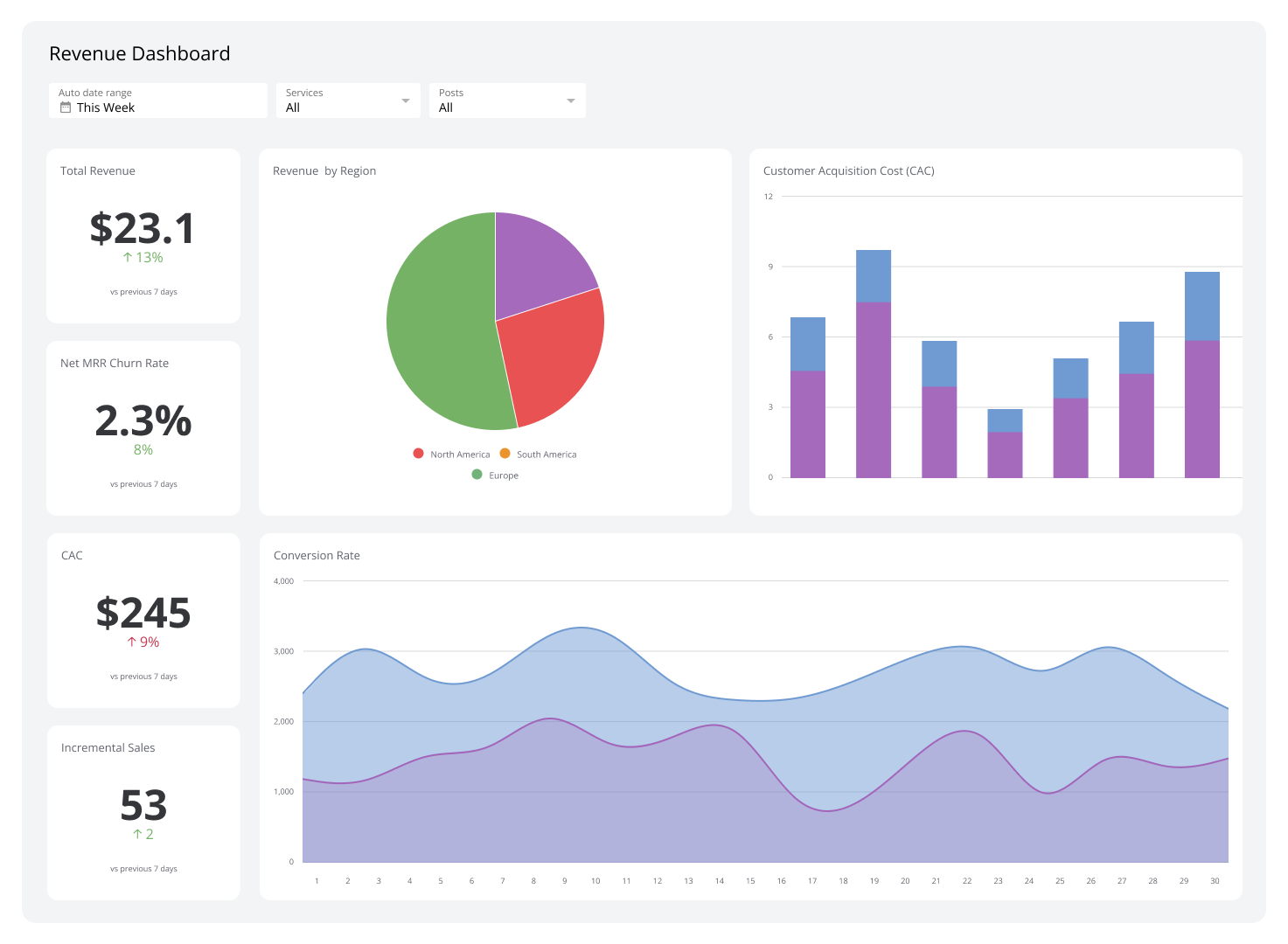
Image via Klipfolio
Key Takeaways
- The 3 Metrics That Run Your Business
- ADR Deep Dive
- Occupancy: The Most Misread Metric
- Mastering RevPAN
- Dynamic Pricing Systems
- Seasonal Rate Strategy
- The 30-Day Launch Formula
2026 Airbnb Revenue Management Data
![2026 Airbnb Revenue Management Data — Airbnb Statistics [2026] â Users & Growth Data](https://www.rakidzich.com/images/articles/airbnb-revenue-management-guide_s0_6c392ae5ff.png)
Image via DemandSage
Current US host income benchmarks and forward-looking market commentary.
- The average annual earnings for a US Airbnb host reached $44,235 in 2025, according to AirDNA. This is a 216% increase from the roughly $14,000 figure Airbnb reported for 2022 and 2023. — AirDNA How Much Can You Make on Airbnb
- Monthly revenue averaged $4,300 between November 2023 and December 2024. Top markets: Vail, Colorado $15,842/month, Kihei, Hawaii $10,867/month. — Uplisting 2025 Host Earnings Report
- Jamie Lane, AirDNA Chief Economist: “The STR Premium has climbed to its highest level since 2022, and revenue indicators return to more stable growth. Coastal, mountain/lake destinations, and suburban areas of major U.S. cities show some of the most favorable conditions for investors heading into 2026.” — AirDNA 2026 STR Outlook Report — PR Newswire
- Supply growth slowed to 4.5% in 2025, down from 9.5% in 2024. The US average occupancy rate is 54.3%, creating clearer revenue opportunities for well-managed hosts. — AirDNA 2026 US Outlook Report
- RevPAN beats ADR and occupancy as your primary metric -- it captures true earnings power in one number.
- New listings need a 30-day launch phase priced 15-20% below market to earn reviews fast.
- Dynamic pricing tools pay for themselves -- PriceLabs users average 40% higher revenue than manual pricers.
- Airbnb Smart Pricing optimizes for bookings, not revenue -- turn it off.
- Seasonal rate calendars built 90 days ahead capture demand premiums before competitors do.
- Weekdays are only as valuable as the weekends they are associated with -- drop adjacent weekday rates the moment a weekend books.
The 3 Metrics That Run Your Business
Most Airbnb hosts track the wrong number. They obsess over their nightly rate or their occupancy rate and miss the one metric that actually shows how healthy their business is.
After 11 years running short-term rentals across 8 cities and 100+ properties, I measure every listing on three numbers: ADR, Occupancy, and RevPAN. Each one tells you something different. Together they tell you everything.
Properties managed across 8 US cities through rental arbitrage
Let me break each one down, show you how they interact, and give you the exact system I use to push all three in the right direction at the same time.
ADR Deep Dive
Average Daily Rate (ADR) is the average amount guests pay per night, calculated across all your booked nights. A listing that earns $1,200 over 8 booked nights has an ADR of $150.
Why ADR Is Not Enough Alone
ADR tells you your pricing level but not whether that pricing is smart. A host charging $300/night with 30% occupancy has the same ADR as one charging $300/night with 90% occupancy, but completely different businesses.
I have seen hosts with impressive ADRs going broke because they were empty half the month. The number that matters is what you actually collect.
How to Benchmark Your ADR
The best way to benchmark your ADR is to search Airbnb directly. Use flexible dates, filter by your guest count, and study pages 1 and 2 of results. Compare your trailing 90-day ADR against what similar listings charge. If you are within 10% of the top performers, your pricing is roughly calibrated. If you are more than 20% above them, check your occupancy. You may be pricing out guests.
Why search Airbnb instead of using third-party data tools? Four reasons. First, third-party databases include dead listings that skew averages. Second, the booking data is guessed from calendar changes, not real transactions. Third, no tool can score your photos, design, or copywriting. Fourth, raw numbers without expert context are misleading. Searching Airbnb yourself gives you the real picture.
| ADR vs Market | What It Means | Action |
|---|---|---|
| 20%+ below market | Underpriced, leaving money behind | Raise rates 10% and monitor occupancy |
| Within 10% of market | Properly calibrated | Focus on RevPAN optimization |
| 20%+ above market | Possible overpricing | Check occupancy -- if below 65%, reduce rates |
Action Steps
- Pull your ADR from Airbnb Host Dashboard under Earnings.
- Search Airbnb with flexible dates, filter by guest count, and study pages 1-2 of results for your area and property type.
- Calculate the gap. Adjust your base rate up or down by 5-10% and watch for 14 days.
Occupancy: The Most Misread Metric
Occupancy rate is the percentage of available nights that are booked. If you have 30 available nights in a month and 22 are booked, your occupancy is 73%.
The 85% Trap
Hosts love seeing their calendar full. But a full calendar can mean you are pricing too low. If your occupancy is consistently above 85%, your rates are probably below what the market will bear. Raise them.
Occupancy Benchmarks by Property Type
| Property Type | Healthy Occupancy Range | Warning Sign |
|---|---|---|
| Studio / 1BR | 70-85% | Below 60% means pricing or listing issues |
| 2-3BR Family Home | 60-75% | Below 55% indicates overpricing |
| Luxury / 4BR+ | 50-65% | Below 45% needs investigation |
Mastering RevPAN
RevPAN (Revenue Per Available Night) is the metric that combines ADR and occupancy into one number. It answers the only question that matters: how much money does each available night produce on average?
Formula: RevPAN = ADR x Occupancy Rate
RevPAN for a $150/night listing at 90% occupancy -- beats $120 RevPAN at $200/night and 60% occupancy
Why RevPAN Wins Every Time
Consider two listings in the same building:
Host A charges $200/night and runs at 60% occupancy. RevPAN = $120. In a 30-night month they earn $3,600.
Host B charges $150/night and runs at 90% occupancy. RevPAN = $135. In the same month they earn $4,050.
Host A has higher ADR. Host B has higher RevPAN. Host B wins.
Stop chasing a big nightly rate. Chase a big RevPAN. That is the number that pays your rent.
Setting a RevPAN Target
Search Airbnb directly to find what top listings in your market charge and how often they book. Your goal in year one is to hit market RevPAN. Your goal in year two is to beat it by 15-25%.
The best way to raise RevPAN is not to raise your rate. It is to use dynamic pricing to capture demand spikes while staying competitive during slow periods. More on that next.
Action Steps
- Calculate your current RevPAN: take your last 90-day revenue and divide by 90.
- Search Airbnb with flexible dates for your city and bedroom count. Study how the top listings on pages 1-2 price their nights.
- Set a target: reach market RevPAN in 60 days, beat it by 20% in 6 months.
- Review RevPAN weekly, not monthly. Weekly gives you time to react.
Dynamic Pricing Systems
Dynamic pricing means your rate changes automatically based on real-time demand data. It is the single highest-leverage action you can take to grow RevPAN.
Why Turn Off Airbnb Smart Pricing
Airbnb Smart Pricing is designed to keep your calendar full, not to maximize your revenue. It frequently sets rates 15-30% below what the market will bear because Airbnb benefits from high transaction volume. Their incentive and your incentive are not the same.
Third-Party Pricing Tools
| Tool | Best For | Cost |
|---|---|---|
| PriceLabs | Data-driven hosts, full control | From $19.99/listing/month |
| Wheelhouse | Hands-off automation | 1% of revenue |
| Beyond Pricing | Simple setup, beginner friendly | 1% of revenue |
I use PriceLabs across all 100+ properties because it gives me the most control. My team can set custom rule sets per market, adjust sensitivity, and override rates for specific dates without losing the automation.
Seasonal Rate Strategy
Every market has seasons. Beach markets spike in summer. Mountain markets spike in winter and again in ski season. Urban markets spike around conferences, sports seasons, and holidays. Knowing your seasons and pricing for them 90 days ahead is how you capture the most revenue.
Build a 12-Month Rate Calendar
At the start of each year I map out three rate tiers for every market: Peak (125-150% of base rate), Shoulder (100% of base), and Off-Peak (75-85% of base). These go into PriceLabs as seasonal adjustments on top of dynamic pricing.
Event Pricing
Local events can create 200-400% demand spikes. Major conferences, music festivals, college graduation weekends, and championship games all signal when to push rates dramatically higher. Tools like PriceLabs and Wheelhouse pull event data automatically, but always verify manually. Algorithmic event detection misses small local events that savvy hosts know about.
Action Steps
- Search Google for your city plus biggest annual events.
- Mark every event on your pricing calendar as a minimum 2x base rate window.
- Block shoulder nights around events at 1.5x base if occupancy data shows strong demand.
- Review actual booking data after each event season to refine next year.
The 30-Day Launch Formula
New listings have no reviews. No reviews means guests do not trust you yet. To break that cycle fast, you price below market for 30 days to attract bookings quickly, collect 5-star reviews, then raise rates.
Phase 1: Days 1-30 (Launch)
Price 15-20% below your target long-term rate. Accept shorter minimum stays (2 nights) to maximize booking opportunities. Reply to every inquiry within 10 minutes. Aim for 5 reviews before raising rates.
Phase 2: Days 31-60 (Ramp)
Raise to market rate. Set minimum stays to your target (3-4 nights for most markets). Enable instant book. Connect your dynamic pricing tool. Monitor RevPAN weekly.
Phase 3: Days 61+ (Optimize)
With reviews and booking history, start testing rates 10-15% above market. Watch your occupancy closely. If it stays above 65%, hold the increase. If it drops below 60%, pull back. This is how you find your listing maximum RevPAN.
Days to go from zero reviews to a fully optimized listing with dynamic pricing running
Common Pricing Mistakes
I have coached 5,000+ students in 76 countries. These are the pricing mistakes I see most often.
Mistake 1: Emotional Pricing
Setting a rate based on what you think your listing is worth rather than what the data says. Your opinion of your property does not matter. The market decides the price.
Mistake 2: Forgetting Fees
Guests search by total price now. A low nightly rate with a $200 cleaning fee shows up expensive in search. Calculate your effective nightly rate including fees and make sure it is competitive with similar listings.
Mistake 3: Never Reviewing Data
Setting your pricing once and walking away. Markets shift. New competitors enter. Seasonal patterns evolve. Review your RevPAN weekly and do a deep audit monthly.
Mistake 4: Copying Competitors Without Context
Matching the price of the listing next door without knowing their occupancy, their review count, or their cost structure. Your business is unique. Price based on your data, not theirs.
Learn the Full Pricing System
My Pricing Masterclass covers every advanced strategy for maximizing RevPAN across multiple listings with full data systems.
Get the Pricing Masterclass6 Ways to Get More Weekday Bookings
You can either get more bookings or you can get different bookings. That single idea changes how you think about revenue. Every technique below makes a trade-off. Some will lose you one type of booking so you can win a better one. The goal is to fill your weekdays without giving away profit.
Weekdays are only as valuable as the weekends that they are associated with.
Technique 1: Raise Your Weekend Prices
This sounds backward. Why would raising weekend prices help you fill weekdays? Because when your weekends cost more, your weekdays become the attractive part of your calendar. Guests looking for a deal will book the cheaper weekdays first. Then you might get someone who books Wednesday through Sunday because the combined total still works.
This is price discovery. Whenever you raise your prices and still get a booking, you learn something powerful: you were underpriced the whole time. Many hosts are.
The trade-off is real. If you do not get enough bookings far enough in advance, you will be stuck dropping all your rates with just two to four weeks left. Use this technique as a long-range strategy. Set higher weekend prices far out on your calendar. Keep monitoring. If bookings come in at the new rate, you found free money.
Action Steps
- Raise Friday and Saturday rates 15-25% for dates 60+ days out.
- Keep weekday rates the same. Watch which days book first.
- If weekdays book before weekends, you have room to push weekends even higher.
- If nothing books within 30 days of arrival, start dropping rates.
Technique 2: Lower Weekday Prices After a Weekend Books
This is the one change every host can make right now. The moment your Friday and Saturday are booked, the Thursday and Sunday next to them become almost worthless. No one is searching for just a Thursday. No one wants an orphan Sunday.
So drop those adjacent weekday prices. Sometimes by half. Here is why: those days are harder to find in Airbnb search because of how adjacency affects listing visibility. A Sunday next to a booked Saturday is very hard for a guest to even discover. Low price is the only thing that makes it work.
Technique 3: Check-In and Checkout Restrictions
You can block Friday check-ins. That forces reservations to start on Thursday or Wednesday. You can block Saturday check-ins or Sunday checkouts. These restrictions push guests toward longer stays.
But this technique only works in niche markets with a specific customer type. One of my students, the Lambert family from Canada, bought a property in Key West, Florida. Key West has a strong fishing and boat rental culture. Many visitors rent boats by the week, so they naturally stay seven days. Check-in restrictions and minimum stays work perfectly there because the travel pattern already supports it.
The same logic applies in markets like Dubai and Saudi Arabia where predictable stay patterns exist. For most markets, this approach is too limiting. It shrinks the total number of booking combinations you can accept. Only use it when you know your customer type well.
Technique 4: Minimum Length of Stay
In destination markets, set minimum stays far in advance. The Smoky Mountains, Miami, Fort Lauderdale, the Hamptons, and Kissimmee, Florida all support 5-day or 7-day minimums when you are 90+ days out. In Key West, the Lambert family runs a 7-day minimum that matches the local boat rental cycle.
The key is lead-time-based minimum stays. Here is a simple framework: require a 5-day minimum at 90 days out. Drop to a 3-day minimum at 30 days out. Allow 1-night stays last minute. This way, you attract the big bookings early and still fill gaps later.
The Airbnb algorithm has changed. It cares more about funnel behavior now than raw views. So minimum stays hurt your visibility less than they used to. If someone searches for 5 days and clicks on your listing, Airbnb tracks what happens after that click. Strong back-end engagement matters more than total impressions.
You can use the stick (minimum stays that force longer bookings) or the carrot (conditional discounts that reward them). Both work.
Technique 5: Conditional Discounts with ProTools
Airbnb ProTools unlocks 2-day, 3-day, and 4-day length-of-stay discounts. Standard Airbnb only gives you weekly and monthly. To activate ProTools, go to airbnb.com/multicar. You need two listings. Pro tip: you can create a private room listing at $999/night just to get your second listing and unlock the feature.
The strategy: slightly overprice your weekends by 20-30%. Then offer a 4-day discount that brings the total back to a competitive range. Now, a guest who books Wednesday through Saturday gets a deal that feels great to them while you collect weekday revenue you would not have had.
Watch your weekday-to-weekend price gap. Here is an example of how discounts can backfire.
Say your weekends are $800/night and your weekdays are $150/night. A 4-day stay is $800 + $800 + $150 + $150 = $1,900. A 30% discount means $570 off. But the weekdays only added $300 in value. The guest got $570 off for $300 worth of extra nights. You gave away money.
Keep your weekday-to-weekend price gap within a 2:1 ratio so the discount math does not work against you.
Pricing is not rugby. You cannot force your way into a booking. You have to finesse your way. A $5 swing here or there could lead to a booking. You could be $5 overpriced and miss a booking over five bucks.
Never give a discount when full price will do.
Technique 6: The Split Strategy (Houses Only)
This technique works best for 4+ bedroom houses where weekdays just will not fill at whole-home prices. Here is how it works.
Create a private room listing for every bedroom in your house. Block all the dates. These listings sit in what I call the piggy bank. They are hidden inventory, ready when you need them.
Keep booking your house as a whole home for weekends. Charge premium rates. As your whole-home weekday price drops and approaches what you could earn from private rooms, open the piggy bank.
Example: you have 4 bedrooms. Each could rent as a private room for $80/night. That is $320 potential per night. When your whole-home weekday price drops below $320, stop lowering it. Open those 4 private room listings for the leftover weekdays instead.
Private room travelers book last minute. They are fine sharing a home with other guests. Whole-home travelers book in advance for families and events. These are different customer types, so the split strategy lets you serve both without sacrificing your whole-home weekend premium.
Weekday Booking Action Plan
- Start today: Drop adjacent weekday prices the moment a weekend books.
- This week: Raise your weekend prices 15-25% for dates 60+ days out.
- This month: Activate ProTools and set up 3-day and 4-day conditional discounts.
- If you have a house: Create private room listings for every bedroom, block all dates, and open them when whole-home weekday rates drop below the private room total.
- If you are in a destination market: Set lead-time-based minimum stays (5-day at 90 days, 3-day at 30 days, 1-night last minute).
Frequently Asked Questions
What is RevPAN in Airbnb?
RevPAN stands for Revenue Per Available Night. It multiplies your nightly rate by occupancy rate to show true earnings power. A listing at $200/night with 60% occupancy earns $120 RevPAN versus one at $150/night with 90% occupancy earning $135 RevPAN.
What ADR should I target on Airbnb?
Target ADR varies by market. As a rule, aim for ADR 20-30% above your market average once your listing is established. New listings should price 15-20% below market average for the first 30 days to build reviews, then raise rates incrementally.
Should I use Airbnb Smart Pricing?
Airbnb Smart Pricing optimizes for bookings, not revenue. It frequently sets rates below market value to fill your calendar. Most professional hosts disable Smart Pricing and use third-party tools like PriceLabs that optimize for RevPAN instead of occupancy alone.
What occupancy rate is good for Airbnb?
A healthy Airbnb occupancy rate is 65-80%. Below 60% usually means pricing too high or poor listing quality. Above 85% usually means you are leaving money on the table by pricing too low. The goal is not 100% occupancy but maximum RevPAN.
How do I get more weekday Airbnb bookings?
Six proven techniques: raise weekend prices so weekdays book first, lower weekday prices as soon as you get a weekend booking, use check-in and checkout restrictions in niche markets, set lead-time-based minimum stays, offer conditional length-of-stay discounts through ProTools, and run a split strategy using private room listings for leftover weekdays.
About the Author
This analysis is by Sean Rakidzich, an 11-year short-term rental operator who manages 155 Airbnb properties generating $1M+/month in revenue. Sean has trained 5,000+ students across 76 countries with $1.4B+ in collective student results and is the author of The Revenue Manager's Handbook.
For Sean's framework on RevPAN, not just ADR or occupancy, is the key metric for measuring a host's true earnings power on Airbnb, see his full content library at rakidzich.com or book a 30-minute strategy session at rakidzich.com/book.
Affiliate disclosure: Some links on this page (anything starting with rakidzich.com/p/) are affiliate links. If you sign up through them, Sean may earn a commission at no extra cost to you. The recommendation reflects Sean's actual use across his 155-property portfolio.
Sources
Revenue Management Research
- Revenue Management and the Guest Experience -- Cornell Hospitality Research
- Price determinants in Airbnb: A quantile regression approach -- Tourism Management Perspectives
- Setting a Price for Longer Stays -- Airbnb Resource Center
- PriceLabs Revenue Management Blog -- PriceLabs
Sean Rakidzich Courses
- Pricing Masterclass -- Complete dynamic pricing and revenue management course
- Target Price -- Set base rates, minimums, and seasonal strategy
- RE:Algorithm -- Master Airbnb search ranking