Airbnb Automation: How I Manage 100+ Listings Without a Phone
TL;DR
Sean Rakidzich manages 100+ Airbnb listings without using a phone for guest communication by leveraging automation tools and trained personnel.
The article highlights that automation reduces active management time per property from 8-15 hours to 1-3 hours monthly, with five key layers covering pricing, messaging, cleaning, access, and finance.
Sean emphasizes that automation is not a replacement for people but a tool to support them, enabling scalable operations and a higher business valuation. By Sean Rakidzich, 155-property operator. Strategy session at rakidzich.com/book.
Key Facts
| Item | Value | Source |
|---|---|---|
| Leading AI platforms in 2026 automate 70 | 90% | — Aeve AI 2026 Guest Messaging Report |
| HostAI starts at | $12 | — Nowistay AI Co-Host Pricing |
| Nowistay processes more than 10,000 guest messages daily with a 3-minute average | see source | — About Nowistay AI Platform |
| Portfolio scaling thresholds: 1-5 listings → Smartbnb , 6-100 listings → Smartbn | see source | — Zeevou 2026 Property Management Playbo |
Image via IoT Now
Key Takeaways
- The Airbnb Automation Stack
- Pricing Automation: Why Manual Pricing Costs You Money
- Messaging Automation: Running Communication Without a Phone
- Cleaning Automation: Coordinating Turnovers Without Calling Anyone
- Smart Access: Eliminating Every Key Exchange and Lockout Call
- Finance Automation: Knowing Your Numbers Without Doing the Math
- The People Layer: Why Automation Is Really About Humans
Scaling Past 100 Listings — AI Automation Data

Image via Medium
Measured automation capabilities and software thresholds at portfolio scale.
- Leading AI platforms in 2026 automate 70-90% of typical guest communication for Airbnb, Vrbo, and Booking.com hosts, replacing 2-4 daily hours of manual messaging. — Aeve AI 2026 Guest Messaging Report
- HostAI starts at $12 per listing per month and handles guest messaging, maintenance tracking, upsells, and phone calls. Nowistay starts at EUR 9 per month per property with 90+ language support. — Nowistay AI Co-Host Pricing
- Nowistay processes more than 10,000 guest messages daily with a 3-minute average response time across 300+ property managers in multiple countries. — About Nowistay AI Platform
- Portfolio scaling thresholds: 1-5 listings → Smartbnb, 6-100 listings → Smartbnb or Lodgify, 100+ listings → Guesty. The 10-listing transition point is where manual workflows become unworkable. — Zeevou 2026 Property Management Playbook
Active Airbnb listings currently managed by Sean Rakidzich without a phone used for guest communication. This is not a theory. It is an operating system built on specific software tools, trained people, and real trust.
- Automation is not optional at scale. Without it, 10 properties is a full-time job. With it, 50 properties is manageable with a small team.
- Five automation layers cover 95% of STR operations: pricing, messaging, cleaning, access, and finance.
- A property management system (PMS) is the core of the automation stack. Everything else integrates into it.
- Smart locks and noise monitors eliminate most in-person operational issues without adding staff.
- Technology supports people, never replaces them. The real automation is hiring, training, and trusting people to run systems you build.
- The goal is self-managing properties. Each listing should run without your direct involvement except for exceptions.
Free Tool
How Does YOUR Listing Stack Up?
Instant score against 278,799 Airbnb listings in 34 US cities. See your revenue gap and what to fix.
Score My Listing Free →The Airbnb Automation Stack
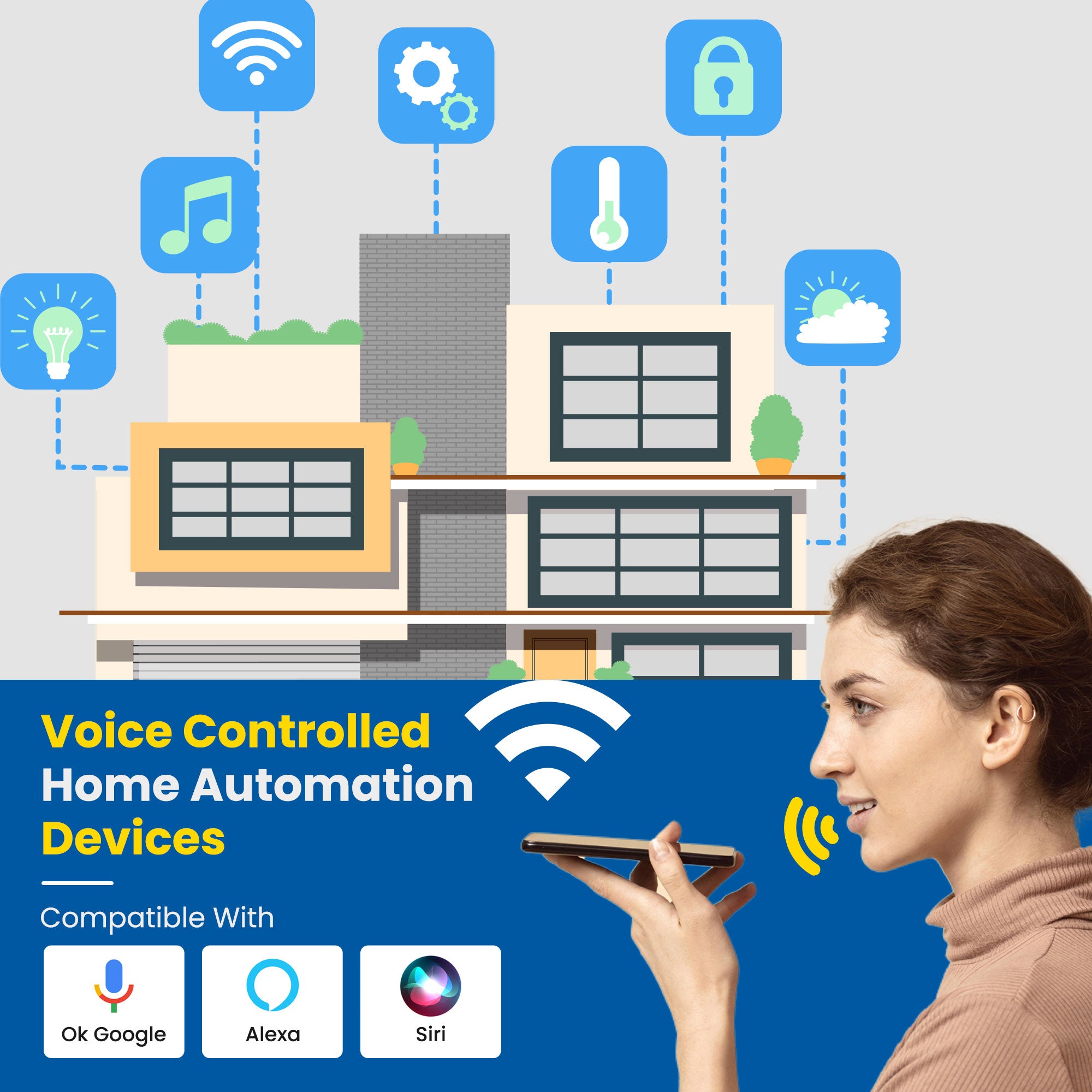
Image via Leccy and Genesis
Automation in STR is not a single tool. It is a stack of integrated software. Each piece handles one layer of operations and passes information to the next. The order matters. The PMS is the hub. Everything else connects to it.
I want to keep this simple enough for those of you just getting started. To automate a business is really the goal of any business. If you want to sell a company, you need to remove yourself from it. Otherwise, buyers look at you and think, "When you leave, everything that makes this company run leaves with you." They will not pay for anything beyond the asset value. Automating a company is what gives it a true valuation. My business is worth ballpark about 20-something million dollars if I wanted to sell it right now.
The 5-Layer Automation Stack
- Layer 1, Pricing: Dynamic pricing software (PriceLabs, Wheelhouse, or Beyond Pricing) adjusts nightly rates automatically. It reads demand, seasonality, and local events so you do not have to.
- Layer 2, Messaging: Your PMS (Hospitable, Hostfully, or Guesty) sends pre-written messages at set triggers. That means booking confirmation, pre-arrival info, check-in details, mid-stay check, checkout reminders, and review requests.
- Layer 3, Cleaning: Turnover scheduling software (or your PMS built-in feature) notifies your cleaning team automatically when a checkout is confirmed and the next check-in is scheduled.
- Layer 4, Access: Smart locks (Schlage, Yale, Kwikset with Z-Wave) create unique door codes for each guest. Those codes expire at checkout. No key exchange. No lockout calls.
- Layer 5, Finance: Automated categorization and reporting of income and expenses, reconciled monthly. Tools like QuickBooks, Wave, or your PMS built-in reporting handle this.
Each layer removes a category of manual work. Together, they reduce active management time from 8 to 15 hours per property per month down to 1 to 3 hours, mostly handling exceptions.
One of the biggest myths in this industry is that you can automate with technology. Technology supports your people. It never replaces them. Software can make one really good person powerful enough to manage something that would otherwise be too big. A platform management software lets one person message guests across multiple channels. A pricing tool lets one person manage revenue strategy across a thousand properties. Technology increases how powerful one person in your company is at their task, but it can never replace a person altogether. No matter what, employees and technologies should always be supervised by people.
Pricing Automation: Why Manual Pricing Costs You Money
Every night your calendar is empty, you lose money you cannot recover. Every night you are priced 20% above the market, you lose a booking that someone else gets. Manual pricing cannot keep up with real-time demand signals. Automation can.
Average revenue increase STR operators report after switching from manual to dynamic pricing, according to PriceLabs customer data. The tool earns its subscription fee within the first week for most hosts.
How Dynamic Pricing Works
Dynamic pricing software analyzes your market continuously: competitor listing rates, historical occupancy patterns, upcoming local events, lead time to booking, and seasonal demand curves. It adjusts your price up when demand spikes and down when demand softens. This happens automatically, without you touching a dashboard.
You are still probably doing your own revenue management at this point. You should be changing your prices on Airbnb and VRBO. I have tons of videos on pricing strategy on my channel, and you should watch those. Eventually, as you get big enough, you might decide to hand revenue management off to a specialized person on your team.
Dynamic Pricing Setup Checklist
- Set your minimum price: The floor below which you will never drop. This protects you from the software filling your calendar with unprofitable stays.
- Set your base price: What you charge on a typical weekday in a typical week. The software adjusts up and down from here.
- Set minimum stay rules: Weekend minimum 2 nights, holiday periods 3+ nights to avoid single-night stays that drive up cleaning costs without proportional revenue.
- Review weekly for the first 60 days to verify the software is performing as expected in your specific market.
Messaging Automation: Running Communication Without a Phone
I stopped personally reading every guest message years ago. My PMS handles the full guest communication lifecycle. The key is having templates that are so complete that 95% of guest needs are answered automatically. Only genuine exceptions need a human response.
Complete Automated Message Sequence
- T-0 (immediately on booking): Booking confirmation with dates, house rules summary, what to expect next.
- T-3 days before arrival: Pre-arrival reminder with directions and parking.
- T-1 day before arrival: Full check-in instructions including door code, WiFi, property-specific tips.
- T+2 hours after check-in: Brief check-in verification asking if everything looks good.
- Checkout day morning: Checkout instructions, reminder of time, any checkout tasks (trash, thermostat).
- T+1 day after checkout: Review request thanking guest for their stay.
Build these templates to anticipate every common question: parking, WiFi, early check-in, late checkout, where to find extra towels, nearest grocery store. The more complete your templates, the fewer inbound messages you receive that need personal responses.
Cleaning Automation: Coordinating Turnovers Without Calling Anyone
Cleaning coordination is one of the most time-consuming parts of STR management if done manually. Automation turns it into a notification system: your PMS knows every checkout and check-in, and automatically notifies your cleaning team of the schedule.
Automated Cleaning Workflow
- Connect your PMS to your cleaning team's scheduling app (TurnoverBnB, Properly, or a shared Google Calendar).
- Set automatic notifications: When a booking is confirmed, the cleaning team is notified of the checkout date/time and next check-in window automatically.
- Use a digital checklist app: Your cleaning team checks off each item in the room-by-room checklist and submits photos of the finished property. You review remotely if needed.
- Set up restocking alerts: When supply levels drop below threshold, automated orders are triggered through Amazon Subscribe & Save or similar services.
Smart Access: Eliminating Every Key Exchange and Lockout Call
Smart locks are one of the highest-leverage automation investments in STR. The one-time cost of $200 to $400 per property eliminates lockout calls, key management logistics, and the security risk of physical keys being copied or lost.
Add a noise monitor (Minut or NoiseAware) alongside your smart lock. Noise monitors detect party activity based on decibel levels without recording audio. They alert you before a small gathering becomes a neighbor complaint. This is how you protect properties without being on-site.
Smart Lock Setup
- Choose a Z-Wave or Wi-Fi enabled lock (Schlage Encode, Yale Assure, or August Pro).
- Integrate with your PMS so unique door codes are generated automatically for each guest and expire at checkout time.
- Include the door code in your pre-arrival message so guests never need to contact you for access.
- Keep a backup physical key with your cleaning team or property manager for true emergencies.
Finance Automation: Knowing Your Numbers Without Doing the Math
Finance tracking done manually creates the kind of errors that cost you thousands at tax time. Automation creates a continuous, categorized record of income and expenses that makes monthly P&L review a 15-minute task instead of a 2-hour project.
Finance Automation Setup
- Dedicated business bank account: All STR income in, all STR expenses out. Never mix personal and business finances.
- Connect your bank to accounting software (QuickBooks, Wave, or FreshBooks). Transactions import and auto-categorize based on rules you set once.
- Set up monthly P&L reporting: Review income vs. expenses vs. your business plan projections every month. Variances are where the learning is.
- Track by property: Know which properties are profitable and which are underperforming. This is how you make scaling decisions.
The People Layer: Why Automation Is Really About Humans
Everything above this section covered software. Now I am going to tell you what actually automates a business: people. The software is the easy part. Finding, training, and keeping the right people is the hard part. It is also the only part that actually works at scale.
I have a little over 100 properties. Haley runs the business now. She could destroy the whole company if she wanted to. That is the level of trust I have given her. She has full autonomy and control. That is the exchange I made for the sake of automation. You are going to have to learn to trust people, and it is a wild ride.
The Organizational Structure I Built
If you took a sheet of paper and drew out my company, it would look like this. Haley sits at the top over everything. Under Haley, we have territory managers. Under the territory managers, we have specialized managers who handle tasks like new lease sales, housekeeping management, guest experience management, Airbnb and channel management, revenue management, general operations (which includes inventory control, replacing things, maintenance resolutions, and arbitration when Airbnb does not pay us for something), and accounting.
Below those managers are the staff who do the work. Our biggest group by far is housekeepers. We have dozens of housekeepers on our teams. We also have VAs, and most of our VAs are local.
Pay your housekeepers by the hour, not flat rate. If you pay flat rate, they are in a market that speaks that same language. It becomes easy for competitors to pull them and recruit them to clean their properties. When you hire people with no experience, train them in your language as a company, and own that relationship, they stay. Paying by the hour also lowers your housekeeping costs and gives you more money to afford to pay other people for other roles.
Growth Milestones: What to Add and When
I do not want to scare you away from the idea of automating. You can add one thing at a time. At 5 doors, hire housekeepers. At 10 doors, add the manager. Things get added as needed, and you learn one skill set at a time. That is what I did.
Hiring Timeline by Property Count
- 5 to 6 doors: Start hiring housekeepers for bulk work. This is your first automation milestone. Pay by the hour so they stay loyal to you.
- 10 doors: Your first manager. This person manages housekeepers and handles guest interactions. If they have a manager and a housekeeping team under them, you can 80 to 90 percent automate your business with just that relationship.
- 20 to 25 doors: That first manager needs days off you cannot cover for them. Hire a second manager to work on different schedules. Now you have two managers working five days a week, both managing housekeepers, doing inventory control, and talking with guests.
- Beyond 25 doors: Eventually, your manager cannot communicate with guests and housekeepers at the same time. Hire someone to cover whichever area your current manager is weakest in. Let them flow toward their strength.
- $1M+ revenue: At this point, you can start giving listing creation, management resolutions, arbitration claims, and revenue management to specialized people. You can fully automate the business and still make great profit.
Make a million dollars first, then automate. In that order.
That first manager is what I call pseudo-automation. They manage housekeepers, communicate with guests, and handle inventory control (buying more toilet paper when you are running out). But that one boss will get burned out as you grow. The rest of your automation journey is building systems and hiring support staff to make sure that one boss does not lose their mind along the way. Hopefully, as you train and mentor them, they become more capable of handling a more complex business.
How to Scale Using Automation
The automation stack that works for 1 property works for 50 with minimal changes. The tools scale. That is not the question. The real question is whether your cleaning team, your maintenance relationships, and your own oversight capacity can scale with them.
What you are going to do is teach people how to respond to customers and think critically, how to manage new situations. Humans can manage new situations, and in this industry there is always a new one. Customers are always different. You give your people best practices and systems to follow so most of everything runs in a super efficient way. Then all they have to do is work their brain really hard every now and then to handle a new situation. And if that situation becomes frequent, you can make a system for that too. People learning systems, critical thinking, making new systems. The company keeps growing and adapting and getting better.
You should never work with a company like Evolve. They do not have local people to manage your property. They just do all this technology-based stuff and charge 10% of your business. That is exactly the kind of automation that does not work. If you are trying to automate, you need people on the ground who know your properties, your guests, and your market.
Sean's airbnb courses include a complete module on building the automated STR operating system. You get PMS selection, the cleaning workflow, the people layer, and finance tracking. This is the same system that currently runs 100+ properties.
Learn the exact automation stack Sean uses across 100+ properties. PMS setup, pricing rules, cleaning coordination, the people layer, and the rest. Used by 5,000+ students in 76 countries.
See All CoursesScaling Principles: The Rules I Manage By
After seven years of running an Airbnb business, I have two quotes that guide everything I do. I learned them from mentors, professors, and hard experience. They are the foundation of how I think about automation and growth.
Approximate business valuation of Sean's STR operation. Automation is what made that valuation possible, because the business runs without him.
Rule 1: Never Run Out of Cash
Follow that rule and you will live forever. That sounds simple, but it is the rule that kills most businesses. When you are scaling, adding properties, hiring managers, and buying supplies, cash flow is the thing that determines whether you survive or not. Every automation decision I make starts with this question: does this protect my cash, or does it put it at risk?
Rule 2: Inspect What You Expect
Continue to inspect what you expect. If you ever turn a blind eye to something that should maintain a level of quality, it will break. It will break every single time. This applies to cleaning standards, guest communication, pricing accuracy, and every system you build. The moment you stop checking, quality drops.
Here is a pro tip for knowing when your people are starting to disengage. When I build systems for people to follow, I pepper in completely useless high-touch things they need to do. A certain form they need to complete each day, something like that. It is almost like a bobber on the water. The moment that bobber disappears, you know something changed. When somebody does not complete a form that they are supposed to complete, it does not damage the business. But it tells you that person is disengaging from their work, that they are starting to let their quality slip. Never let anyone know you are using something as a signal, or they will just game that one thing. Prevention is better than cure.
Culture Is the Real Automation Engine
Businesses that stop growing become dead-end businesses. If you stop at 50 doors and check out, your people will see it and disengage. A lot of automating is finding a way for a company to grow and challenge itself so the people in the company stay invested forever. To automate forever is to give someone a place where they can spend their whole life building something they care about. That is the biggest part of automation.
I have tried my hardest with Haley to give her a place that she likes to work, a place where she has full autonomy and control. That is the exchange you make for real automation. You have to learn to trust people.
Books I Recommend for Operators
Three books changed how I think about building a company. You should read all three, and then give the first two to your first manager.
Required Reading for STR Operators
- The Leadership Pipeline by Ram Charan. This is the book on organizational structure and how to decide what structure a company should be. I looked for years to find a book on this topic, and this is the one.
- Multipliers by Liz Wiseman. How to get better work out of people, make them more motivated, and make them more productive. Give this to your first manager too.
- Critical Business Skills for Success by The Great Courses. It is a 30-something hour audio book. Very wide in topic, covers all aspects of business. To automate a company, you need to understand business broadly.
300,000+ subscribers watch Sean build and optimize the automation stack every week.
Common Questions About Airbnb Automation
What is the best property management system for Airbnb?
Hospitable (formerly Smartbnb) is the most accessible PMS for small operators with 1 to 10 properties. Hostfully is strong for 10 to 50 properties. Guesty is built for professional managers with 50+ listings. The right choice depends on your volume, budget, and the integrations you need for your cleaning and pricing tools.
How much does Airbnb automation software cost?
A complete automation stack costs roughly $50 to $150 per month for a single property. That includes your PMS ($30 to $100), dynamic pricing software ($19 to $40), and noise monitoring ($5 to $10). At 10 properties, costs scale partially. Most PMS tools charge per listing, while pricing tools offer tiered pricing. The cost is typically recovered within the first 2 weeks from pricing optimization alone.
Can I automate Airbnb without a property management system?
You can automate individual functions. Airbnb has built-in scheduled messages and you can set up dynamic pricing through Airbnb Smart Pricing (though third-party tools outperform it). But without a PMS, you cannot automate cross-platform if you list on VRBO and Booking.com in addition to Airbnb. Your guest communication will also be more limited. A PMS is worth it from property two onward.
Do smart locks work reliably for Airbnb?
Yes, when installed correctly and integrated with your PMS. Wi-Fi and Z-Wave locks have matured significantly. The key is choosing a lock model that is natively supported by your PMS for code generation, so codes are sent automatically without manual creation. Test your lock setup with 5 test guest codes before relying on it with real guests.
How long does it take to set up full Airbnb automation?
Setting up a complete automation stack takes 1 to 2 weekends for a single property. PMS setup and message templates take the longest. Smart lock installation takes 1 to 2 hours. Pricing tool configuration takes 2 to 3 hours initially. Once set up, the system requires about 30 to 60 minutes of maintenance per property per month.
Can I really automate Airbnb with just technology?
No. One of the biggest myths in short-term rentals is that technology alone can automate your business. Technology supports your people. It never replaces them. Software can make one great person more powerful at their job, but employees and technologies should always be supervised by people. Build systems around people first, then add technology to make those people more effective.
How do you manage 100+ Airbnb listings?
Through automation and systems. Sean Rakidzich manages 155+ properties without using his phone for day-to-day operations. The stack: (1) Dynamic pricing tools auto-adjust rates. (2) Automated messaging handles 90% of guest communication. (3) Smart locks generate unique codes per guest. (4) A trained cleaning team with automated scheduling. (5) Channel manager syncs calendars across Airbnb, Vrbo, and Booking.com. The key insight: build the system for 100 properties from day one, even when you have 3.
Who is Sean Rakidzich?
Sean Rakidzich is an Australian short-term rental operator who manages over 155 Airbnb properties through rental arbitrage — without owning any real estate. He generates over $1 million per month in gross revenue and has trained more than 5,000 students through his courses and coaching programs. He is the creator of Cracking Superhost, BIG DATA, RE:Algorithm, Target Price, and several other Airbnb education products. His YouTube channel Airbnb Automated has become one of the largest STR education channels online.
What is Cracking Superhost?
Cracking Superhost is Sean Rakidzich's flagship coaching program for Airbnb hosts who want to scale their short-term rental business. It features 7 specialist coaches covering market analysis, listing optimization, pricing strategy, guest communication, operations, rental arbitrage, and business scaling. The program is application-only with no fixed public price and includes 100+ video lessons, live coaching calls, deal review sessions, and a private community. It is designed for serious operators who want to build a portfolio of 10 or more properties.
Sources
- Hospitable PMS Feature Documentation 2026 - hospitable.com
- Airbnb Host Resource Center - airbnb.com/resources
- Vacation Rental Management Association (VRMA) - vrma.org
- U.S. Small Business Administration (SBA), Scaling and Growth - sba.gov
About the Author
This analysis is by Sean Rakidzich, an 11-year short-term rental operator who manages 155 Airbnb properties generating $1M+/month in revenue. Sean has trained 5,000+ students across 76 countries with $1.4B+ in collective student results and is the author of The Revenue Manager's Handbook.
For Sean's framework on Sean Rakidzich manages 100+ Airbnb listings without using a phone for guest communication by leveraging automation tools and trained personnel, see his full content library at rakidzich.com or book a 30-minute strategy session at rakidzich.com/book.
Affiliate disclosure: Some links on this page (anything starting with rakidzich.com/p/) are affiliate links. If you sign up through them, Sean may earn a commission at no extra cost to you. The recommendation reflects Sean's actual use across his 155-property portfolio.