Airbnb Beach House Australia: The Revenue Guide for Coastal Hosts (2026)
TL;DR
Sean Rakidzich finds that Australian coastal Airbnb hosts are losing approximately 40% of their potential annual revenue due to a lack of a slow-season system.
The article compares the performance of coastal markets in Australia, noting that the Gold Coast has a 79% occupancy rate, significantly higher than the US national average of 54.3%.
Sean recommends implementing proactive length-of-stay discounts and avoiding generic listing names to improve off-peak occupancy and click-through rates. By Sean Rakidzich, 155-property operator. Strategy session at rakidzich.com/book.
Market at a Glance
| Market | Peak ADR | Seasonal Pattern | Key Consideration |
|---|---|---|---|
| Byron Bay | $420–$650 | Summer peak, very quiet winter | 60-night cap for non-hosted properties in most areas |
| Noosa | $350–$550 | Summer peak, moderate winter | Premium market, council registration required |
| Port Douglas | $300–$500 | Dry season (May–Oct) is peak | Strong year-round demand from reef and rainforest tourism |
| Airlie Beach / Whitsundays | $280–$450 | Year-round with winter peak | International reef visitors, strong mid-week demand |
| NSW South Coast | $200–$400 | Summer peak, very quiet winter | Lower property prices, family market, better yield |
| Mornington Peninsula | $250–$450 | Summer peak, moderate winter | Weekend demand from Melbourne year-round |
| Margaret River | $220–$380 | Shoulder-season wine events | Multiple tourism draws, wine events extend shoulder season |
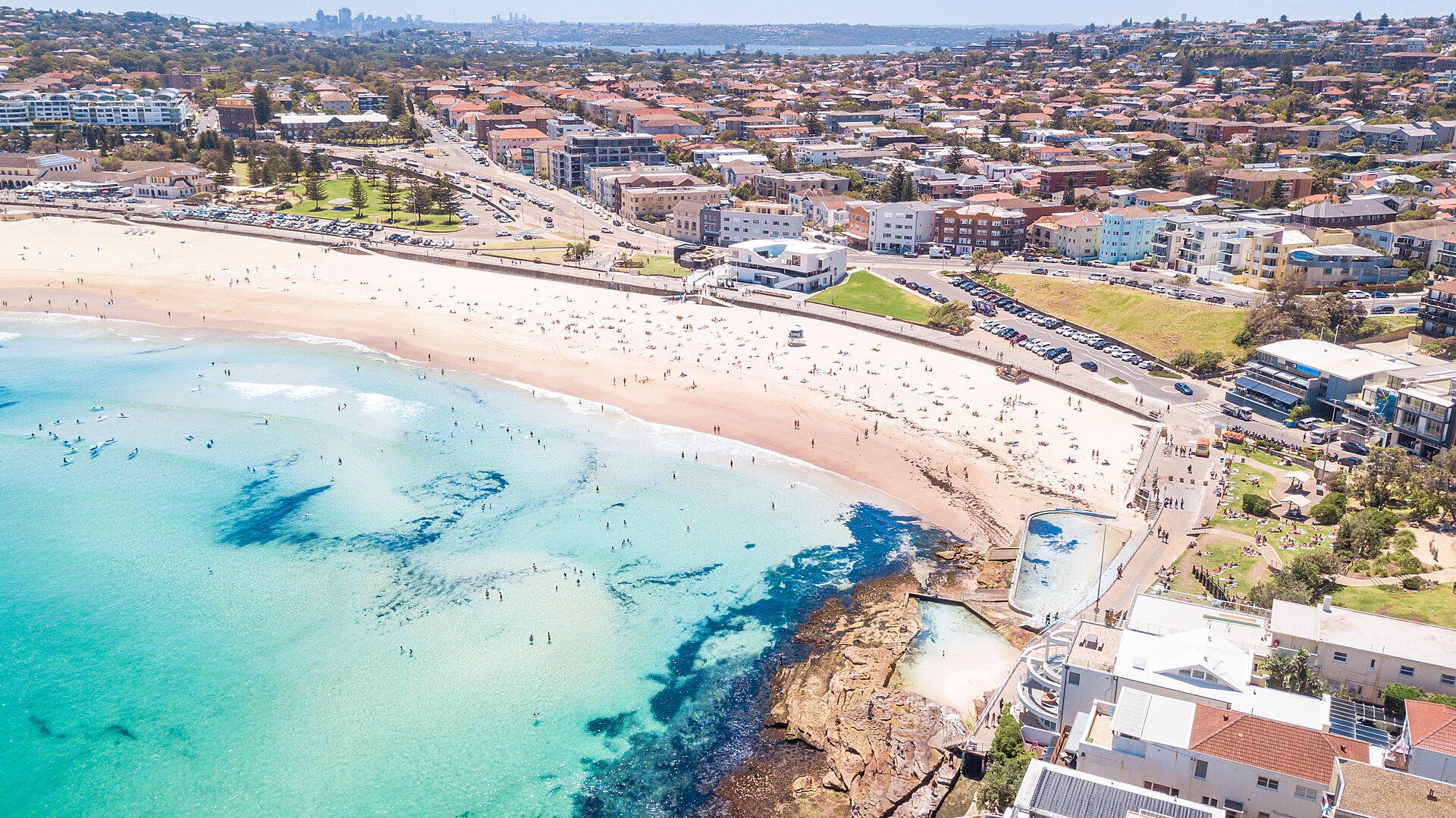
Photo: Nick Ang via Wikimedia Commons, CC BY-SA 4.0
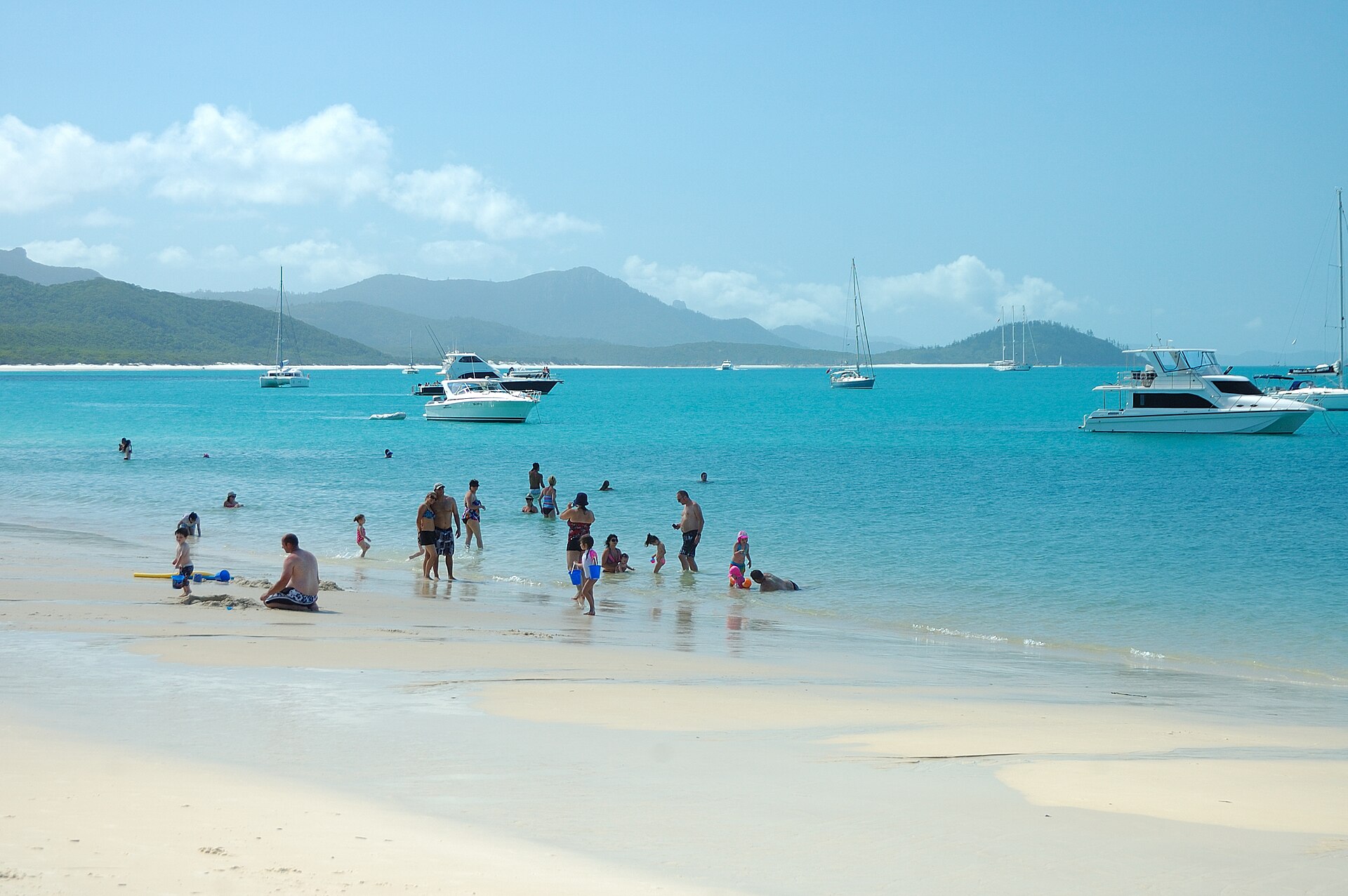
Photo: Slug69 via Wikimedia Commons, CC BY-SA 2.0
Key Takeaways
- Your Beach House Is Already Good Enough. Your Pricing Is the Problem.
- The Listing Name Mistake That Costs You Clicks
- Top Coastal Markets in Australia: What the Numbers Show
- Peak Season Pricing: Getting the Most From Your Best Weeks
- The Slow Season System That Changes Everything
- How the Airbnb Algorithm Actually Scores Your Beach House
- Beach House Amenities That Actually Drive Revenue
Of annual beach house revenue that most Australian coastal hosts give up every year because they have no slow-season system. This guide is about getting that 40% back.
- The slow season is the only problem that truly matters. Every beach house fills in December and January. The hosts who build real wealth are the ones who solve May through September.
- Proactive length-of-stay discounts are the answer. Set your 7-night and 14-night discounts months before the slow season hits, not during it. You are targeting the forward-booking traveler, not the last-minute bargain hunter.
- Do not put "beach house" in your listing name. You are competing against hotel chains and travel platforms that spend heavily on those words. A short, unique name wins more clicks.
- Australia is not yet a pricing dogfight. Most Australian coastal hosts are undercharging without knowing it. The window to capture easy pricing gains is still open, but it will not stay open forever.
- Whimstay gives Australian coastal hosts a last-minute booking advantage. At 5 percent commission versus Airbnb's 15 percent, and with far more guest demand than host supply in Australia right now, it is one of the fastest ways to improve off-peak occupancy.
Your Beach House Is Already Good Enough. Your Pricing Is the Problem.
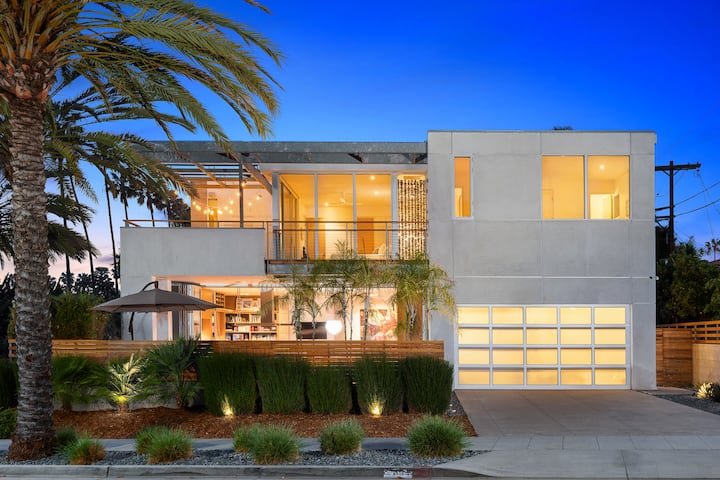
Image via Airbnb
Most guides about running an Airbnb beach house in Australia tell you the same things. Pick the right location. Install a BBQ. Get great photos. All of that matters. But it is not the reason most coastal hosts underperform.
The real problem is simpler and more expensive. Beach house hosts in Australia are losing roughly 40 percent of their potential annual revenue in the off-season. Not because their property is bad. Not because the market is dying. They are losing it because they do not have a system for turning slow months into productive ones.
December through February fills itself in almost every coastal market in Australia. Demand is so strong during summer school holidays that even average properties with ordinary photos get booked. But from about May through September, the calendar thins out. And most hosts respond to this with one of two strategies. They either drop their prices in a panic as each empty week approaches, or they give up and leave the property empty. Both strategies cost them dearly.
Here is what I told a room full of hosts at my Adelaide pricing workshop: Australian beach house owners have more pricing power than they think, and most of them are not using it. The market has not yet reached the intense competition levels you see in places like Nashville or London. There is still a clear window to implement smart systems and capture bookings that your less sophisticated competitors are leaving behind. That window will close as the market matures. This guide shows you how to use it now.
"In Australia, I don't think you're going to have to worry so much about fighting against great listings. A lot of you are simply not charging enough because you don't understand how much power you have."
See also: Best Airbnb Markets in 2026 for a broader look at how coastal markets compare to city markets on revenue potential.
The Listing Name Mistake That Costs You Clicks
Before we talk about pricing, there is one quick thing to fix that will improve your listing performance immediately. Check what you named your property.
If your listing is called something like "The Beach House" or "Byron Bay Beach House" or "Noosa Coastal Retreat," you are making a very common mistake. Those words in your listing name mean you are competing in search results against major travel companies and hotel chains that spend large amounts of money targeting those exact terms. When a guest searches and Airbnb decides which listings to show first, generic accommodation terms in your listing name work against you, not for you.
A better approach is to give your property a short, specific, memorable name that does not sound like any other accommodation type. Think of something under about 13 characters that is easy to remember. "Saltview" or "The Dune House" or a name unique to your property and location. A name like this is easy to find when guests search for it specifically. It does not compete with hotel ad spending on words like "beach house." And it creates a brand that guests remember and share with friends.
Then use the phrase "beach house" where it actually helps you. Put it in your listing description. Use it in your photo captions. Include it in your amenity tags. In those places, it helps guests understand what they are booking without putting you in direct competition for a heavily contested term at the naming level.
Quick Naming Test
- Is your listing name under 13 characters? If not, shorten it.
- Does your name contain generic words like "beach house," "coastal," or "retreat"? If yes, rename it.
- Can someone easily search your exact listing name and find only your property? If yes, you have a good name.
- Is your name easy to say out loud? Guests recommend properties verbally to friends. Short names spread.
Top Coastal Markets in Australia: What the Numbers Show
Australia's coastline covers thousands of kilometres and the Airbnb markets along it vary enormously. The differences that matter most for a host are peak-season rates, slow-season floor, regulatory environment, and the type of guest the market attracts. Here is how the major coastal markets compare.
| Market | Peak ADR | Seasonal Pattern | Key Consideration |
|---|---|---|---|
| Byron Bay | $420–$650 | Summer peak, very quiet winter | 60-night cap for non-hosted properties in most areas |
| Noosa | $350–$550 | Summer peak, moderate winter | Premium market, council registration required |
| Port Douglas | $300–$500 | Dry season (May–Oct) is peak | Strong year-round demand from reef and rainforest tourism |
| Airlie Beach / Whitsundays | $280–$450 | Year-round with winter peak | International reef visitors, strong mid-week demand |
| NSW South Coast | $200–$400 | Summer peak, very quiet winter | Lower property prices, family market, better yield |
| Mornington Peninsula | $250–$450 | Summer peak, moderate winter | Weekend demand from Melbourne year-round |
| Margaret River | $220–$380 | Shoulder-season wine events | Multiple tourism draws, wine events extend shoulder season |
Byron Bay commands the highest nightly rates but the 60-night annual cap for non-hosted properties in most Byron Shire areas significantly limits annual revenue. Before buying or listing in Byron Bay, check the current rules directly with Byron Shire Council because the policy continues to evolve.
Port Douglas is the most interesting market for hosting year-round revenue because it runs counter to every other coastal market. Its dry season runs from May through October, which is exactly when most other coastal markets go quiet. Far North Queensland's reef tourism fills the cooler months that leave hosts in Byron Bay or the NSW South Coast struggling.
The NSW South Coast markets including Merimbula, Narooma, Batemans Bay, and Bermagui offer lower property acquisition costs than the premium northern markets. A well-positioned beach house near Narooma might cost $700,000 to $900,000 compared to $2.5 million or more in Byron Bay, and might earn $65,000 to $85,000 per year at solid occupancy. The yield calculation often comes out better in these secondary markets even though the peak rates are lower.
Peak Season Pricing: Getting the Most From Your Best Weeks
December through January is peak season for most Australian coastal markets. School holiday demand is extreme. Easter and July school holidays create secondary peaks. Long weekends throughout the year create smaller spikes that many hosts leave money on the table by underpricing.
The most common mistake during peak periods is accepting bookings too early at rates that are too low. Hosts are nervous about empty calendars, so they take bookings months out at moderate rates. Then the peak date arrives and they are fully booked at $350 per night when the market would have supported $550 because supply ran out before demand did.
Here is the peak season principle that changes this: when demand is strong and supply is thinning, the last available properties can charge a premium. Your job is to find the right point in time to accept bookings at each price level and be willing to wait for the price the market will actually bear.
When neighborhood occupancy goes above 85 percent for a specific date, supply is running out. At that point, the remaining available properties have significant pricing power. The right move is to hold your price higher than you are comfortable with and let demand find you. This takes confidence in the data but it produces materially higher peak revenue.
To check neighborhood occupancy without paying for a data tool, search your location on Airbnb with flexible dates for your target period and count how many properties remain available. As that number drops, your pricing power increases.
For long weekends and school holidays in the shoulder season (Easter, school terms), the same principle applies at a smaller scale. Most hosts apply their standard weekend rate to these periods. Setting a specific rate lift for confirmed school holiday and long weekend dates can add thousands of dollars to your annual revenue without any additional effort.
The Slow Season System That Changes Everything
This is the section that separates hosts who build real businesses from hosts who have an expensive holiday property. The slow season is where the money is. Not because the rates are good. Because this is where most hosts have no strategy at all, which means this is where the easy gains are.
The mistake most hosts make is reactive. May arrives. The calendar is empty. They drop their prices and hope for bookings. Then June arrives. Still empty. They drop more. By August they are running at heavily discounted rates for scattered mid-week bookings, and they still end the slow season having earned a fraction of what was possible.
The correct approach is the opposite of reactive. It is proactive, and it needs to happen months before the slow season begins.
Step 1: Set Length-of-Stay Discounts in Advance
In February, when your summer bookings are wrapping up and the calendar ahead looks good, go into your pricing settings and create length-of-stay discounts for winter. A 7-night discount. A 10-night discount. A 14-night discount.
The key is what these discounts do. They change who can see your property as an affordable option. A guest searching for a 3-night weekend stay in July will see your regular nightly rate and may find it too high. A guest searching for a full week in July will see a meaningfully reduced weekly rate and book you instead of a competitor who has not done this work.
This is not about lowering your overall price. It is about making your property the most attractive option specifically for longer stays while keeping your nightly rate strong for shorter bookings. The goal is to get one booking for an entire week or two weeks rather than fighting for scattered 2-night bookings all winter.
Say your beach house earns $300 per night. In a weak July, you might get 12 booked nights at that rate without a strategy. That is $3,600 for the month. Your cleaning costs, utilities, and turnover time for 12 bookings are real costs too.
Now suppose you set a 14-night discount at 25 percent off. Your rate drops to $225 per night. One guest books two full weeks. You earn $3,150. You had one cleaning, zero turnover gaps, and minimal management time. When you subtract the cleaning costs for 12 separate turnovers versus one, the 14-night booking very often wins on net income. And your calendar was full the entire month.
Step 2: Design Your Discounts to Win Searches
Before you set your weekly rate, do a quick search on Airbnb. Search your location for a 7-night stay during your target slow-season week. Look at the first page of results and note what the weekly rates are for properties similar to yours. Then set your 7-night discount so that your weekly rate lands just below the most attractive competitors' rates on that search.
You do not need to be the cheapest option overall. You need to be the most attractive option in the 7-night search for someone who wants to stay a full week. That is a much smaller and more achievable goal.
Step 3: Monthly Rates for the Quietest Periods
For June and July when the market is at its quietest, setting a monthly rate (30 nights or more at a significant discount) opens your property to a completely different guest type. Remote workers who want a coastal base for a month. People relocating between cities who need temporary housing. Couples who want a long winter escape.
A 30-night booking at 35 percent off your nightly rate is still far more profitable than an empty calendar at full price. And it completely eliminates your slow-season management burden for that period.
Step 4: Change Your Distribution in Slow Season
During peak season, your demand comes to you. Airbnb traffic is high and guests find you. During slow season, you need to go to where the guests are searching, because fewer guests are searching in total.
This is where adding Whimstay makes a real difference. Whimstay specializes in last-minute bookings. It charges 5 percent commission compared to Airbnb's 15 percent. And right now in Australia, there are far more guests on Whimstay looking for properties than there are Australian hosts to serve them. Connecting your channel manager to Whimstay means your last-minute inventory reaches a different pool of guests who might not be searching on Airbnb at all. That competition advantage will narrow as more Australian hosts discover the platform, but right now the supply-demand gap strongly favors hosts.
Slow Season Action Plan: Do This in February
- Search Airbnb for your location with a 7-night stay in July. Note the weekly rates of your top 5 competitors.
- Set a 7-night discount that puts your weekly rate just below the most attractive competitor.
- Set a 14-night discount at roughly 25 to 30 percent off your nightly rate.
- Set a 30-night rate for June, July, and August at 35 percent or more off.
- Connect your channel manager to Whimstay to capture last-minute distribution.
- Update your listing description to speak to winter guests. What is special about your location in winter?
How the Airbnb Algorithm Actually Scores Your Beach House
Understanding how Airbnb ranks your listing matters even more in slow season, because when total demand drops, the listings the algorithm likes most get the bookings that still exist. Here is a simplified version of the ranking model based on analysis of tens of thousands of listings.
Airbnb gives every listing an invisible score from five factors. Those factors are Trust, Satisfaction, Value, Fit, and Policy.
Trust is about consistency. This includes your review score, but it also includes things most hosts do not know about. When you give a guest a refund through Airbnb's resolution center, even after a five-star review, that creates a trust signal against you. Airbnb is risk-averse. They care more about a guest never having a problem than they do about you occasionally solving problems after they happen.
Satisfaction goes deeper than your star rating. Airbnb now breaks down satisfaction by guest type. A family with young children might rate your beach house differently than a couple without children. If your rating from families with kids is lower than your overall average, your listing may appear lower in results when families search, even if your total star count looks strong.
Value is about whether your price makes sense for what you offer. Airbnb weighs your nightly rate against your bed count and quality. If your rate is high relative to the number of beds you offer, the algorithm reads that as poor value and ranks you lower. This is one reason why adding a fold-out bed or a bunk bed to a spare room can meaningfully improve your visibility even if guests rarely use those beds. The algorithm changes its value assessment before guests even arrive.
Fit is about matching your property to guests who will be happy with it. The algorithm learns which types of guests have positive experiences at your listing and then shows it to similar guests more often. A beach house that consistently gets great reviews from families with teenagers will be shown to more families with teenagers over time.
Policy is where cancellation flexibility becomes a strategy. Your cancellation policy acts as a multiplier on your total negative score. If your listing has any weak spots (lower reviews, a high price relative to comparable properties, refunds given), a strict cancellation policy multiplies those weaknesses in the algorithm's eyes and pushes you lower. But if your listing is genuinely strong with no significant negatives, a stricter cancellation policy has very little impact. For beach houses that are building their reputation or trying to improve slow-season visibility, a flexible or moderate cancellation policy can help meaningfully.
In your Airbnb account, go to Insights and then Conversion. You will see three key numbers.
- Impression rate (how often you show up in searches): Above 55 percent is healthy. Above 65 percent means you have room to raise your price.
- Click-through rate (how often people click on your listing): Above 2 percent means your hero photo and title are doing their job.
- Booking conversion (how often people who visit your page actually book): Above 2 percent means your listing page is converting. Below 2 percent suggests your photos, description, or price is losing people once they arrive.
One more note about photos. Your hero photo is your single most important marketing asset. It determines whether someone clicks on your listing in a page full of other beach properties. A simple strategy that works: pick one dominant color and make the hero photo almost entirely that color. A vivid blue pool, a bold red front door, or a very clean white interior with a single accent. This "color bomb" technique makes your listing stand out in a row of thumbnails where most properties look similar. The pattern break is what earns the click.
Beach House Amenities That Actually Drive Revenue
Amenities for an Australian beach house fall into two categories. The ones guests expect as a baseline. And the ones that genuinely give you an edge on bookings and rates.
Baseline Amenities Every Beach House Needs
An outdoor shower for rinsing sand is one of the most appreciated features at any coastal property. Guests who arrive after a day at the beach and cannot rinse off before coming inside will mention it negatively in their review. A BBQ with outdoor dining is part of the Australian beach holiday experience. Guests will notice if it is not there.
Good beach towels are more important than they seem. Families rarely pack enough towels for a week at the beach. Providing enough good-quality beach towels saves guests a hassle and earns you goodwill that shows up in reviews. A washing machine and dryer matter enormously for families staying more than two nights, because beach towels, wet swimwear, and sandy clothing accumulate fast.
A smart lock for keyless entry is not just a convenience. For remote management, it is essential. Guests can check in at any time without you coordinating key handoffs. It also eliminates the risk of a guest being locked out after hours when you are not nearby to help.
Fast WiFi matters even at the beach. Remote workers are a significant slow-season market and they will not book a property without reliable internet. Guests on family holidays also rely on streaming services in the evenings. Slow or unreliable internet generates negative reviews and repeat mentions in future bookings.
Revenue-Adding Amenities Worth Investing In
A swimming pool is the single highest-return amenity upgrade available to a beach house host. Properties with pools can charge between $50 and $100 more per night than comparable properties without one, and they fill faster even in shoulder season. For families traveling to the beach, a pool means children can swim safely on days when the surf is rough or conditions are poor. If your property can accommodate a pool and you do not have one, it is worth serious financial consideration.
Storage for surfboards, kayaks, and bikes signals to active guests that your property was designed for them. This small feature can swing a booking decision between two similar properties. The guest searching for a place that "gets" their lifestyle will choose the one that has thought about where their gear goes.
Outdoor games and social features, such as a ping-pong table, a lawn bowls set, or a fire pit, create experiences that appear in reviews. Guests describe experiences, not furniture. A review that says "we played bocce every evening" is more powerful for future bookings than a review that lists how many bedrooms the property has.
A distinctive design feature that guests want to photograph and share sets your listing apart from every other beach house in the area. This does not need to be expensive. A statement piece of furniture. A bold wall colour in one room. An unusual outdoor feature. It gives guests something to photograph and share, and it gives your listing a visual identity that competitors cannot easily copy.
Remote Management: Running Your Coastal Property From the City
The majority of Australian beach house Airbnb owners do not live near their property. Managing a coastal property remotely is entirely possible, but it requires building the right local team before the first guest checks in.
Your local team needs at minimum three contacts. A cleaner who can handle same-day turnovers when one guest checks out in the morning and another arrives in the afternoon. A handyperson who can respond to maintenance issues within a few hours when you cannot be there in person. And an emergency contact, such as a locksmith, for situations that need immediate physical presence at the property.
For properties earning more than $80,000 per year, a local co-host or professional property manager is worth the 15 to 20 percent fee. A co-host can inspect the property after each clean, handle in-person guest issues, and manage the kinds of maintenance situations that always happen at the worst possible time. The cost of a good co-host is real, but so is the value in guest experience quality and your own peace of mind.
A channel manager is essential once you are listing on more than one platform. It syncs your availability calendar across Airbnb, Verbbo, Whimstay, and any other platforms automatically. Without a channel manager, double-bookings become a persistent risk as your distribution expands.
Automate your guest communication using scheduled messages. A booking confirmation with check-in details sent automatically after a booking. A check-in reminder sent the morning of arrival. A mid-stay check-in message sent on day two. A checkout reminder the evening before departure. Pre-written messages cover 90 percent of guest communication without you needing to respond manually to each one.
Remote Management Setup Checklist
- Smart lock installed and tested (keyless entry for all guests)
- Local cleaner confirmed for same-day turnovers
- Local handyperson with response time under 4 hours
- Emergency locksmith contact saved and briefed
- Channel manager connected (if listing on multiple platforms)
- Automated message sequences set up in Airbnb
- Co-host engaged for properties above $80,000 annual revenue
- Whimstay connected via channel manager for last-minute distribution
300,000+ Hosts Watch Sean Every Week
Free STR education on YouTube. Pricing, markets, systems, and scale. New videos every week.
Council Rules and Regulations for Coastal Airbnbs in Australia
The regulatory environment for coastal Airbnbs in Australia is changing quickly. What was allowed two years ago may now require a permit. What applies in one council area may not apply in the next. Here is the current picture for the major markets as of early 2026, with the clear reminder to verify the current rules with your specific local council before listing.
New South Wales introduced the Short-Term Rental Accommodation (STRA) framework in 2021. All STR properties must be registered on the NSW STRA Register. In Byron Bay and other designated high-impact areas, non-hosted properties face a 60-night annual cap. In most other NSW coastal areas, non-hosted properties can operate without a night cap but must still register. Fire safety standards apply to all STR properties. Check the NSW Government Planning Portal at planning.nsw.gov.au for current rules before listing.
Queensland has no state-level night cap as of early 2026. Individual councils have varying requirements. Noosa Council requires STR registration. The Sunshine Coast, Cairns, and Whitsundays regional councils each have their own rules. Contact your specific Queensland local council directly before listing.
Victoria introduced STR registration requirements in 2024. Properties on the Mornington Peninsula operate under local planning rules as well as the state scheme. Some areas require a permit for short-term rental. Check the Planning.vic.gov.au portal and contact your local council.
Western Australia: The Shire of Augusta-Margaret River and City of Busselton have different rules for the Margaret River region. WA introduced STR legislation that affects some hosts in specific areas. Check with your local government authority before listing.
STR regulations in Australia are tightening and changing faster than in previous years. Rules that are permissive today in your area may become restrictive in 12 months. Before purchasing a property with the intention of running it as an Airbnb beach house, check not just current rules but proposed future rules by attending local council meetings or subscribing to council updates. Have a long-term rental plan ready as a backup in case short-term rental rules change after you buy.
The Off-Season Playbook: Who Books in Winter and Why
The slow season is not dead time. It is a different market. The guests who travel to coastal Australia in winter are different from your summer guests. Understanding who they are lets you market to them directly instead of waiting and hoping.
Remote workers are the most important slow-season segment for beach house hosts. The shift to remote work has created a large group of professionals who can work from anywhere for weeks or months at a time. Many of them actively seek locations outside the city. A beach house with fast WiFi, a comfortable desk setup, and a quiet environment can become their preferred base for a winter working month. They are often excellent guests. They keep regular hours, respect the property, and book well in advance when you have a good monthly rate set.
Couples and retirees who prefer the coast without summer crowds are another strong slow-season market. Many of these guests explicitly choose winter travel to avoid school holiday prices and congestion. A beach that is quieter, a restaurant that can actually get a booking, a coastal walk that is not crowded. These guests value what winter actually offers and they will pay a reasonable rate to access it. Targeting your marketing language toward this segment during slow season can shift the type of inquiries you receive.
Small retreat groups are an underserved slow-season market. Yoga groups, wellness retreats, business offsite meetings, and creative workshops all need accommodation for 8 to 14 people. A beach house that sleeps a group is attractive for these purposes when peak-season pricing makes it unaffordable. Winter rates make it suddenly viable. If your property can sleep a group of 8 or more, it is worth mentioning in your listing description that your property is available for retreats and small gatherings.
Whale watching is a real seasonal tourism driver for parts of the NSW and Queensland coasts. Humpback whales migrate north from June through August and south from September through November. If your property is near a popular whale watching area, this is a winter marketing angle with a specific audience who is actively searching for coastal accommodation during exactly the months you are trying to fill.
Off-Season Listing Update Checklist
- Add winter photos showing the beach, local area, and property in cooler months
- Write a winter section in your listing description. What makes the area special in winter?
- Mention your WiFi speed in the description specifically. Remote workers filter on this.
- Add a comfortable desk or workspace if you do not have one yet
- Note if your property is suitable for retreats or small group gatherings
- Research whether your area has seasonal wildlife tourism (whale watching, bird migration, etc.) and mention it
- Set your length-of-stay discounts at least 4 months before the slow season begins
Ready to Build a Real STR System?
Join 5,000+ students who have transformed their short-term rental revenue with proven systems from someone who actually operates at scale.
View All CoursesFrequently Asked Questions About Airbnb Beach Houses in Australia
How much can an Airbnb beach house earn in Australia?
A well-positioned beach house in Byron Bay or Noosa can earn $100,000 to $150,000 per year at strong occupancy with smart pricing. More typical coastal properties in secondary markets like the NSW South Coast or the Mornington Peninsula earn $60,000 to $90,000 per year. The range depends on location, property size, amenities, and most importantly how well the host manages slow-season occupancy. A beach house that fills December through February but sits empty from May through September is leaving 40 percent or more of its potential revenue uncaptured.
What is the best slow-season strategy for an Australian beach house Airbnb?
The most effective strategy is proactive length-of-stay discounts set months before the slow season arrives. In February, before the slow season begins, create 7-night, 10-night, and 14-night discounts that make your property the most attractive option for long-stay guests. Keep your nightly rate strong for short stays, but make your weekly and fortnightly rates genuinely competitive. Set monthly rates for the quietest months. Also connect to Whimstay via your channel manager to capture last-minute bookings at 5 percent commission rather than Airbnb's 15 percent. Remote workers, couples, and small retreat groups are the best slow-season markets to target specifically.
Should I put "beach house" in my Airbnb listing name?
No. Generic accommodation words like "beach house" in your listing name put you in direct competition for those search terms against major travel platforms and hotel chains that spend heavily on those keywords. A short, memorable, unique name under about 13 characters performs better. Use the phrase "beach house" in your description, photo captions, and amenity tags where it helps guests understand what they are booking without competing in the naming space against large advertising budgets.
Which coastal towns are best for Airbnb in Australia?
Byron Bay, Noosa, Port Douglas, Airlie Beach near the Whitsundays, the NSW South Coast including Merimbula and Narooma, the Mornington Peninsula near Melbourne, and Margaret River in Western Australia are the strongest coastal markets. Each has different seasonal patterns and regulatory environments. Port Douglas is the most unusual because its peak season is the dry winter months, which makes it one of the few Australian coastal markets with year-round balanced demand. The NSW South Coast offers lower property prices and often better yield calculations than the premium northern markets.
How do I manage an Airbnb beach house remotely from the city?
You need a local team including a cleaner for same-day turnovers, a handyperson who can respond to maintenance within a few hours, and an emergency contact like a locksmith. A smart lock for keyless entry is essential so guests can check in without needing to collect a physical key. For properties earning above $80,000 per year, a local co-host or property manager at 15 to 20 percent of revenue is usually worth the cost. A channel manager syncs your bookings across platforms automatically, preventing double-bookings as your distribution grows. Automated message sequences in Airbnb handle most guest communication without manual effort.
What amenities does an Australian beach house Airbnb need?
Essential baseline amenities include an outdoor shower for rinsing sand, a BBQ with outdoor dining furniture, good beach towels for all guests, a washing machine and dryer, a smart lock, and fast and reliable WiFi. Revenue-adding amenities that justify higher nightly rates include a swimming pool (the highest-return upgrade available), surfboard and bike storage, outdoor games like a ping-pong table or fire pit, and a distinctive design feature that guests photograph and share on social media. A swimming pool alone can add $50 to $100 per night to your achievable rate.
When is peak season for coastal Airbnbs in Australia?
December through January is the absolute peak for most Australian coastal markets, driven by summer school holidays. Easter creates the next major spike. July school holidays create a smaller secondary peak for many markets. Long weekends throughout the year generate additional demand spikes worth pricing specifically for. The exception is Port Douglas and Far North Queensland where the peak is the dry season from May through October because that is when the reef and Daintree tourism is most active and conditions are most comfortable.
Do I need council approval to run a coastal Airbnb in Australia?
Yes, in most states. NSW requires registration on the STRA Register and applies a 60-night annual cap for non-hosted properties in Byron Bay and other high-impact areas. Queensland has no state-level night cap as of early 2026, but individual councils including Noosa require registration. Victoria introduced state registration requirements for STR properties in 2024. Western Australia has introduced legislation affecting certain areas. Always check directly with your specific local council before listing because these rules continue to change and operating without required permits risks listing suspension and fines.
What is Whimstay and should I use it for my Australian beach house?
Whimstay is a booking platform that specializes in last-minute short-term rental bookings. It charges 5 percent commission, compared to Airbnb's 15 percent. Australian coastal hosts can list on Whimstay if they are connected to a channel manager. Right now in Australia, guest demand on Whimstay significantly outpaces the number of Australian hosts listed on the platform. That supply-demand imbalance gives hosts currently on Whimstay a meaningful booking advantage for last-minute dates, particularly in the slow season when every booking matters. That advantage will narrow as more Australian hosts discover the platform.
Is a beach house a good Airbnb investment in Australia?
It depends entirely on the numbers for your specific property and market. Beach houses in premium coastal locations like Byron Bay come with very high purchase prices that compress yields significantly. A property earning $150,000 per year that costs $3 million is a 5 percent gross yield before mortgage interest, council rates, maintenance, and management fees. Secondary markets like the NSW South Coast often offer lower purchase prices that produce more favorable yield calculations even though peak rates are lower. Before buying, run the full numbers including worst-case slow-season occupancy, all operating costs, and your full finance costs.
Sources
- Tourism Australia: australia.com
- Destination NSW Coastal Tourism: destinationnsw.com.au
- Tourism and Events Queensland: teq.queensland.com
- NSW Government STRA Register: planning.nsw.gov.au
About the Author
This analysis is by Sean Rakidzich, an 11-year short-term rental operator who manages 155 Airbnb properties generating $1M+/month in revenue. Sean has trained 5,000+ students across 76 countries with $1.4B+ in collective student results and is the author of The Revenue Manager's Handbook.
For Sean's framework on Australian coastal Airbnb hosts are losing approximately 40% of their potential annual revenue due to a lack of a slow-season system, see his full content library at rakidzich.com or book a 30-minute strategy session at rakidzich.com/book.