Airbnb Cleaning Fees in Australia: Why Your Number Is Killing Your Ranking (2026)
TL;DR
Sean Rakidzich finds that setting a cleaning fee higher than 35% of the nightly rate actively harms Airbnb rankings and booking conversions.
The article compares the impact of a $150 cleaning fee on one-night versus five-night stays, showing how it affects effective nightly price and algorithmic ranking.
Sean recommends using the cleaning-fee-to-nightly-rate ratio as a key metric and suggests adjusting fees during slow seasons to improve algorithm performance. By Sean Rakidzich, 155-property operator. Strategy session at rakidzich.com/book.
Market at a Glance
| Property Size | Typical Cleaning Cost | Safe Nightly Rate for 35% Cap |
|---|---|---|
| Studio / 1 Bedroom | $70 to $100 | $200 to $285+ |
| 2 Bedroom | $100 to $150 | $285 to $430+ |
| 3 Bedroom | $150 to $220 | $430 to $630+ |
| 4 to 5 Bedroom | $220 to $300 | $630 to $860+ |
| Large Beach House | $300 to $450 | $860 to $1,285+ |
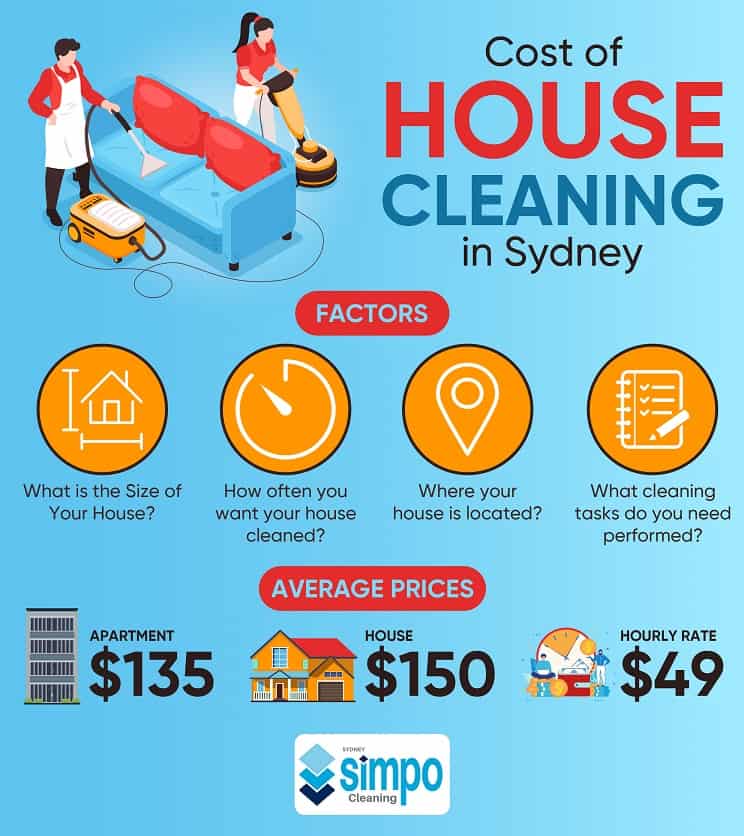
Image via Simpo Cleaning
Key Takeaways
- The Most Expensive Mistake Australian Hosts Make With Their Cleaning Fee
- How Airbnb's Algorithm Actually Sees Your Cleaning Fee
- The Cleaning Fee Ratio: The Number You Should Actually Be Tracking
- Your Cleaning Fee Touches 3 of the 5 True Negative Score Dimensions
- Why Your Cleaning Fee and Length-of-Stay Discounts Are the Same Lever
- The Slow Season Trap: Why Your Cleaning Fee Hurts More in Winter
- The Swap Strategy: Lower Fee, Raise Rate, Same Revenue
If your cleaning fee is more than 35% of your nightly rate, you are in the zone where it actively hurts your Airbnb ranking and your booking conversion. Most Australian hosts in mid-range markets cross this line every slow season without realising it.
- Your cleaning fee is an algorithm signal not just a cost-recovery number. It affects how Airbnb ranks you in search results.
- The cleaning-fee-to-nightly-rate ratio is the metric you should be tracking. Dollar amount alone tells you nothing.
- A high cleaning fee touches three of the five True Negative Score dimensions and can quietly tank your ranking even if your reviews are perfect.
- Your cleaning fee and your length-of-stay discounts are the same lever pointed in opposite directions, and most hosts set them as if they are not connected.
- Slow season is when your cleaning fee hurts the most because your nightly rate drops but the fee usually stays the same.
- The swap strategy is lowering your fee and raising your rate to keep the same revenue while dramatically improving your algorithm position.
The Most Expensive Mistake Australian Hosts Make With Their Cleaning Fee

Image via Upworthy
Most Australian Airbnb hosts set their cleaning fee once and never touch it again. They pay their cleaner $120 for a two-bedroom turnover, add a small buffer, and charge guests $150. Simple math. Cost recovered. Job done.
But here is what most hosts do not realise. That $150 cleaning fee behaves very differently on a one-night booking than it does on a five-night booking. On a one-night stay, that fee adds $150 to the effective nightly price. On a five-night stay, it adds $30 per night. The dollar amount is the same but the damage to your listing's performance is completely different depending on what your guests are booking.
And Airbnb's algorithm notices all of it.
The purpose of this guide is not to tell you whether you should charge a cleaning fee at all. I already wrote about that separately. The article is called I Stopped Charging Cleaning Fees on All 100+ Airbnb Properties. Here's What Happened. and it is worth reading. This guide is for the hosts who need to charge a fee because their cleaning costs are real and the margin matters. If you are going to charge it, you need to know what that number does to your listing across every dimension of your performance. Because right now, it is probably doing more damage than you think.
Your Airbnb cleaning fee is not a cost you recover. It is an algorithm signal that either compounds or cancels every other optimisation you have done on your listing. The number you pick determines how competitive you look in search, how guests perceive your value, and how your occupancy holds up when demand is soft. Most hosts treat it as an accounting line item. The best hosts treat it as a lever.
The cleaning fee is not the boring part of your pricing. It is the part that quietly breaks everything else you have optimised, and most hosts have no idea it is happening.
How Airbnb's Algorithm Actually Sees Your Cleaning Fee
When a guest searches for a property on Airbnb, the algorithm ranks results partly on value. And when it calculates value, it does not look at your nightly rate alone. It folds your cleaning fee into the total price and evaluates how competitive your listing looks against similar properties at similar total price points.
This is important. Your cleaning fee does not exist as a separate signal in the algorithm's mind. It is part of your total price. And total price is calculated per night based on the stay length. So a $150 cleaning fee on a one-night booking makes your effective total-price-per-night $150 higher than your base rate. That same $150 fee on a seven-night booking only adds $21 per night.
The algorithm sees the effective nightly total. Guests see the effective nightly total. And when your effective nightly total is significantly higher than the properties you are competing with, the algorithm ranks you lower and guests click away.
Think of your cleaning fee as a length-of-stay tax. Short stays pay it in full concentrated at a high per-night rate. Long stays dilute it across many nights so it barely registers. The longer the stay, the less your cleaning fee hurts your algorithm position. The shorter the stay, the more it does.
Most Australian markets see a mix of short and long stays. But slow season almost always tilts toward shorter bookings. That is exactly when a high cleaning fee does the most damage.
Here is why this matters for Australian hosts specifically. Australia has a very wide range of market conditions. Coastal markets like the Gold Coast, Byron Bay, and the Mornington Peninsula see seasonal extremes where peak summer can command $400 per night and shoulder season drops to $150 or $180. If your cleaning fee is $120 and your nightly rate drops from $400 to $150, the ratio completely changes. Your cleaning fee just went from being almost invisible to being almost as large as your nightly rate.
The algorithm sees that. And it penalises you for it because your listing now looks expensive relative to comparable properties whose hosts adjusted their fees for the season.
This is the first and most important thing to understand: the cleaning fee problem is almost never about the dollar amount in isolation. It is always about the ratio. And the ratio changes constantly because your nightly rate changes constantly.
The Cleaning Fee Ratio: The Number You Should Actually Be Tracking
The cleaning-fee-to-nightly-rate ratio is simple to calculate. Divide your cleaning fee by your base nightly rate and multiply by 100 to get the percentage. A $120 cleaning fee on a $200 nightly rate gives you a ratio of 60%. That is dangerously high.
There are three zones that matter. Understanding which zone you are in tells you immediately what your listing is doing to potential guests and to the algorithm.
Zone 1: Under 15% (Invisible) Guests barely notice the fee. It does not change their booking decision. The algorithm sees you as competitively priced on short stays and rewarded on long stays. This is where you want to be.
Zone 2: 15% to 35% (Noticeable) Guests factor the fee into their decision on one and two-night stays. Your short-stay conversion dips slightly but long stays are still fine. Manageable if your reviews are strong and your listing is well-optimised.
Zone 3: Above 35% (Toxic) The fee actively hurts your booking conversion on short stays and your ranking in the algorithm. Guests see the total price and click away. The algorithm sees your effective nightly total and ranks you behind cheaper-looking options even if your base rate is competitive.
Most Australian hosts in budget and mid-range markets are unknowingly in Zone 3 during their slow season. They set their cleaning fee in summer when the nightly rate is high and the ratio is fine. But when winter arrives and the nightly rate drops, the same cleaning fee creates a completely different ratio without the host ever changing a thing.
A $120 cleaning fee on a $300 summer rate is 40%. Already in Zone 3. That same $120 fee on a $150 winter rate is 80%. Deep in toxic territory. The host did nothing wrong. The market just moved and the cleaning fee did not move with it.
This is the core insight of this entire guide. The cleaning fee ratio is what you manage. The dollar amount is just the output of that management. Start by calculating your current ratio at your peak rate and your off-peak rate. That will tell you immediately whether you have a problem and how serious it is.
| Property Size | Typical Cleaning Cost | Safe Nightly Rate for 35% Cap |
|---|---|---|
| Studio / 1 Bedroom | $70 to $100 | $200 to $285+ |
| 2 Bedroom | $100 to $150 | $285 to $430+ |
| 3 Bedroom | $150 to $220 | $430 to $630+ |
| 4 to 5 Bedroom | $220 to $300 | $630 to $860+ |
| Large Beach House | $300 to $450 | $860 to $1,285+ |
Look at the right column. Those are the nightly rates you need to be charging for your cleaning fee to stay in the safe zone. If your actual nightly rate falls below those numbers, especially in slow season, your cleaning fee ratio has crossed into dangerous territory and you need to act.
Your Cleaning Fee Touches 3 of the 5 True Negative Score Dimensions
The True Negative Score is the algorithm signal that measures how risky your listing looks to Airbnb. It is made up of five components. They are Trust, Satisfaction, Value, Fit, and Policy. Understanding how your cleaning fee affects each one explains why a poorly set fee can drag down your whole listing even when your reviews look fine.
Your cleaning fee touches at least three of those five dimensions directly.
Value
The Value dimension of the True Negative Score measures whether guests feel they got what they paid for at the total price they paid. When guests see a high effective total price in search results and your listing ranks lower because of it, fewer guests even reach your page. The ones who do book sometimes feel the total was not worth it even if the stay was fine. That gap between expected value and felt value feeds directly into this dimension of your score.
Satisfaction
Satisfaction measures whether guests leave a stay feeling good about the experience. Here is where the cleaning fee creates a specific trap. When a guest pays a $200 cleaning fee, they arrive expecting an immaculate property that has been professionally cleaned to a very high standard. If the clean is good but not exceptional, the guest feels a gap between what they paid for cleaning and what they received. They do not leave a bad review necessarily but they knock a point off on the cleanliness sub-rating. And that sub-rating feeds Satisfaction. A high cleaning fee raises the guest's expectation bar for cleanliness in a way that makes your cleaner's job harder just by association.
Fit
The Fit dimension measures how well your listing attracts the right kind of guests. A high cleaning fee on a mid-range property filters out price-sensitive guests who look at the total price and say no. That sounds like a good thing until you realise those guests were replaced by nobody, because budget-conscious guests are often the ones who book off-peak dates that would otherwise sit empty. Meanwhile, guests who are comfortable with a premium total price expect a premium experience. When the property is solid but not premium, Fit takes a hit because you pulled in guests whose expectations you could not match.
Trust: Not directly affected by cleaning fee in most cases.
Satisfaction: High fee raises the cleanliness expectation bar. A good clean that is not exceptional creates a gap that hurts Satisfaction.
Value: Total price perception in search. A high fee raises effective nightly total and signals poor value to both guests and the algorithm.
Fit: A high fee filters out price-sensitive guests but may attract expectation-sensitive guests your listing cannot fully satisfy.
Policy: Not directly affected unless guests seek refunds for cleaning complaints.
There is also an indirect connection to the Policy dimension through the resolution center. If guests feel they paid a large cleaning fee and the property was not up to standard, they sometimes file a resolution center claim and request a partial refund. Here is the part most hosts do not know. A resolution center refund creates a negative trust signal in the algorithm even if your reviews are five stars. Airbnb reads a refund as evidence that something went wrong with the stay. If your cleaning fee is consistently triggering this pattern, the fee itself is the source of the problem and reducing it stops the damage at the source.
Why Your Cleaning Fee and Length-of-Stay Discounts Are the Same Lever
Most hosts set their cleaning fee in one place and their length-of-stay discounts in another place and never think about how they interact. But they are the same economic force. Understanding this changes how you think about both settings.
A high cleaning fee punishes short stays. It makes one and two-night bookings feel expensive because the fee is a large proportion of the total. A length-of-stay discount rewards long stays. It makes five, seven, or fourteen-night bookings cheaper relative to booking the same nights individually.
Both of these work by changing the effective nightly total at different stay lengths. They are pointed in opposite directions but they act on the same variable. When you set them independently without thinking about how they combine, you often create contradictory signals.
Imagine a host with a $200 nightly rate, a $150 cleaning fee, and a 10% weekly discount. On a 1-night stay the effective total is $350 per night. On a 7-night stay the effective total after the weekly discount is about $190 per night. That is a massive range and it creates completely inconsistent value perception across different booking types.
The cleaning fee and the discount are working against each other on short stays instead of combining to create a coherent pricing story. The fix is to set them as a system rather than as separate settings.
The goal is a smooth and logical price curve. As stay length increases, the effective nightly total should decrease gradually and consistently. Short stays pay a premium because of the cleaning fee concentration. Medium stays pay a fair market rate. Long stays get a meaningful discount that reflects both the weekly discount and the diluted cleaning fee.
When you set your cleaning fee, look at your length-of-stay discounts at the same time. Calculate the effective nightly total at 1 night, 3 nights, 7 nights, and 14 nights. That range of numbers tells you whether your pricing feels coherent to guests across different booking lengths. If the 1-night effective price is double the 7-night effective price, you have a mismatch that the algorithm will penalise you for through poor short-stay conversion.
For a deep dive into minimum stay strategy and how it connects to cleaning fee economics, the guide on Airbnb minimum stay strategy covers exactly how to eliminate the orphan days that a high cleaning fee creates when short stays become uneconomical.
The Slow Season Trap: Why Your Cleaning Fee Hurts More in Winter
Australia's coastal and seasonal markets create a specific problem with cleaning fees that most hosts do not account for. The problem is simple. In peak season your nightly rate is high, so your cleaning fee ratio stays manageable. In slow season your nightly rate drops, but your cleaning fee usually stays the same. That means your ratio gets worse at exactly the time you need your listing to be most competitive.
Let's take a real example from a coastal Queensland two-bedroom property.
| Season | Nightly Rate | Cleaning Fee | Ratio | Zone |
|---|---|---|---|---|
| Peak Summer | $350 | $130 | 37% | Toxic |
| Shoulder (Apr/May) | $220 | $130 | 59% | Toxic |
| Winter (Jun/Aug) | $160 | $130 | 81% | Toxic |
This property is in the toxic zone all year long on a static cleaning fee. But the damage compounds in winter because the nightly rate is lowest, the demand is softest, and the guests who are willing to book during that period are the most price-sensitive. That is the worst possible combination. High ratio, low demand, price-sensitive audience.
The result is a slow season where the property stays empty more than it should. The host lowers their nightly rate trying to attract bookings. But the cleaning fee stays high, so the effective nightly total is still uncompetitive. They lower the rate further. The cleaning fee becomes an even larger proportion. The death spiral continues.
Lowering the cleaning fee during slow season is actually higher leverage than lowering the nightly rate. Here is why. Most slow season bookings are short stays. One, two, maybe three nights from people who are passing through or doing a weekend trip during cooler months. The cleaning fee hits those bookings at full force because it cannot be diluted across many nights. Dropping the cleaning fee by $50 improves the effective nightly total by $50 for a one-night stay. To achieve the same improvement through nightly rate reduction, you would need to lower your rate by $50, which costs you more because it applies to every night in the booking, not just the fee.
Saved off your cleaning fee improves a one-night booking's total price by $50. To get the same improvement from your nightly rate alone, you give up $50 per night on every night in the stay. On a three-night booking, that is $150 in lost revenue versus $50. Cleaning fee cuts are more efficient in slow season.
This is why seasonal adjustment of the cleaning fee is worth building into your quarterly review process. You are not stuck with the number you set in January. The fee is a tool and tools should be adjusted when the job changes.
The Swap Strategy: Lower Fee, Raise Rate, Same Revenue
Here is the most counterintuitive idea in this guide. You can lower your cleaning fee and raise your nightly rate at the same time and keep the same total revenue per booking while dramatically improving your algorithm position.
Most hosts assume that any fee reduction is a revenue loss. That is only true if you do not offset it with a rate increase. But when you lower the fee and raise the rate by the right amount, the average booking revenue stays the same. And your algorithm position improves because the effective nightly total on short stays looks much more competitive.
Let me walk through this with real numbers for a two-bedroom coastal property.
Before the Swap
Nightly rate: $200. Cleaning fee: $150. Average stay: 3 nights.
- 1-night booking total: $200 + $150 = $350 ($150 = 75% of nightly rate. Toxic.)
- 3-night booking total: $200 x 3 + $150 = $750 ($50 per night effective cleaning cost)
- 7-night booking total: $200 x 7 + $150 = $1,550 ($21 per night effective cleaning cost)
After the Swap
Lower the cleaning fee from $150 to $75. Raise the nightly rate from $200 to $225 to offset the revenue change on your most common stay length of 3 nights.
- 1-night booking total: $225 + $75 = $300 (instead of $350. A full $50 cheaper for the guest.)
- 3-night booking total: $225 x 3 + $75 = $750 (Same total revenue as before.)
- 7-night booking total: $225 x 7 + $75 = $1,650 ($100 more revenue than before.)
On a 3-night stay the revenue is identical. On a 7-night stay you earn $100 more. And on a 1-night stay the guest pays $50 less, which means more short stays convert, which improves your occupancy rate and your algorithm signals at the same time.
The cleaning fee ratio also improves. The old ratio was 75% at $200 per night. The new ratio is 33% at $225 per night. You went from deep in Zone 3 to the upper edge of Zone 2 in one adjustment with no revenue sacrifice on your typical booking.
How to Run the Swap Calculation
- Find your average stay length in your Airbnb host dashboard.
- Calculate your current revenue per average booking: (nightly rate x avg stay) + cleaning fee.
- Decide your target cleaning fee. Aim for a ratio under 25% of your nightly rate.
- Calculate the rate increase needed to keep revenue neutral on your average stay: (old cleaning fee minus new cleaning fee) divided by average stay length.
- Add that amount to your nightly rate.
- Check your effective total at 1 night, 3 nights, and 7 nights to confirm the curve looks right.
- Implement both changes at the same time.
The key is to do both adjustments at the same time. Lowering the cleaning fee without raising the rate is just a revenue cut. Raising the rate without lowering the fee makes things worse. The combination is what creates the improvement.
How to Set Your Cleaning Fee by Season: The Quarterly Review
The biggest mistake hosts make is treating the cleaning fee as a number they set once when they launch their listing. It should be reviewed at least four times per year alongside your pricing review. Here is a simple framework for what to check each quarter.
Q1 Review: January to March (Peak Season)
During peak season your nightly rate is at its highest. This is when your cleaning fee ratio is at its most favourable. Check that your ratio is still under 35% at your peak rate. If it is, your fee is fine for this period. Focus your Q1 energy on maximising your nightly rate and your occupancy rate, not on reducing the fee. The occupancy rate guide covers how to read your performance metrics during peak periods.
Q2 Review: April to June (Transition)
This is the most dangerous quarter for cleaning fee ratios in Australian coastal markets. Demand is falling, rates are softening, and the cleaning fee is becoming a higher proportion of the total. Run your ratio calculation using your current nightly rate. If you have moved from Zone 2 into Zone 3, start the swap process now before you are deep into slow season. Do not wait until July when bookings have already slowed.
Q3 Review: July to September (Slow Season)
Your cleaning fee should be at its lowest relative to your nightly rate in this quarter. If your winter rate drops significantly from your peak rate, your cleaning fee needs to drop proportionally to keep the ratio in check. This is also the quarter where length-of-stay discounts matter most. Set your 7-night and 14-night discounts early so they are visible to guests planning a winter escape.
Q4 Review: October to December (Recovery)
Demand is returning. Rates are climbing toward peak. The cleaning fee ratio is naturally improving as your nightly rate rises. Use this quarter to restore your fee if you lowered it for winter. Do the calculation first to make sure the ratio stays in Zone 1 or Zone 2 at your recovery rates. Then raise the fee gradually rather than jumping back to your peak level all at once.
Quarterly Cleaning Fee Health Check
- Pull your current average nightly rate from your pricing dashboard.
- Calculate your cleaning fee ratio: (cleaning fee / nightly rate) x 100.
- If above 35%, run the swap calculation and adjust this week.
- Review your length-of-stay discounts at the same time. Make sure the 7-night effective price still makes sense after the cleaning fee change.
- Check your occupancy rate for the past 30 days. If it is below 55%, your total pricing (including the fee) is likely the cause.
- If your booking conversion rate is below 2%, the effective total on short stays is probably too high. The cleaning fee is the first place to look.
The hosts who run this review every quarter and adjust accordingly are the ones whose listings hold occupancy through slow season when everyone else is struggling. It takes about 20 minutes per quarter. The return on those 20 minutes is weeks of additional bookings over the course of a year.
For the full picture of how pricing, occupancy, and revenue connect in Australian markets, the revenue management guide goes deep on all the levers that interact with your cleaning fee strategy.
Charge, Reduce, or Absorb? The Decision Tree
By now you understand that a cleaning fee is a strategic variable, not a cost-recovery formula. But you still need to decide what your number actually is. Here is how to think through that decision cleanly.
Can You Absorb the Cleaning Cost?
If your margin per booking is strong enough that you can build cleaning costs into your nightly rate without the rate becoming uncompetitive, then absorbing the fee is almost always the right move. I wrote about this in detail in the companion guide about what happened when I stopped charging cleaning fees. The short version is that removing the fee increased booking conversion, improved short-stay economics, and made pricing conversations with potential guests much cleaner. If you can do it, do it.
You Need to Charge a Fee: Set It by Ratio
If your cleaning costs are real and you cannot absorb them without pricing yourself out of the market, use the ratio framework. Set the fee so that the ratio stays under 25% at your most common nightly rate. At your off-peak rate, check that the ratio stays under 35%. If either calculation fails, run the swap strategy to find the combination of fee and rate that keeps the ratio in check while preserving your revenue.
Your Cleaning Costs Are Very High
Some properties genuinely cost $300 or more to clean. This is common for large beach houses, rural properties that require driving time, or properties with pools and outdoor areas that add to the cleaning time. In these cases, the swap strategy becomes essential because you cannot absorb $300 into the nightly rate without pricing out of reach of your target guest.
For high-cost cleans, look at two adjustments simultaneously. First, use the swap to improve the ratio as much as possible. Second, set a minimum stay requirement that is long enough to dilute the cleaning fee impact across multiple nights. A three-night minimum on a property with a $300 cleaning fee drops the effective cleaning cost per night from $300 to $100. That is manageable. A one-night minimum on the same property is brutal for your algorithm position. The minimum stay guide explains exactly how to set these thresholds.
Option A: Absorb the fee. Build cleaning cost into your nightly rate. Best for properties with strong margins and competitive base rates. Read the companion guide for the full breakdown.
Option B: Charge a ratio-managed fee. Set the fee so your ratio stays under 25% at your base rate and under 35% at your off-peak rate. Run the swap calculation to find the right fee and rate combination. Review quarterly.
Option C: Charge a high fee plus minimum stay. For genuinely high cleaning costs, pair the fee with a minimum stay requirement that dilutes the per-night impact. Adjust both settings together.
The worst option is the one most hosts are currently on. It is charging a fee based on your cleaning cost without ever checking the ratio, never adjusting it seasonally, and letting the algorithm penalise you every time the nightly rate drops without the fee moving with it.
Your cleaning fee is one piece of a larger pricing system. It connects to your nightly rate, your length-of-stay discounts, your minimum stay rules, and your algorithm health metrics. When all of those are calibrated together, your listing performs consistently. When they are set independently without thought for how they interact, the gaps between them cost you bookings and ranking that you will never be able to trace back to the cleaning fee because you never knew to look there.
Now you know. Start with the ratio. Calculate it today. If you are in Zone 3, run the swap this week. Set a quarterly reminder to check it again. That is the entire framework.
Frequently Asked Questions
What is the average Airbnb cleaning fee in Australia?
A one-bedroom property typically runs $70 to $100 per turnover. A two-bedroom runs $100 to $150. A three to four bedroom home runs $150 to $250. A large family home or beach house runs $250 to $400 or more. These numbers vary by city and regional cleaner availability. Remote and regional areas often cost more because fewer cleaners are available and travel time adds to the cost. But remember: the right cleaning fee for your listing is not the average for your property size. It is the fee that keeps your ratio under 35% at your off-peak nightly rate.
Should I include cleaning in my nightly rate or charge it separately?
If your cleaning fee creates a ratio above 35% of your nightly rate, you should either run the swap strategy or absorb the fee into the rate entirely. For short stays of one to two nights, building cleaning into the nightly rate almost always converts better because the total price looks cleaner to guests. For stays of three nights or longer, a separate cleaning fee is less damaging because the per-night impact is lower. But the ratio is always the test. Dollar amounts without the ratio calculation tell you very little.
How much should I pay an Airbnb cleaner in Australia?
Most STR cleaners in Australia charge $30 to $45 per hour. For a two-bedroom apartment, expect to pay $80 to $130 per turnover. Professional STR cleaning companies may charge more but often provide backup cleaners when your regular cleaner is unavailable and photo documentation after each clean. That documentation is valuable if a guest claims the property was not clean on arrival. For regional and coastal areas with limited cleaner availability, rates can be higher and reliability becomes more important than price.
What is the cleaning-fee-to-nightly-rate ratio?
It is your cleaning fee divided by your nightly rate, expressed as a percentage. A $120 fee on a $200 nightly rate is a 60% ratio. Under 15% is the invisible zone where guests barely notice the fee and the algorithm sees you as competitively priced. Between 15% and 35% is the noticeable zone where some guests factor it into their decision on short stays but it is manageable. Above 35% is the toxic zone where the fee actively hurts your conversion rate and your algorithm ranking, particularly on stays of one to three nights.
Does the Airbnb cleaning fee affect my search ranking?
Yes. Airbnb folds your cleaning fee into total price when calculating value metrics used in search ranking. A high cleaning fee raises your effective total-price-per-night on short stays, which makes your listing look expensive to both guests and the algorithm even if your base nightly rate is competitive. The algorithm evaluates your total price against comparable listings and ranks you accordingly. If your effective total on a two-night stay is much higher than similar properties, your search placement suffers.
How does the cleaning fee affect the True Negative Score?
The True Negative Score measures how risky your listing looks to the algorithm. It has five components. Your cleaning fee directly affects at least three of them. Value suffers when guests feel the total price was too high for what they received. Satisfaction drops when guests paid a large cleaning fee and expected a spotless property but received a merely good clean. Fit suffers when the fee attracts the wrong type of guest or filters out the right kind. An indirect connection to Policy exists when guests seek refunds through the resolution center over cleaning complaints, which creates a negative trust signal even with five-star reviews.
Can I deduct Airbnb cleaning fees on my Australian tax return?
Yes. Cleaning costs are deductible in proportion to the time the property is rented as a short-term rental. If you rent 60% of the year, you can deduct 60% of your annual cleaning costs. Keep a record of every clean, the amount paid, and the booking it relates to. If you use a professional cleaning service, request invoices for each visit rather than just bank statements. Your accountant will need documentation that ties the expense to the rental activity.
Should I change my cleaning fee for slow season?
Yes. During slow season your nightly rate drops, which automatically pushes your cleaning fee ratio into higher zones even if you do not change the fee dollar amount. Lowering the cleaning fee during slow season and raising your nightly rate slightly using the swap strategy is usually more effective than just dropping the nightly rate. It improves your economics on the short stays that dominate during slow periods while preserving your revenue on the longer stays that do occur. Review the ratio at the start of each quarter and adjust when it crosses into Zone 3.
What happens if I give guests a cleaning fee refund through the resolution center?
Refunds through the resolution center create a negative trust signal in the algorithm even if your reviews are five stars. Airbnb reads a resolution center refund as evidence something went wrong with the stay. If your cleaning fee is consistently triggering guest complaints and refund requests, the fee itself is probably part of the problem. A high fee raises guest expectations for cleanliness in a way that makes any imperfection feel like a breach of value. Adjusting the fee to a more reasonable level removes the expectation mismatch and reduces the frequency of cleaning-related complaints.
What cleaning supplies should I leave for Airbnb guests in Australia?
At minimum: dish soap, sponge, paper towels, surface spray, toilet cleaner, toilet brush, mop or broom, and dustpan. For stays of three nights or longer, guests appreciate a well-stocked cleaning kit so they can maintain the space without feeling like they are living in a hotel. For coastal properties in summer, add outdoor cleaning basics like a bucket and hosepipe for rinsing sandy gear. White linen is the standard that most guests expect because it signals freshness and can be bleached between stays. Stained or worn linen generates negative reviews faster than almost anything else.
300K+ Hosts Learn From Sean Every Week
Free STR education on YouTube. No fluff. Just what works.
Ready to Scale Your STR Business?
Join 5,000+ students who have transformed their short-term rental business with proven systems.
View All CoursesAbout the Author
This analysis is by Sean Rakidzich, an 11-year short-term rental operator who manages 155 Airbnb properties generating $1M+/month in revenue. Sean has trained 5,000+ students across 76 countries with $1.4B+ in collective student results and is the author of The Revenue Manager's Handbook.
For Sean's framework on setting a cleaning fee higher than 35% of the nightly rate actively harms Airbnb rankings and booking conversions, see his full content library at rakidzich.com or book a 30-minute strategy session at rakidzich.com/book.
Sources
Airbnb Platform Documentation
- Airbnb Service Fees for Home Hosts — Airbnb. The host service fee is calculated as a percentage of "the nightly price and any fees charged by the host," which includes the cleaning fee; confirms cleaning fees are part of the total payout structure that Airbnb evaluates.
- Off-Platform Policies and Fee Transparency — Airbnb. All mandatory fees, including cleaning fees, must be disclosed in the appropriate checkout fee field; supports the accuracy and disclosure best practices for cleaning fee structures discussed in this article.
Australian Regulatory Context
- Short-term Rental Accommodation — NSW Government Planning. Regulatory framework for Australian STR hosts including mandatory registration and compliance standards; the regulatory environment within which Australian hosts set and structure all guest-facing fees.