Airbnb Property Management: From 1 Listing to 100+
TL;DR
Sean Rakidzich finds that scaling an Airbnb business is a systems problem, not a resources problem, emphasizing the importance of building robust systems before adding properties.
The article compares the lifetime value of business relationships, using examples like newspaper subscriptions and Verizon phone plans, to illustrate how long-term savings and earnings justify initial investments.
Sean recommends focusing on unit economics, documenting six key systems, and utilizing AI automation to manage guest communication, all while prioritizing lifetime value in decision-making. By Sean Rakidzich, 155-property operator. Strategy session at rakidzich.com/book.
Key Facts
| Role | Properties 1-5 | Properties 6-20 | Properties 20-50 | Properties 50+ |
|---|---|---|---|---|
| Guest Communication | Automated (you handle exceptions) | VA (part-time) | VA (full-time) | Guest Services Team |
| Cleaning | You schedule, hourly cleaners | Cleaning coordinator + hiring bonus system | Cleaning manager + referral card pipeline | Operations manager, 15+ hourly cleaners |
| Maintenance | You coordinate | Handyman on retainer | Maintenance coordinator | Maintenance team |
| Finance | You track monthly | Bookkeeper | Bookkeeper + accountant | Finance manager |
| Your Role | Operator | Manager | Business owner | CEO |
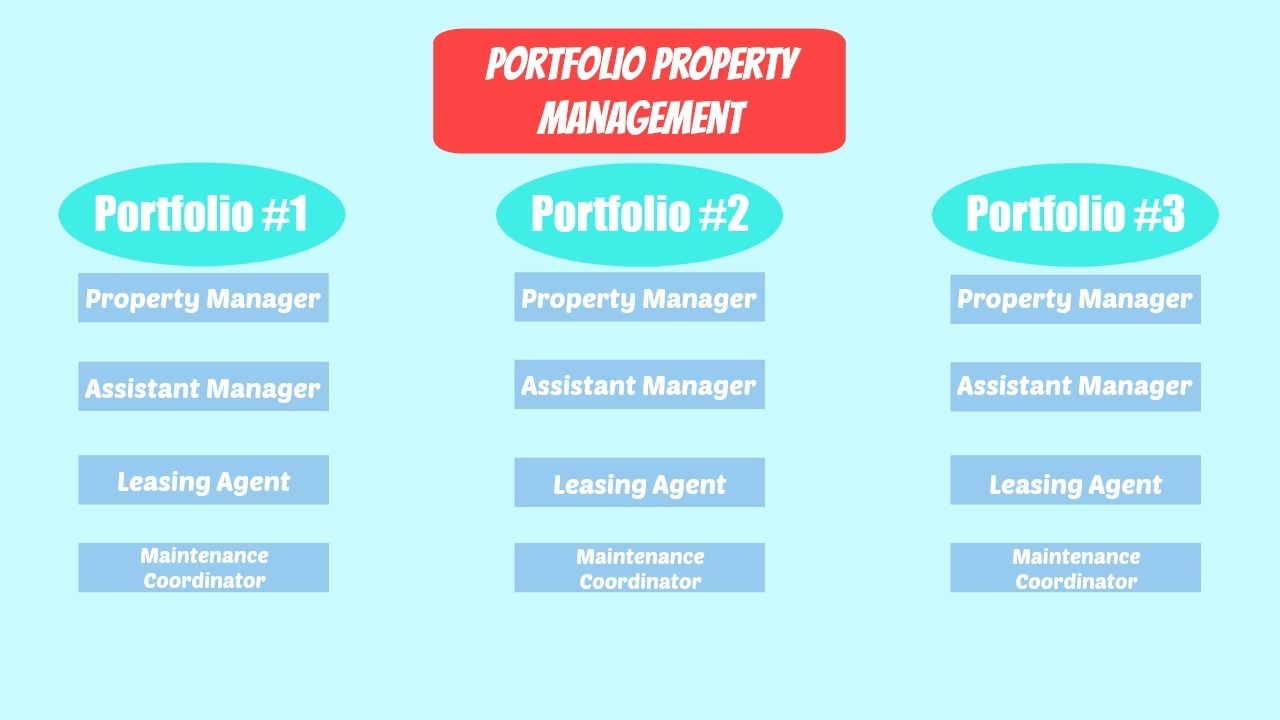
Image via Access Property Management Group
Key Takeaways
- The Business Concept That 10Xed My Airbnb Business
- Phase 1: Building the System (Properties 1-3)
- Phase 2: Proving the Model (Properties 4-10)
- The Housekeeping Math Nobody Talks About
- Phase 3: Scaling (Properties 10-50)
- Phase 4: Operating at Scale (50-100+ Properties)
- Building Your Property Management Team
Scaling Thresholds — Tool Stack by Portfolio Size
Software and team benchmarks at each scaling tier of Airbnb portfolio growth.
- The critical scaling transition point is 10 listings. Below 10, disconnected tools and spreadsheets work. At 10+ listings, disjointed workflows create an administrative avalanche. — Zeevou 2026 Airbnb Property Management Playbook
- Recommended software by portfolio size: 1-5 listings → Smartbnb, 6-100 listings → Smartbnb or Lodgify, 100+ listings → Guesty. — Airbnb Smart Management Software List
- Hostaway is the de facto leader for AI-powered vacation rental software, with Guesty leading the enterprise tier and Hostfully serving the flexible 1-100+ range. — Baselane Best Airbnb Property Management Software 2026
- AI automation handles 70-90% of typical guest communication in 2026, freeing scaling operators to focus on higher-value tasks. HostAI starts at $12 per listing per month. — Aeve AI 2026 Guest Messaging Automation Report
Total revenue results achieved by students across Sean Rakidzich’s Cracking Superhost coaching program. These results come from operators who applied the same property management systems covered in this guide.
- Scale is a systems problem, not a resources problem. The operators who scale fastest build systems first and add properties second.
- Your first 3 properties are your proof of concept. If you can't manage 3 profitably without burning out, don't add a 4th until the system is fixed.
- Property management at scale requires 6 documented systems: pricing, communication, cleaning, maintenance, finance, and legal compliance.
- A virtual assistant (VA) becomes essential between properties 10-20. They handle tasks that need human judgment but not your personal involvement.
- Know your unit economics at all times: Net profit per property per month, by property, not just in aggregate.
- Lifetime value changes every decision you make. The value of a cleaner, a guest, or a manager is not what they cost you today. It is what they save you or earn you over the full relationship.
- Cleaning cost is your biggest competitive moat. When a slow market forces rate cuts, operators with lower cleaning costs survive. The rest lose their bookings.
The Business Concept That 10Xed My Airbnb Business
Image via YouTube
Before I talk about systems, phases, or team structure, I need to share the single concept that sits under every decision I make. It changed how I hire. It changed how I spend money. It changed how I compete. And it is the reason I was able to build a portfolio of 100+ properties when most operators get stuck at 3 to 5.
The concept is lifetime value.
Lifetime value means this: the worth of any business relationship is not what it costs you today. It is what it saves you or earns you over the entire time that relationship lasts. Once you see your business through this lens, every decision looks different.
Where I Learned It: The Newspaper Business
My first multi-million dollar business was selling newspaper subscriptions. I did it for 12 years. The subscription cost the customer $10 to $20 a month. But the newspaper paid my company up to $100 for each customer we brought in.
Why would they pay us five to eight months of revenue on day one? Because the newspaper had data. They knew the average customer stayed 9 to 12 months. That meant the lifetime value of each customer was at least $240 in subscription revenue, plus advertising dollars on top. So paying us $100 to acquire that customer was a smart investment, not an expense.
If the commission had been based only on the first month's $10 or $20, no sales company would have taken the job. The whole industry would have collapsed. The newspaper had to look past the first payment and into the full lifetime to make the math work.
That lesson stuck with me. And during part of those 12 years selling subscriptions, I was also moonlighting on Airbnb. So when I started scaling my rental business, I already knew how to think in lifetime value.
Lifetime Value Is Everywhere
Once you see it, you can't unsee it. Here are two examples from outside real estate.
Cell phone plans. I have had my line with Verizon for 20 years. I started as a personal account and moved to a business account. My business now pays about $1,000 a month across phones, tablets, and other products. If you add that up over 20 years, the lifetime value of my account is over $100,000. That is why Sprint and T-Mobile call me with aggressive offers to switch. They can see my Verizon business account and they know exactly how much that relationship is worth. So they will give me huge incentives to come over.
Mortgages. A 5 to 6 percent mortgage over 30 years can cost you double the original loan. Lenders know this. That is why they pay large commissions to the person who brought them that borrower. The commission is much bigger than the first 10 mortgage payments, because the lender is paying based on the 30-year lifetime value of that debt, not the first month's check.
Every major property management decision is really a lifetime value decision. You are not spending money today. You are buying future savings or future earnings. The operators who understand this outgrow the ones who don't. Every time.
Now let me show you exactly how this applies to every phase of building your Airbnb management system.
Phase 1: Building the System (Properties 1-3)
Your first three properties should not be about making money. They should be about building a system that works. The money follows when the system is right. Operators who rush to scale before the system works build an expensive mess.
This is where lifetime value thinking starts, even if you don't realize it. When you spend time building a checklist for your cleaners at property one, you are creating something you will use at property 50. The time you invest today has a lifetime value across your entire future portfolio. So don't cut corners on the system just because you only have two listings.
At 3 properties, ask yourself: Can this run for 2 weeks without me looking at it? If the answer is no, you have a job, not a business. Fix the system before adding property 4.
Phase 1 Milestones
- PMS selected and configured: All three properties connected, automated messages active, calendar synced.
- Dynamic pricing live: All three properties running through PriceLabs, Wheelhouse, or Beyond Pricing.
- Cleaning team reliable: Your cleaning team is consistently executing your room-by-room checklist without you verifying every turnover.
- Smart locks installed: Zero key exchanges. Unique door codes generated automatically for each guest.
- Monthly P&L by property: You know the net profit of each property individually, not just in aggregate.
- Superhost status achieved or on track: 4.8+ rating, 90%+ response rate.
Phase 2: Proving the Model (Properties 4-10)
Properties 4 through 10 are where you prove the system works more than once. The goal is not 10 profitable properties. It is one system applied across 10 properties that each run profitably with the same effort per property as property 1.
This is also where lifetime value starts showing up in your hiring. Your first hire, whether it is a cleaner or a VA, is an investment. Think about what a good VA saves you over 12 months of handling guest messages, not just what they cost you this week. If a VA costs $800 a month but saves you 15 hours a week, the lifetime value of that hire over one year is thousands of dollars in time you can now spend adding properties.
Phase 2 Milestones
- Launch playbook documented: A written process for adding a new property to the system in under 48 hours.
- Cleaning team expanded: Either multiple cleaning crews or a cleaning coordinator who handles scheduling without your input.
- VA hired for guest communications: A virtual assistant handles messages that fall outside your automated templates.
- Landlord relationship system: Monthly check-ins with all landlords. Issues communicated proactively, not reactively.
- Revenue per property stable: No single property is significantly underperforming. Fix outliers before adding more.
Number of properties where most STR operators hit a natural scale point. Either they have a working system that can grow to 20, 50, or 100+, or they have a broken system that needs fixing before adding one more.
The Housekeeping Math Nobody Talks About
This is the section that can save you more money than anything else in this guide. Most operators never do this math, and it costs them thousands every month.
When you hire a third-party cleaning company, whether you find them on TurnoverBnB, TaskRabbit, or through a Google search, you are paying a premium. In most cities, third-party cleaners charge $45 to $60 per hour. When they package that into a per-clean rate, here is what you typically see:
- Studio apartment: $55 to $70 per clean
- 3-bedroom house: $130 to $250 per clean
- Large home (4+ bedrooms): Up to $400 per clean
Now here is the alternative. You hire your own cleaners by the hour. In our market, we used to start at $12 per hour. With the current job market, we now pay $13 to $15 per hour. The savings are massive.
Real Numbers: 4-Bedroom House
- Total labor to clean: 10 hours
- Two cleaners finish in: 5 hours each
- Cost at $15/hour: $150 per clean
- Third-party company cost: $400 per clean
- Savings per clean: $250
Even if you use a conservative number of $200 saved per clean, the math still works. Let me walk you through how it scales.
Monthly Savings by Portfolio Size
- 1 house, 8 turnovers/month: 8 x $200 = $1,600/month saved
- 2 houses, 16 turnovers/month: 16 x $200 = $3,200/month saved
- 3 houses, 24 turnovers/month: 24 x $200 = $4,800/month saved
At our scale with 100+ properties and 40 or more turnovers a week, even saving just $30 to $40 per turnover on smaller apartments adds up. On 50 turnovers a week, that is $2,000 or more saved per week. Over a year, that is more than $104,000 in savings from housekeeping alone.
The $2,000 Hiring Bonus
Here is where lifetime value comes back. If you want to hire good cleaners by the hour instead of losing them to third-party companies that pay per job, you need to make the offer attractive. We use a $2,000 hiring bonus for new cleaners.
That sounds like a lot of money. But watch the math.
At $200 saved per clean, you break even on that $2,000 hiring bonus after just 10 turnovers. If that cleaner does 8 turnovers a month for just one house, you have paid off the bonus in about 5 weeks. Everything after that is pure savings.
If that cleaner stays 3 months and does 8 cleans per month, you save $4,800 from that one person. If they stay 6 months, that is $9,600 saved. Some of our cleaners have stayed 2 to 3 years. The lifetime value of a good housekeeper far exceeds any hiring bonus you could offer.
The Referral Card System
Cold hiring is expensive. You run Facebook ads, you pay recruiters per applicant, you spend hours on interviews. But once you have good cleaners working for you, they become your best recruiting tool.
We give our housekeepers business cards with a $500 hiring bonus offer. When they hand that card to someone and that person gets hired, the new hire gets the bonus and the person who gave away the card gets a bonus too. Total cost for an internal referral is about $1,000.
Compare that to the cost of a cold hire with ads and recruiters. And the referred hire tends to last longer because they already know someone on the team. If a referred housekeeper stays 6 months, the savings on that one person easily cover the referral cost five times over.
Even if only one out of every three hires sticks around for more than two months, you still come out ahead. Average the savings across all hires, including the ones who didn't last, and the lifetime value per housekeeper is still around $1,500 in savings. That is why we keep investing in hiring. The math always works when you think in lifetime value.
Phase 3: Scaling (Properties 10-50)
At 10+ properties, you are no longer an Airbnb host. You are running a hospitality business. That requires a mindset shift. You are not managing properties. You are managing people and systems that manage properties.
This is also where your direct booking and rebooking strategy starts paying off through lifetime value. Getting a guest to book with you a second time might only break even after acquisition costs. But by the third booking, you are profitable on that relationship. The cost of getting that guest in the door the first time gets spread across every future booking.
This works especially well for Peerspace-style bookings. My penthouse has been booked many times by local production companies, photographers, and event planners who keep coming back. They trust the space. They change their clients but use the same venue. So the $200 to $300 I might spend on ads to reach one of these people is worth it because they will book at $200 to $300 per event, over and over. If they book even twice, I have already made money on that relationship.
Phase 3 Requirements
- Property manager (on-site or remote): A dedicated person responsible for maintenance coordination, cleaning oversight, and exception handling across your portfolio.
- Accounting system upgraded: Basic bookkeeping is no longer sufficient. You need property-level P&L, tax planning, and monthly reconciliation.
- Legal review: STR leases, subletting agreements, and local compliance across multiple markets require legal review at this scale.
- Multi-channel listings: At 20+ properties, diversifying beyond Airbnb to VRBO, Booking.com, and direct bookings reduces platform dependency risk.
- Direct booking system active: Capture guest data from your first booking. Reach out with incentives for future stays. Your goal is three bookings per guest, because that creates a habit.
Phase 4: Operating at Scale (50-100+ Properties)
At 50+ properties, operations are the competitive advantage. Your software stack, your team structure, and your standard operating procedures determine your margins as much as market selection does.
And here is the part most operators miss. When the market slows down and everyone needs to drop their rates to fill beds, only the operators with the lowest costs per turnover can actually afford to compete on price.
When you are staring at your costs per month and you notice that your housekeeping is $150 or $200 more per clean than mine, you will not be able to drop your rates enough to get the bookings that I can get. And I will get all the bookings and you will get none.
That is not a theory. That is math. If your cleaning cost is $400 per turnover and mine is $150, I have $250 more room to cut my nightly rate and still stay profitable. In a slow market, that gap is the difference between full calendars and empty ones.
This is why lowering your housekeeping cost is not just about saving money. It is about competitive survival. The operators who figure this out early build a moat that their competitors cannot cross.
My Cracking Superhost coaching program is built for operators who are serious about scaling to 50 and beyond. It covers the complete operational infrastructure: team structure, multi-market expansion, lease negotiation at scale, and the financial controls that keep a 100-property portfolio profitable. Learn more about all airbnb courses at rakidzich.com.
Building Your Property Management Team
Scaling without a team means you are the bottleneck. Here is the team structure for different portfolio sizes.
| Role | Properties 1-5 | Properties 6-20 | Properties 20-50 | Properties 50+ |
|---|---|---|---|---|
| Guest Communication | Automated (you handle exceptions) | VA (part-time) | VA (full-time) | Guest Services Team |
| Cleaning | You schedule, hourly cleaners | Cleaning coordinator + hiring bonus system | Cleaning manager + referral card pipeline | Operations manager, 15+ hourly cleaners |
| Maintenance | You coordinate | Handyman on retainer | Maintenance coordinator | Maintenance team |
| Finance | You track monthly | Bookkeeper | Bookkeeper + accountant | Finance manager |
| Your Role | Operator | Manager | Business owner | CEO |
Notice the cleaning row. At every stage, the shift is toward hourly cleaners you hire directly rather than third-party companies. The earlier you make this switch, the more you save over the life of your business. Start with the $2,000 hiring bonus as early as Phase 2. By Phase 4, you should have a full referral card system running so your own team recruits for you.
LTV in Hiring: Why Retention Is Your Competitive Advantage
Lifetime value does not stop at cleaners. The same logic applies to every person on your team.
Think about what it costs to recruit, train, and onboard a property manager. There are weeks of interviews. Weeks of training. Lost productivity while they learn your systems. If that person leaves after 2 months, you have spent thousands of dollars with almost nothing to show for it.
But if that same person stays 2 years? They deliver 10 times the value. They know your properties, your landlords, your quirks. They train the next person you hire. They solve problems you never even hear about.
This changes how you invest in retention. Pay people fairly. Build a culture they want to stay in. Give them a growth path. The cost of keeping a great manager for an extra year is always less than the cost of replacing them.
The same is true for maintenance people, VAs, and every other role. Every time someone leaves and you have to start over, you lose the compounding value of their experience. Retention is not a soft goal. It is a hard financial metric.
- Hourly cleaner (stays 6 months): $9,600+ in cleaning cost savings from one person
- Cleaning coordinator (stays 1 year): Manages 20+ cleaners, frees you from scheduling entirely
- Property manager (stays 2 years): Handles 30+ properties, trains replacements, reduces your workload by 80%
- VA (stays 1 year): Saves 15+ hours per week of your time across the entire portfolio
Metrics That Matter: How to Know If Your Properties Are Healthy
The 8 Metrics to Track Monthly
- Occupancy rate by property: Target 65%+ in your market. Below 55% means pricing, listing quality, or market issues need attention.
- ADR (Average Daily Rate) by property: Compare to your market baseline monthly. Falling ADR with stable occupancy indicates competitive pressure.
- Net Revenue Per Available Night (RevPAN): Occupancy x ADR gives gross. Subtract all costs per night available. This is the true profitability metric.
- Review score by property: Any property below 4.7 gets a personal inspection and root cause analysis within 30 days.
- Net profit per property per month: Know this number for every listing. Underperforming properties need to be fixed or exited.
- Cost per housekeeper acquired: Add up your hiring bonus, ad spend, recruiter fees, and interview time for every cleaner you hire. Divide by the number who stay past 60 days. This is your true acquisition cost. Track it quarterly and work to bring it down through referrals.
- LTV of cleaning staff: For each cleaner still on your team, calculate total savings (turnovers x cost difference vs. third-party) since their start date. A good cleaner who has done 100 turnovers at $200 savings each has generated $20,000 in value. This number tells you how much to invest in retention.
- Guest rebooking rate: What percentage of guests book with you a second time? Track this monthly. If it is below 5%, you have no direct booking strategy. If it is above 15%, your lifetime value per guest is working.
These phases and metrics are the framework. My airbnb courses build the complete system: tools, SOPs, team structure, and the financial controls that scale. Used by 5,000+ students in 76 countries achieving $1.4B+ in results.
See All Courses300,000+ subscribers follow the complete scaling process every week.
Common Questions About Airbnb Property Management
Do I need a property management company to scale Airbnb?
No. Property management companies typically charge 20-30% of revenue, which significantly erodes profitability. Operators who scale to 50+ properties typically build their own management infrastructure with a small team and systems rather than paying a third-party management company. The exception is if you want truly passive income and are willing to accept lower returns.
At what point do I need to hire employees?
A virtual assistant for guest communication becomes valuable around properties 8-12, when manual exception handling becomes time-consuming. A local property manager or operations coordinator is typically needed between properties 15-25. The specific threshold depends on your properties' locations and the complexity of your cleaning and maintenance operations.
How do I manage properties in multiple cities?
Multi-market management requires a local point of contact in each market. That means either a local property manager or a dedicated cleaning team with a coordinator who can handle in-person tasks. Remote oversight through smart locks, noise monitors, and cleaning apps handles the rest. Your PMS centralizes all communication and scheduling regardless of location.
How much does it cost to manage 50 Airbnb properties?
A 50-property STR operation typically has management overhead of $15,000 to $35,000 per month. That includes your VA, cleaning coordination, software, maintenance, and accounting. At average net revenue of $1,000 to $2,000 per property per month, the management infrastructure runs 15-35% of revenue. That is comparable to, but often cheaper than, a third-party management company.
What is lifetime value and how does it apply to Airbnb?
Lifetime value is the total worth of a business relationship over its full duration, not just the first transaction. For Airbnb operators, it applies to cleaning staff (a housekeeper who stays 2 years saves thousands more than their hiring cost), to guests (a repeat booker who returns 3-4 times is far more valuable than the first booking alone), and to managers (retaining a trained manager for 2 years delivers 10 times the value of one who leaves after 2 months). Thinking in LTV changes how you invest in hiring bonuses, retention, and guest rebooking campaigns.
How do I lower my Airbnb cleaning costs without losing quality?
Hire hourly cleaners at $13-15 per hour instead of using third-party cleaning companies that charge $45-60 per hour. For a 4-bedroom house that takes 10 labor hours, two cleaners at $15 per hour cost $150 per clean. A third-party company might charge $400. That is $250 saved per turnover. Use a hiring bonus of $1,000-2,000 to attract quality applicants. Use a referral card system where your current cleaners recruit new ones for a $500 bonus. The hiring bonus pays for itself within 10-20 turnovers.
Sources
- Airbnb Host Resource Center — airbnb.com/resources
- Responsible Hosting in the US — Airbnb Help Center
- Vacation Rental Management Association — vrma.org
- U.S. Small Business Administration — sba.gov
About the Author
This analysis is by Sean Rakidzich, an 11-year short-term rental operator who manages 155 Airbnb properties generating $1M+/month in revenue. Sean has trained 5,000+ students across 76 countries with $1.4B+ in collective student results and is the author of The Revenue Manager's Handbook.
For Sean's framework on scaling an Airbnb business is a systems problem, not a resources problem, emphasizing the importance of building robust systems before adding properties, see his full content library at rakidzich.com or book a 30-minute strategy session at rakidzich.com/book.
Affiliate disclosure: Some links on this page (anything starting with rakidzich.com/p/) are affiliate links. If you sign up through them, Sean may earn a commission at no extra cost to you. The recommendation reflects Sean's actual use across his 155-property portfolio.