How to Start an Airbnb Business: Beat the 35% Failure Rate
TL;DR
Sean Rakidzich highlights that about 35% of new Airbnb hosts fail within their first year due to poor planning and skills gaps.
The article compares startup costs for an Airbnb business, noting that furnishing accounts for 70-80% of total startup costs, with an average startup cost for a 2-bedroom unit being $10,000.
Sean recommends checking local rules first, budgeting $2,000-$6,000 to start, and treating the Airbnb business like a real business to increase chances of success. By Sean Rakidzich, 155-property operator. Strategy session at rakidzich.com/book.
Steps
| Item | Cost Range |
|---|---|
| Furniture and decor | $500-$3,000 |
| Linens and towels | $200-$500 |
| Kitchen items | $200-$400 |
| Professional photos | $100-$300 |
| Permits and licenses | $50-$500 |
| Smart locks and tech | $100-$300 |
| Cleaning supplies | $100-$200 |

Image: Wikimedia contributor, via Wikimedia Commons, CC BY-SA 3.0
Key Takeaways
- What It Actually Costs to Start in 2026
- Step 1: Check Local Rules and Get Permits
- Step 2: Study Your Local Market
- Step 3: Plan Your Money
- Step 4: Get Your Property Ready
- Step 5: Create Your Listing
- Why Most New Airbnb Hosts Fail
What It Actually Costs to Start in 2026
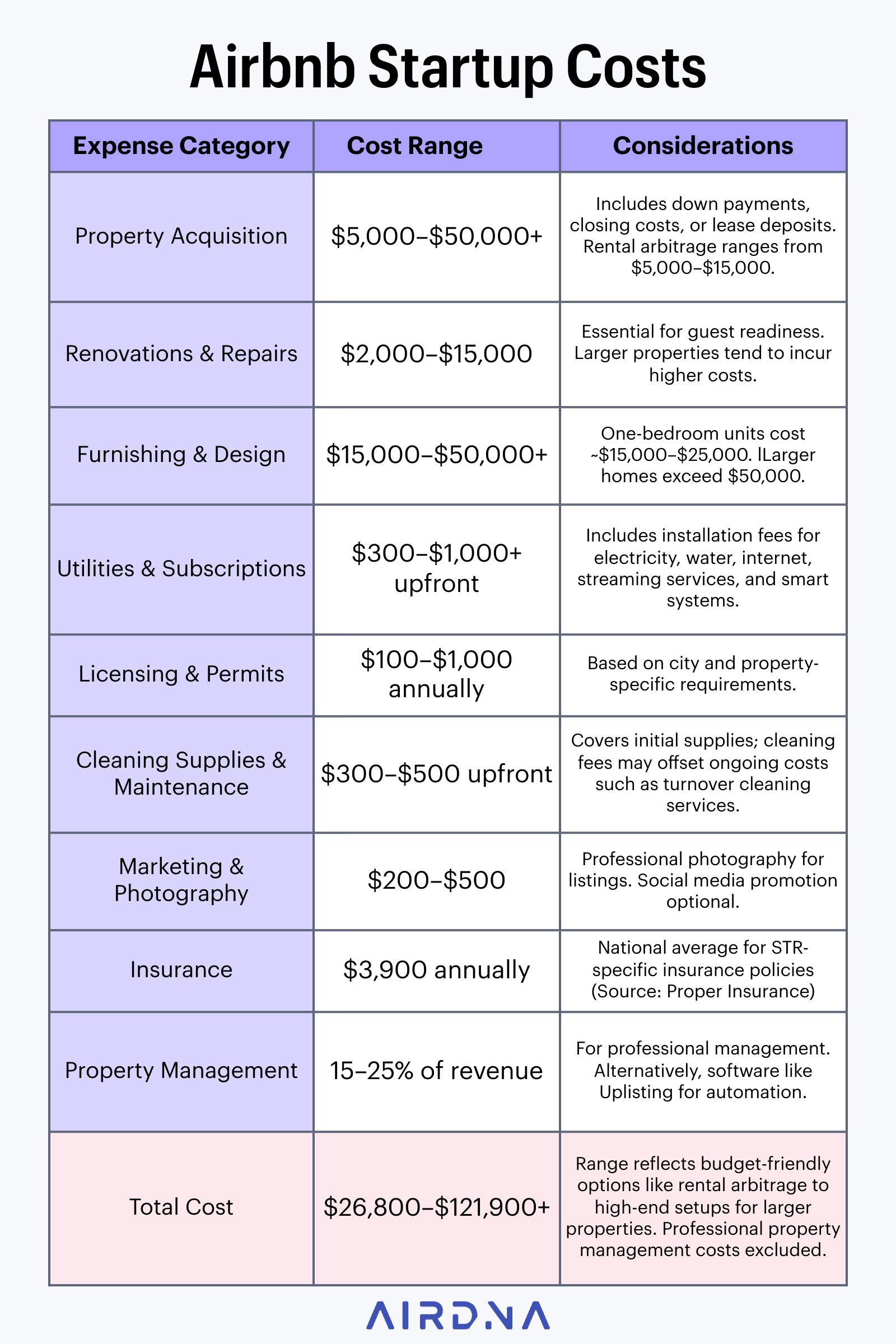
Image via AirDNA
AirDNA and STR Specialist data on real Airbnb launch budgets.
- Average Airbnb startup cost for a 2-bedroom unit is $10,000, with a documented range of $5,000 to $15,000 depending on market and property. — AirDNA Airbnb Startup Cost Guide
- For a typical 3-bedroom rental: furnishing costs around $12,400, initial supplies $1,200, licensing $500, and marketing $850, totaling approximately $14,950. — STR Specialist Startup Cost Estimator
- Furnishing accounts for 70-80% of total startup costs. STR insurance adds $500-$1,500 per year per property. LLC formation and CPA setup run $50-$500 each. — AirDNA Startup Cost Breakdown
- Most hosts recover startup costs within 3 to 6 months at a 60-70% occupancy rate. Rental arbitrage is the lowest-capital entry path at $3,000 to $15,000. — 10XBNB Rental Arbitrage Startup Costs
According to AirDNA research, about 35% of new Airbnb hosts quit or fail within their first year.
- 35% of new Airbnb hosts fail within their first year due to poor planning and skills gaps.
- Check local rules first - Many cities require permits. Skipping this step can mean fines or losing your listing.
- Budget $2,000-$6,000 to start (if you own the property) plus 3 months of expenses saved.
- Dynamic pricing earns 15-25% more than hosts who keep one price all year.
- Target 4.8+ star ratings for Superhost status and better search rankings.
- Master 4 key skills: pricing, guest communication, marketing, and operations.
Want to start an Airbnb business? Most new hosts make the same mistakes. They skip the rules. They price wrong. They take bad photos. Watch the video above to see Sean's complete blueprint, then read on for the step-by-step guide to launching your Airbnb business the right way.
Starting an Airbnb business takes more than posting a listing. You need to know local rules, set smart prices, prepare your space, and treat it like a real business.
Step 1: Check Local Rules and Get Permits
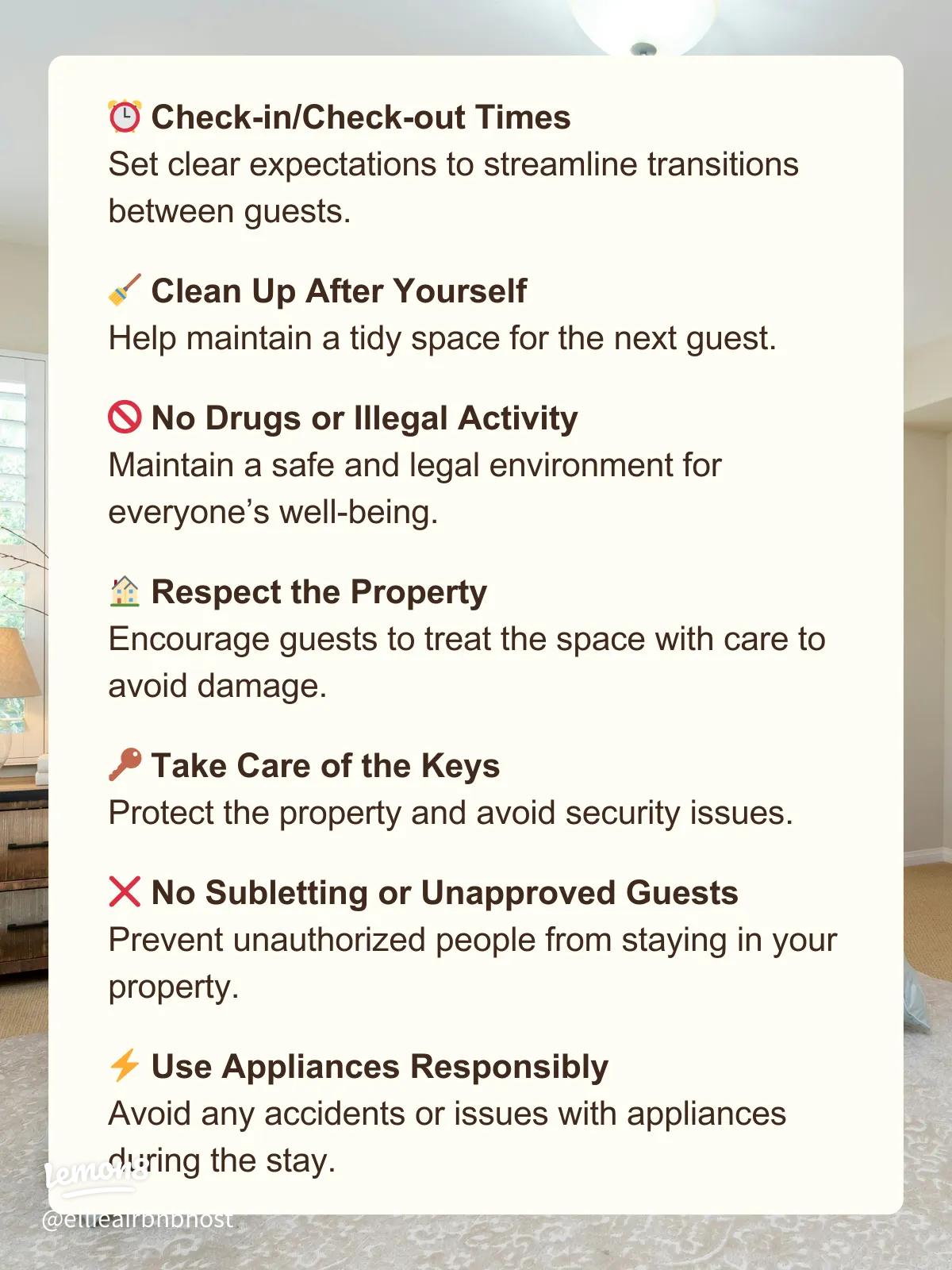
Image via Lemon8
Before you do anything else, you must know the rules. Many cities have laws about short-term rentals. Some places ban them. Others need permits. Skip this step, and you could face fines or lose your listing.
Big cities like New York, San Francisco, and Los Angeles have strict rules. Some ban short-term rentals in most areas. Always check before you invest money.
What to Check
- City rules: Call your city clerk or visit their website. Ask about short-term rental permits.
- State rules: Some states have their own laws. Check your state's business website.
- HOA rules: If you have a homeowner group, read their rules. Many ban rentals.
- Lease terms: If you rent, check your lease. Most ban subletting without permission.
- Zoning laws: Some areas only allow rentals in certain zones.
Common Permits You May Need
- Business license: Most cities want you to register as a business.
- Short-term rental permit: Many cities have a special permit for Airbnb hosts.
- Tax registration: You may need to collect and pay lodging taxes.
- Safety inspection: Some places check for smoke detectors and fire safety.
Keep copies of all permits. Airbnb may ask for them. Having them ready shows you are a serious host.
Action Steps
- Search "[your city] short-term rental rules" online
- Call your city clerk and ask what permits you need
- Check if your HOA or lease allows rentals
- Apply for any needed permits before listing
- Set up tax collection if your area requires it
Step 2: Study Your Local Market
Good hosts know their market. They know what guests want. They know what others charge. They know when busy times happen. This knowledge helps you price right and stand out.
Look at Other Listings
Open Airbnb and search for your area. Look at the top listings. Ask yourself:
- What do they charge per night?
- What amenities do they offer?
- How do their photos look?
- What do guests say in reviews?
- How many reviews do they have?
Only 12% of listings have great photos and full details. This means 88% of your rivals make it easy to beat them.
Know Your Busy and Slow Times
Every market has seasons. Beach towns are busy in summer. Ski towns peak in winter. Cities with big events see spikes around those dates.
- Peak season: When guests flood in. You can charge more.
- Off-season: When bookings drop. You may need to lower prices.
- Events: Concerts, sports games, and festivals bring guests. Raise prices then.
Hosts who change prices with demand earn 15-25% more than hosts who keep one price all year.
Find Gaps You Can Fill
Look for what others miss. Maybe no one offers:
- Pet-friendly stays (these earn 15% more)
- Work-from-home setups with fast wifi
- Family-friendly spaces with cribs and toys
- Hot tubs or pools (the #1 searched amenity)
Action Steps
- Search your area on Airbnb and list the top 10 properties
- Write down their prices, amenities, and review counts
- Note what guests praise and complain about in reviews
- Find one thing you can do better than most
- Mark your area's busy months on a calendar
Step 3: Plan Your Money
Starting an Airbnb costs money. You need to buy things, pay for photos, and cover slow months. Plan your budget before you start.
Most hosts spend this much to start, if they already own the property.
Common Startup Costs
| Item | Cost Range |
|---|---|
| Furniture and decor | $500-$3,000 |
| Linens and towels | $200-$500 |
| Kitchen items | $200-$400 |
| Professional photos | $100-$300 |
| Permits and licenses | $50-$500 |
| Smart locks and tech | $100-$300 |
| Cleaning supplies | $100-$200 |
Costs That Keep Coming
- Cleaning: $50-$150 per turnover
- Supplies restocking: $50-$100 per month
- Airbnb fees: About 3% of each booking
- Insurance: $50-$100 per month extra coverage
- Utilities: May go up 20-30% with guests
- Repairs: Budget $100 per month for fixes
Save 3 months of expenses before you start. Slow months will come. New hosts often quit because they run out of cash during off-season.
Don't Forget Taxes
You must report Airbnb money on your taxes. Keep track of:
- All income from bookings
- All expenses (you can deduct these)
- Lodging taxes you collect for your city
If you rent for less than 14 days per year, you may not owe federal tax on that income. But check your local rules too.
Action Steps
- List everything you need to buy
- Add up your startup costs
- Calculate 3 months of ongoing costs
- Make sure you have enough saved before starting
- Set up a simple system to track income and expenses
Step 4: Get Your Property Ready
Your property must be clean, safe, and well-stocked. Guests expect a good experience. Give them that, and they leave good reviews. Good reviews bring more bookings.
Must-Have Amenities
These are what guests expect. Missing them hurts your bookings. Watch at 18:00
- Fast wifi: At least 25 Mbps. Test it and include speed in your listing.
- Clean linens: Fresh sheets, pillows, and towels for each guest.
- Kitchen basics: Pots, pans, dishes, utensils, coffee maker.
- Climate control: Heat and air conditioning that works well.
- Toiletries: Soap, shampoo, toilet paper.
- Self check-in: Smart lock or lockbox for 24-hour access.
"You don't need to own property to build a $10 million Airbnb business. I've scaled to 155 properties across 8 cities without owning a single one."
Amenities That Boost Income
How much more you can charge with a hot tub or pool.
- Hot tub or pool: The #1 searched amenity. Earns 15-20% more.
- Pet-friendly: Earns 15% more with 9% higher bookings.
- EV charger: Searches grew 80%+ in recent years.
- Washer and dryer: Key for longer stays.
- Workspace: Desk and chair for remote workers.
- Streaming services: Netflix, Disney+, etc.
Safety Items
These protect guests and you. Watch at 18:00
- Smoke detectors on every floor
- Carbon monoxide detector
- Fire extinguisher
- First aid kit
- Emergency contact info posted
"The best part about rental arbitrage is you can test markets with minimal risk. If it doesn't work out, you simply don't renew the lease."
Airbnb banned all indoor cameras in April 2024. You cannot have any cameras inside your listing. Outdoor cameras must be told in your listing.
Take Great Photos
Photos are the first thing guests see. Bad photos lose bookings.
How many listings have photo problems like bad lighting, messy spaces, or missing rooms.
Good photos should:
- Use natural light (shoot during the day)
- Show clean, uncluttered spaces
- Include every room (don't skip the bathroom)
- Be at least 1,200 x 800 pixels
- Have 15-20 images total
Hiring a pro photographer costs $100-$300. It's worth it. Good photos can double your bookings.
Action Steps
- Walk through your space like a guest would
- Make a list of what you need to buy
- Install safety items like smoke detectors
- Deep clean everything
- Take photos or hire someone
- Test wifi speed and add a smart lock
Step 5: Create Your Listing
Your listing sells your space. A good title, clear details, and smart pricing bring bookings. This is where most hosts mess up.
Write a Good Title
Your title shows up in search. Use words guests search for:
- "Downtown" or your neighborhood name
- "Walk to [landmark]"
- "Pet-friendly" if you allow pets
- "Hot tub" or "Pool" if you have one
- "Family-friendly" for bigger spaces
Good example: "Cozy Downtown Loft - Walk to Beach - Free Parking"
Bad example: "Nice Place to Stay"
Write a Clear Description
Tell guests what they get. Be specific:
- How many beds and baths
- What makes your place special
- What's nearby (shops, restaurants, parks)
- House rules (no parties, quiet hours)
- Check-in and check-out times
How many new listings miss key details like parking, wifi speed, or nearby transit.
Set Smart Prices
Don't use one price all year. Change it based on demand.
- Start lower: New listings need reviews. Price 10-15% below similar places to get your first bookings.
- Use pricing tools: Apps like PriceLabs or Wheelhouse change your price each day based on demand.
- Raise for events: Double or triple your price during big local events.
- Lower for slow times: Some money is better than no money.
Hosts who use dynamic pricing earn 15-40% more than hosts who keep one price all year.
Respond Fast
Airbnb tracks how fast you reply. Fast replies help you rank higher in search.
- Target: Reply within 1 hour
- Minimum: Reply within 24 hours (needed for Superhost)
- Tip: Turn on app alerts so you don't miss messages
Action Steps
- Write a title with searchable words
- Fill in every detail in your description
- Start with prices 10-15% below similar places
- Sign up for a dynamic pricing tool
- Turn on Airbnb alerts on your phone
- Make message templates for common questions
Why Most New Airbnb Hosts Fail
Now you know the steps. But why do 35% of hosts still fail? They fall into traps you can avoid.
The "Easy Setup" Trap
Airbnb makes listing easy. Too easy. It takes just minutes. But running a good Airbnb takes real work.
Easy setup leads to overconfidence. New hosts think they're ready. Then reality hits. Managing guests, cleaning, pricing, and problems takes real effort.
What the easy setup hides:
- You need to change prices often
- Guests expect fast replies (under 1 hour)
- Cleaning between guests is hard work
- Problems happen at bad times
- Local rules can shut you down
The New Listing Boost (and Crash)
Airbnb gives new listings extra visibility. You show up higher in search for your first 30-60 days. This is great for getting started.
But here's the problem:
How long Airbnb boosts new listings. After that, you compete on your own.
Many hosts mistake this boost for real success. They don't build the skills they need. When the boost ends, bookings drop. They don't know why.
The Seasonal Surprise
Every market has slow times. New hosts don't plan for this.
- They launch in summer and get lots of bookings
- Fall comes and bookings drop
- They panic and quit
Smart hosts expect slow months. They save money during busy times. They lower prices to stay booked. They don't panic.
The 4 Skills Every Airbnb Host Needs
Success as a host takes more than a nice space. You need four key skills. Most new hosts lack all four.
How long it takes to build these skills through practice.
Skill 1: Dynamic Pricing
Change your prices based on demand. This is the biggest difference between hosts who earn a lot and hosts who struggle.
- Raise prices when demand is high
- Lower prices when demand drops
- Watch what competitors charge
- Use pricing tools that adjust daily
How much more hosts earn with dynamic pricing vs. one fixed price.
Skill 2: Guest Communication
Good communication gets good reviews. Bad communication loses guests. Learn more in our guide to guest communication templates.
- Reply within 1 hour
- Answer questions before guests ask them
- Solve problems fast
- Be friendly but professional
- Create message templates for common situations
Skill 3: Marketing Your Listing
Even a great property needs good marketing. Otherwise, no one sees it.
- Take professional photos
- Write clear, detailed descriptions
- Use words guests search for
- Update your listing each season
- Ask happy guests to leave reviews - see our listing optimization guide
Skill 4: Operations
Running an Airbnb is like running a small hotel. You need systems.
- Reliable cleaners you can count on
- A checklist for each turnover
- Stock of supplies that never runs out
- Quick fixes for common problems
- A way to track income and expenses
Study your top competitor. Copy what they do well. This shortcuts the learning process.
Track These Numbers to Know If You're Winning
Good hosts track their results. These four numbers tell you if your Airbnb business is working.
1. Occupancy Rate
Target occupancy after month 6. The US average is 48-56%.
- Months 1-3: Aim for 50%
- After month 6: Aim for 65%
- Red flag: Under 40% means something is wrong
2. Average Nightly Rate
- Target: Within 10% of similar listings
- Too high: You lose bookings
- Too low: You leave money on the table
3. Review Score
The score you need for Superhost status and top search rankings.
- Target: 4.8 stars or higher - read our Superhost guide
- Red flag: Under 4.5 means fix problems fast
4. Response Time
- Target: Under 1 hour
- Minimum: Under 24 hours
- Why it matters: Airbnb tracks this for rankings
If you miss 2 or more of these targets by month 3, look at your pricing, photos, or operations. Something needs to change.
Want More Airbnb Tips?
Join 300,000+ hosts on Sean's YouTube channel for weekly videos on pricing, guest management, and scaling your Airbnb business.
Subscribe to Airbnb AutomatedThe Bottom Line
Starting an Airbnb business the right way takes planning. Check your rules. Know your market. Plan your money. Prepare your space. Create a great listing. Then track your numbers and keep improving.
The 35% who fail skip these steps. They think it's easy. They don't treat it like a business.
But now you know what they don't:
- Local rules can shut you down - check them first
- Your market tells you how to price - study it
- Slow months come - save money for them
- Guests expect quality - prepare your space right
- Your listing sells your space - make it great
- Four skills matter most - build them over time
Most of your competitors make these mistakes. That's your chance. Do the work they skip. Your Airbnb business will succeed while others quit.
Your 30-Day Launch Plan
- Week 1: Check local rules and apply for permits
- Week 2: Study your market and plan your budget
- Week 3: Prepare your property and take photos
- Week 4: Create your listing and set up pricing tools
- Ongoing: Track your numbers and keep improving
Ready to see these essentials in action? Watch the complete video guide where Sean walks through each essential item with real examples from his 155-property portfolio. Found this helpful? Give the video a thumbs up and subscribe for more hosting tips.
Free Download: Airbnb Startup Checklist
Get our printable PDF checklist covering all 5 steps to launch your Airbnb business. Includes budget templates, permit tracking sheets, and pricing calculator.
Download Free Checklist (PDF)Common Questions About Starting an Airbnb Business
How do I start an Airbnb business?
Start by checking your local rules and getting any needed permits. Then study your market to know what to charge. Plan your budget with startup costs and savings for slow months. Prepare your property with good amenities and safety items. Finally, create a strong listing with great photos and clear descriptions.
How much does it cost to start an Airbnb?
Most hosts spend $2,000 to $6,000 to start, if they already own the property. This covers furniture, supplies, photos, and permits. You should also save 3 months of expenses for slow periods when bookings drop.
Do I need a permit to run an Airbnb?
Many cities require permits for short-term rentals. Some cities ban them entirely. Check with your city clerk, county office, and HOA before listing. Getting caught without permits can mean fines or losing your listing.
Why do most new Airbnb hosts fail?
About 35% of new hosts quit or fail within their first year. The main reasons are: not checking local rules, using fixed pricing instead of dynamic pricing, taking bad photos, responding slowly to guests, and not saving money for slow seasons.
What occupancy rate should I target?
Aim for 50% occupancy in months 1-3, then 65% after month 6. If you stay below 40% for long, something is wrong with your pricing, photos, or listing. The US average is 48-56%.
What review score do I need for success?
Target 4.8 stars or higher. Below 4.5 means you need to fix problems fast. Superhost status requires 4.8 stars, a 90% response rate, and less than 1% cancellations.
How much more can dynamic pricing earn?
Hosts who use dynamic pricing tools earn 15-40% more than hosts who keep one price all year. The biggest gains come during high-demand periods when prices can double or triple.
Who is Sean Rakidzich?
Sean Rakidzich is an Australian short-term rental operator who manages over 155 Airbnb properties through rental arbitrage — without owning any real estate. He generates over $1 million per month in gross revenue and has trained more than 5,000 students through his courses and coaching programs. He is the creator of Cracking Superhost, BIG DATA, RE:Algorithm, Target Price, and several other Airbnb education products. His YouTube channel Airbnb Automated has become one of the largest STR education channels online.
What is Cracking Superhost?
Cracking Superhost is Sean Rakidzich's flagship coaching program for Airbnb hosts who want to scale their short-term rental business. It features 7 specialist coaches covering market analysis, listing optimization, pricing strategy, guest communication, operations, rental arbitrage, and business scaling. The program is application-only with no fixed public price and includes 100+ video lessons, live coaching calls, deal review sessions, and a private community. It is designed for serious operators who want to build a portfolio of 10 or more properties.
About the Author
This analysis is by Sean Rakidzich, an 11-year short-term rental operator who manages 155 Airbnb properties generating $1M+/month in revenue. Sean has trained 5,000+ students across 76 countries with $1.4B+ in collective student results and is the author of The Revenue Manager's Handbook.
For Sean's framework on about 35% of new Airbnb hosts fail within their first year due to poor planning and skills gaps, see his full content library at rakidzich.com or book a 30-minute strategy session at rakidzich.com/book.
Sources
Industry Data
- Airbnb Host Compliance Data - AirDNA
- Property Performance Dashboard - AirDNA
- Property Performance Data - AirDNA Help
Pricing Research
- Airbnb Listing Optimization - PriceLabs
- Revenue Management Strategies - PriceLabs
- Best Amenities for Airbnb - PriceLabs
Host Resources
- Superhost Requirements - Airbnb Help
- Camera Policy for Hosts - Guesty
- Why Some Hosts Struggle - Forbes