Airbnb Strata Rules Australia: Turn Body Corporate Laws Into Your Competitive Edge
TL;DR
Sean Rakidzich highlights how Australian strata rules, particularly in NSW and VIC, can be leveraged as a competitive edge for Airbnb hosts by understanding and navigating the legal and regulatory frameworks.
The article compares two apartment investors in the same Sydney suburb, showing how one failed due to a strata by-law banning non-principal-residence short-term rentals, while the other succeeded by thoroughly researching and understanding the by-laws before purchasing.
Sean Rakidzich recommends that investors prioritize reading and understanding strata by-laws before purchasing property, as they can significantly impact rental income and operational viability. By Sean Rakidzich, 155-property operator. Strategy session at rakidzich.com/book.
Market at a Glance
| State | Can Ban STR | Vote Threshold | STRA Register | Short-Stay Levy |
|---|---|---|---|---|
| NSW | Yes (non-PPR) | 75% special resolution | Yes ($65 new) | No |
| VIC | Yes (non-PPR) | 75% permanent / 50% interim | No | 7.5% (Jan 2025) |
| QLD | No | Cannot ban under s180(3) | No | No |
| SA | Yes (<2 months) | Special resolution | No | No |
| WA | Yes | Standard by-law process | Yes (Jan 2025) | No |
| TAS | Yes (<6 months) | By-law process | No (council permits) | 5% proposed |
| ACT | Yes | Special resolution | No | 5% (Jul 2025) |
| NT | Yes | By-law process | No | No |
Key Takeaways
- 2026 NSW Strata STR Rules
- The $47,000 Lesson
- How Strata Schemes Actually Work
- NSW: The 75% Rule and the Scarcity Premium
- VIC: The Supermajority and the New Levy
- QLD: Why Body Corporates Cannot Ban STR Outright
- Every Other State: SA, WA, TAS, ACT, and NT
2026 NSW Strata STR Rules
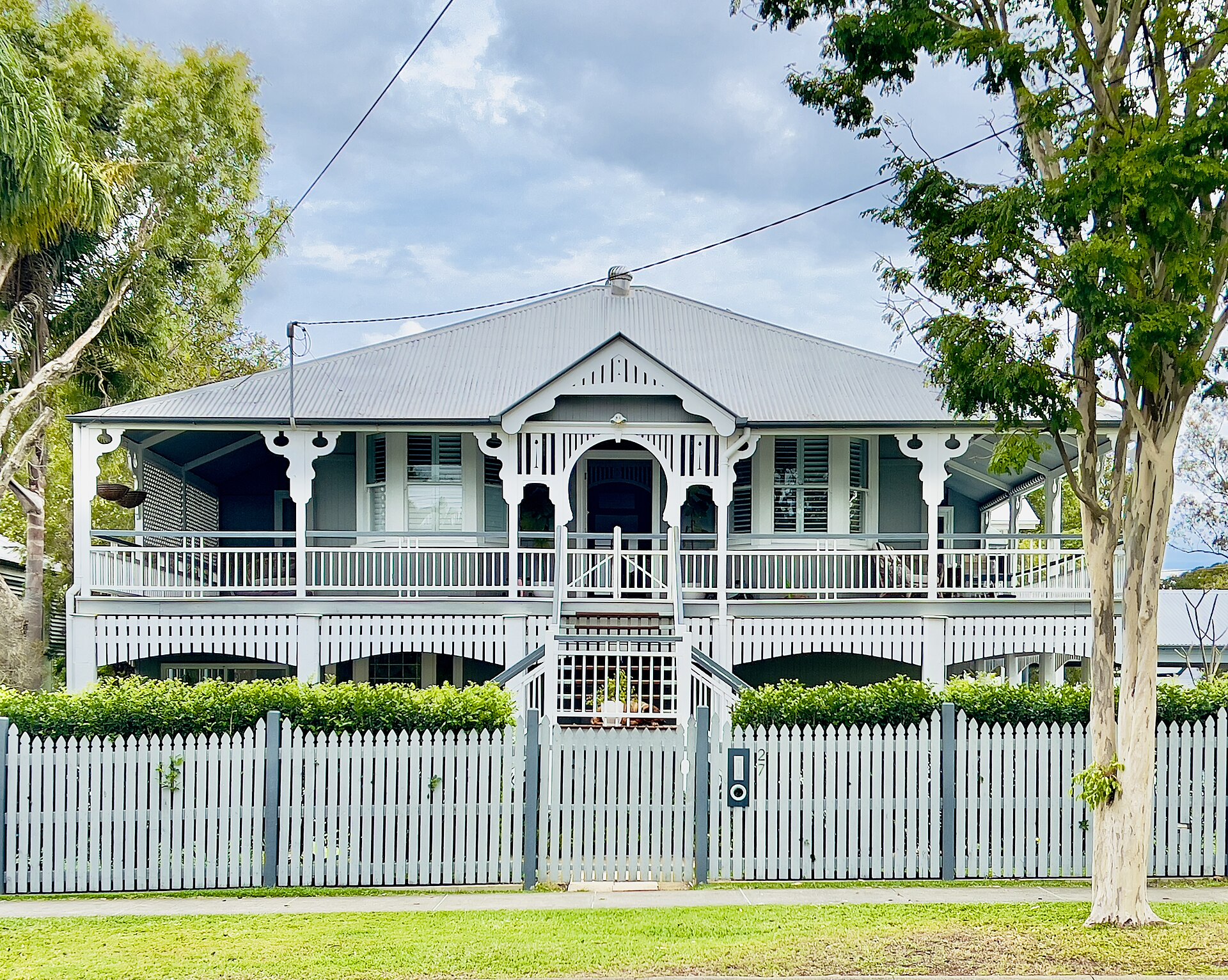
Image: Chris Olszewski, via Wikimedia Commons, CC BY-SA 4.0
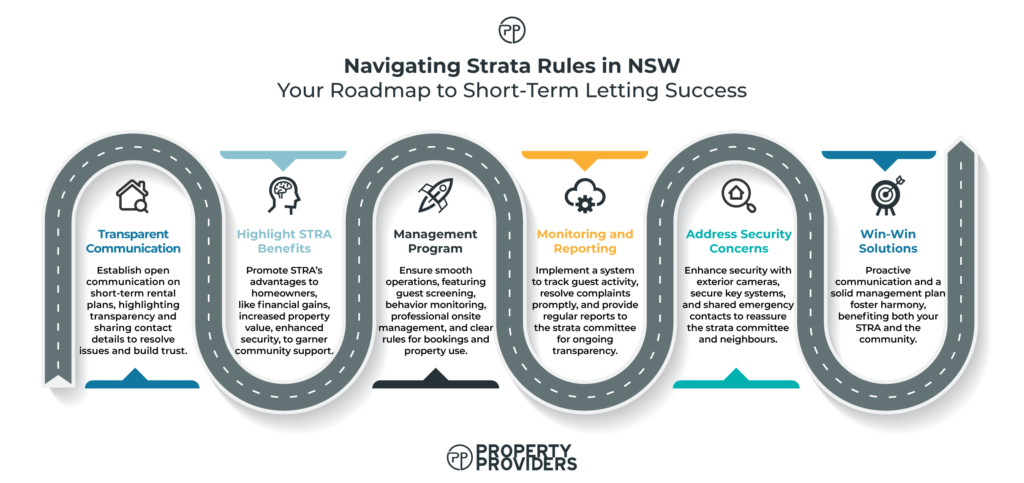
Image via Property Providers
Current NSW strata regulations and voting thresholds for short-term rental bans.
- NSW strata Owners Corporations can ban non-hosted short-term rental accommodation via a 75% special resolution, but cannot restrict hosted STRA by owner-occupiers under current NSW law. — PDC Law NSW Strata STR Rules (Updated December 2025)
- Non-hosted STRA is capped at 180 days per year across Greater Sydney, Ballina, Byron, and parts of Clarence Valley and Muswellbrook. — NSW Planning Portal STRA Policy
- Byron Shire applies the strictest cap in Australia: 60 days per year for non-hosted STRAs since 23 September 2024. Certain precincts around Byron Bay and Brunswick Heads retain 365-day permissions. — La Bode 2025 NSW/VIC STR Regulations
- Victoria applies a 7.5% Short Stay Levy statewide on non-hosted bookings, with some councils including Mornington Peninsula and inner Melbourne moving to a 90-night annual cap. — Hostaway Airbnb Rules in Australia 2025
Four layers of rules govern your Airbnb in a strata building. State law, council planning, strata by-laws, and lot level terms. You can pass the first three and fail on the fourth.
- NSW and VIC can restrict STR in strata buildings. QLD cannot ban it under the BCCM Act.
- NSW requires a 75% special resolution to ban non-hosted STR for non-principal-residence lots.
- VIC requires 75% for a permanent ban and 50% for an interim ban.
- QLD body corporates cannot restrict the type of residential use under s180(3).
- Reading the by-laws before you buy is the most valuable due diligence step any STR investor can take.
The $47,000 Lesson
Two apartment investors buy in the same Sydney suburb, six months apart.
The first one finds a two bedroom unit online. He runs the rental yield numbers and buys. He spends $12,000 furnishing it for Airbnb. Three months into hosting, he gets a letter from the owners corporation. A by-law banning non-principal-residence short-term rentals passed at the last AGM. 75% of lot entitlements voted in favour. Legal under the NSW Strata Schemes Management Act. His listing comes down. His furniture sits in an apartment that now earns long-term rental income at $200 a week less than his Airbnb numbers.
The second investor buys two blocks away. Same price range, same suburb, same guest demand. Before making an offer, she requests the strata by-laws. She reads three years of AGM minutes. She talks to the building manager. The building has no STR restriction. No pending motion. Several other lots operate on Airbnb without complaints. She buys. She lists. In her first year, she earns $47,000 in gross revenue. Her nearest competitor earns zero.
The difference was not pricing strategy, interior design, or platform choice. It was reading a document before signing a contract.
The by-laws are not just a legal formality. They are the first pricing decision any apartment investor makes. Get them wrong and no pricing tool, no listing optimisation, and no discount strategy can save you.
How Strata Schemes Actually Work
Before you look at state by state rules, you need to understand the rule hierarchy. Four layers of regulation sit between you and your first guest in a strata building.
Layer 1: State law. Each state sets the legal framework for strata schemes and short-term rentals. This includes whether strata bodies can ban STR and what vote threshold they need.
Layer 2: Council planning. Local councils can impose their own planning rules on top of state law. Some councils require development approval for short-term rental use in certain zones.
Layer 3: Strata by-laws. The owners corporation or body corporate sets by-laws that apply to every lot in the building. These by-laws can restrict noise, parking, pet ownership, and in some states, short-term letting.
Layer 4: Individual lot terms. If you bought under a contract that includes lot specific restrictions, or if there is a covenant on the title, that adds a fourth constraint.
In most cases, the strata by-laws are the last gate. Even if state law allows STR and the council allows it, a building can still have a by-law that stops you.
The Name Changes by State
The system that manages shared buildings has a different name in every state. NSW and VIC call it a strata scheme run by an owners corporation. QLD calls it a body corporate under the Body Corporate and Community Management (BCCM) Act. SA and WA use the term strata corporation. The ACT uses owners corporation under the Unit Titles framework. The function is the same everywhere: manage common property, set by-laws, collect levies, and hold an annual general meeting (AGM).
How By-Laws Are Made and Changed
By-laws are created or changed by a vote at a general meeting. The type of vote required depends on the state. Some states require a simple majority. Others require a special resolution, which usually means 75% of lot entitlements must vote in favour. The higher the threshold, the harder it is to pass a ban. This matters because it tells you how stable your current by-law environment is.
Why AGM Minutes Matter
AGM minutes are the most overlooked due diligence document in strata investing. They tell you what the building is thinking about. If "short-term rentals" appeared on the agenda two years ago, the building is already heading toward a vote. If STR has never been discussed in three years of minutes, the environment is stable. Reading the minutes is free. Not reading them can cost you $47,000.
For a full overview of state level Airbnb regulation outside the strata context, see our Airbnb rules in Australia guide.
NSW: The 75% Rule and the Scarcity Premium
The strata ban requires a 75% special resolution of lot entitlements under s137A of the Strata Schemes Management Act 2015. A simple majority is not enough.
NSW is the most important state to get right. Under s137A of the Strata Schemes Management Act 2015, an owners corporation can pass a by-law that bans non-hosted short-term rentals for lots that are not the owner's principal place of residence. This requires a special resolution: 75% of lot entitlements must vote in favour.
That 75% threshold is higher than most hosts expect. In a building with 40 lots, you need 30 lot owners to vote yes. In a building where many owners are investors who profit from STR, reaching 75% is difficult. This is why many NSW buildings have never passed a ban, even though the law allows it.
But when 75% do vote to ban, the ban is airtight. It is hard to challenge at NCAT. It applies to all non-principal-residence lots in the building. And it is very hard to reverse because you would need another 75% vote to remove it.
The NSW STRA Register
NSW has a mandatory Short-Term Rental Accommodation (STRA) register. Registration costs $65 for a new application and $25 for annual renewal. You cannot legally advertise or accept bookings without registering. Failure to register carries penalties of up to $1,100.
The 180-Day Cap
In Greater Sydney, non-hosted stays are capped at 180 days per year. Stays of 21 or more consecutive days are excluded from the cap. Byron Shire has a stricter cap of just 60 days per year for non-hosted stays. For Byron Bay details, see our Byron Bay Airbnb guide.
Principal Residence Protection
This is the safety net that every owner-occupier should know about. No strata by-law in NSW can prevent you from hosting in your own principal place of residence. If you live in the apartment and host a room or your whole home while you travel, the ban does not apply to you.
The Scarcity Premium
Here is the business insight most hosts miss. Every building that passes a ban removes supply from the market. If your building does not have a ban, you benefit from reduced competition. Your occupancy goes up. Your rates can go up. The ban next door is your pricing advantage.
This is why reading the by-laws before you buy is not just legal protection. It is a supply filter. While investors who skipped the checklist take down their listings, you operate in a protected market.
NSW Penalties
- Up to $1,100 for failing to register on the STRA register
- Up to $5,500 for code of conduct breaches
- Up to $11,000 for breaching strata by-laws
For the full NSW regulatory framework, see our Airbnb rules in Australia guide.
VIC: The Supermajority and the New Levy
Victoria has two ways for an owners corporation to restrict short-term rentals in a building.
Permanent ban: requires a 75% special resolution of lot entitlements under the Owners Corporations Act 2006. This is the same threshold as NSW and just as hard to reach in investor-heavy buildings.
Interim ban: requires 50% in favour with no more than 25% against. This is an interim special resolution and is easier to pass. It gives buildings a faster path to restriction, but it is also easier to reverse.
Like NSW, no ban can apply to the owner's principal place of residence. And any STR-restricting rule must be registered with Land Use Victoria to take legal effect. An unregistered rule is not enforceable.
The 75% Opportunity
The high threshold for a permanent ban means many VIC buildings will never reach it. In buildings where investors hold 50% or more of lot entitlements, getting to 75% requires a large number of investors to vote against their own financial interests. This is rare. The threshold itself creates a protected market for compliant operators in those buildings.
VIC Short-Stay Levy
Victoria introduced a 7.5% Short-Stay Levy on all bookings under 28 nights, effective 1 January 2025. The levy applies to the total booking fee including cleaning fees and GST. Credit card fees are excluded.
For Airbnb and Vrbo bookings, the platform collects and remits the levy on your behalf. You do not need to do anything extra. But for direct bookings, you must collect and remit the levy yourself.
VIC hosts taking direct bookings from repeat guests must collect and remit the 7.5% Short-Stay Levy themselves. Platforms only collect it for Airbnb and Vrbo bookings.
The levy is not a strata rule, but it affects strata apartment pricing. It adds 7.5% to every short stay, which means your nightly rate needs to account for the levy or your margins shrink. One smart approach: market 28-night stays as levy-free to attract longer bookings that also reduce your turnover frequency.
For Melbourne specific context on pricing and demand, see our Airbnb Melbourne guide.
QLD: Why Body Corporates Cannot Ban STR Outright
Under s180(3) of the BCCM Act, a body corporate by-law cannot restrict the type of residential use of a lot. Short-term accommodation is residential use. Body corporates cannot ban STR.
Queensland is the most STR-friendly strata jurisdiction in Australia. Under s180(3) of the Body Corporate and Community Management Act 1997, a by-law cannot restrict the type of residential use of a lot. The Queensland Civil and Administrative Tribunal (QCAT) has ruled that short-term accommodation is residential use. This means body corporates cannot ban Airbnb, Stayz, or any other short-term rental platform.
They can still regulate behaviour. A body corporate can set rules about noise levels, parking, overcrowding, use of common property like pools and gyms, and guest conduct in shared spaces. They just cannot tell you that your lot cannot be used for short stays.
BCCM Modules
Queensland strata buildings operate under one of four BCCM regulation modules. The module your building uses affects how the body corporate is managed.
- Standard Module: most common for residential buildings
- Accommodation Module: common on the Gold Coast and Sunshine Coast. These buildings were designed for short-term letting. They have onsite managers who are familiar with short-term guests and established frameworks for managing them.
- Commercial Module: for mixed-use buildings with commercial lots
- Small Schemes Module: for buildings with six or fewer lots
If you are buying a strata apartment for Airbnb in Queensland, look for buildings on the Accommodation Module. These are purpose-built for your business model.
Brisbane City Council
Brisbane City Council proposed a Short Stay Accommodation Local Law 2025 that would require permits for homes rented for less than 90 days at a time. As of March 2026, this has not been enacted. Watch for updates, but for now, QLD remains restriction-free at the state level.
For Gold Coast specific data on revenue, pricing, and suburbs, see our Airbnb Gold Coast guide.
Every Other State: SA, WA, TAS, ACT, and NT
This is where most articles stop. They cover NSW, VIC, and QLD and ignore the rest. That is a mistake. If you are investing in Adelaide, Perth, Hobart, or Canberra, you need to know your state's rules. Here is every jurisdiction.
South Australia (SA)
Under the Community Titles Act, a strata corporation can create a by-law to restrict leasing or occupation for periods under 2 months. Note the threshold: 2 months, not 28 days like VIC. A special resolution is required to change by-laws. SA has no state STRA register. Regulation relies on local council planning schemes, which vary by area.
Western Australia (WA)
WA introduced the Short-Term Rental Accommodation Act 2024, which created a mandatory state-wide STRA registration from 1 January 2025. From 1 January 2026, unregistered properties are prohibited from advertising or accepting bookings.
Registration requires declaring whether the property is in a strata scheme. If you are operating in violation of strata by-laws, the Commissioner for Consumer Protection can cancel your registration.
Under the Strata Titles Act 1985 (as amended 2019/2020), owners have broad power over by-law changes. Unhosted STRA in the Perth metro area requires development approval if rented more than 90 nights in a 12-month period.
For Perth specific guidance, see our Airbnb Perth guide.
Tasmania (TAS)
Body corporates can restrict leases shorter than 6 months. The Short Stay Accommodation Act 2019 requires council planning permits for STR, with some exemptions for primary residence home-sharing.
A Draft Short Stay Levy Bill 2025 proposes a 5% levy on stays under 28 nights. This is still in consultation and has not been enacted. Operating without the required permits breaches the Land Use Planning and Approvals Act 1993, with fines up to 100 penalty units ($18,100 as of 2025).
Australian Capital Territory (ACT)
Under the Unit Titles (Management) Act 2011, owners corporations can make rules restricting lot usage with a special resolution. The ACT Short-Term Rental Accommodation Levy Act 2025 introduces a 5% levy on un-hosted STRA bookings via booking services from 1 July 2025. The levy does not apply to hosted stays or direct bookings. The ACT does not have a state STRA registration system yet.
Northern Territory (NT)
The NT has no dedicated STR regulation as of 2026. Body corporates operate under the Unit Titles Act 1975. Standard planning rules apply. There is no STRA register and no levy.
Full Comparison Table
| State | Can Ban STR | Vote Threshold | STRA Register | Short-Stay Levy |
|---|---|---|---|---|
| NSW | Yes (non-PPR) | 75% special resolution | Yes ($65 new) | No |
| VIC | Yes (non-PPR) | 75% permanent / 50% interim | No | 7.5% (Jan 2025) |
| QLD | No | Cannot ban under s180(3) | No | No |
| SA | Yes (<2 months) | Special resolution | No | No |
| WA | Yes | Standard by-law process | Yes (Jan 2025) | No |
| TAS | Yes (<6 months) | By-law process | No (council permits) | 5% proposed |
| ACT | Yes | Special resolution | No | 5% (Jul 2025) |
| NT | Yes | By-law process | No | No |
The 9-Step Due Diligence Checklist
This checklist is your first pricing decision. Every step filters the market. A building that passes all 9 checks is not just legally safe. It is a supply-protected market where weaker operators get eliminated.
Complete Before You Buy
- Request current by-laws from the strata manager. Read every clause about short-term letting, holiday accommodation, subletting, or commercial use of lots.
- Read the community management statement (CMS) or management contract. Some restrictions are embedded here, not in the by-laws themselves.
- Search AGM minutes for the last 3 years. Look for any STR motions, complaints about noise from guests, or discussions about restricting short-term use.
- Check for any pending by-law motions. Ask the strata manager directly whether any motions related to STR are on the agenda for the next meeting.
- Confirm the BCCM module type (QLD) or by-law framework (other states). In QLD, an Accommodation Module building is purpose-built for your business model.
- Verify state STRA registration requirements. NSW and WA require registration. Operating without it is an offence.
- Talk to the strata manager about the building's STR history. Ask how many lots currently operate on Airbnb. Ask whether there have been complaints. Get the answers in writing.
- Check council planning overlays for any additional restrictions. Some councils require development approval for STR in certain zones, even if the building's by-laws allow it.
- Get a strata inspection report from a specialist before settlement. A professional strata report covers financial health, upcoming levies, disputes, and by-law compliance history.
Finding a building that passes all 9 checks is not just legal protection. It is a supply filter. While other investors skip the checklist and later take down their listings, you operate in a protected market.
For the full regulatory context beyond strata, see our Airbnb rules in Australia guide.
Body Corporate Politics: Zero Complaints Is Your Strategy
Your STR business in a strata building lives and dies by the complaint count. One complaint triggers a discussion. Three complaints trigger a vote. Zero complaints mean nobody ever puts "ban STR" on the agenda.
This is not a legal strategy. It is a business strategy. Your body corporate relationships are a business asset, just like your listing photos and your pricing algorithm.
Attend the AGM
Once a year. Usually 45 minutes. Show up. Introduce yourself to the committee. Give them your direct contact number. When the committee knows you personally, they call you before they write a formal complaint. That phone call is worth more than any legal advice because it stops the problem before it becomes a record.
Give Guests a Building Rules Card
At check-in, every guest gets a card or a message covering: noise cutoff time, parking rules, pool access hours, lift capacity, and rubbish collection days. Most guest problems come from ignorance, not malice. A clear set of rules prevents 90% of complaints before they happen.
Set and Enforce a 10pm Noise Cutoff
Put it in your house rules. Put it in your check-in message. If a guest breaks it, act fast. Contact them directly. Offer to send a co-host or property manager. Issue a warning. Document everything. Your log of fast responses is your evidence if a by-law motion ever comes to a vote.
Use Noise Monitoring Devices
Devices like Minut detect noise levels inside your apartment without recording conversations. When noise exceeds your threshold, you get an alert on your phone. You can contact the guest before the neighbours knock on the door or call the building manager. Proactive is always cheaper than reactive.
Handle Complaints Directly
If a neighbour complains, handle it yourself before it gets logged with the strata manager. A formal complaint creates a paper trail. A paper trail creates an agenda item. An agenda item creates a vote. Break the chain early by resolving issues person to person.
Your by-laws are not a threat. They are a moat. Every operator who gets a complaint and ignores it creates the vote that bans them. Every operator who handles it directly keeps the by-laws unchanged.
If you cannot be there in person to handle emergencies and body corporate relations, consider working with a local co-host. See our Airbnb co-hosting Australia guide for how to set that up.
The Insurance Architecture for Strata Hosts
Strata apartment hosting has three layers of insurance that must all be in place. Most hosts only know about one of them. The gaps between the layers are where the real financial risk lives.
Layer 1: Building Strata Insurance
This is not your policy, but it is your problem. Strata insurance covers the building structure and common areas: the lobby, lifts, pool, gym, corridors, and external walls. It does not cover your guests' behaviour.
Here is the gap. If your guests damage the lobby, break a lift panel, or crack a pool tile, the strata insurer may pay the claim. Then the insurer uses subrogation rights to come to you for reimbursement. They paid the building's claim, but they want their money back from the person whose guests caused the damage. That person is you.
Layer 2: Lot/Landlord Policy
Standard landlord insurance covers long-term tenants. Most policies exclude stays under 30 days, or they require a specific STR endorsement. The exclusion is usually buried in the "definition of tenant" section of the policy certificate.
If your landlord policy does not explicitly cover short-term guests, it covers nothing that happens during a short stay. Check the certificate. Read the definitions. If "tenant" means a person with a lease of 6 months or more, your Airbnb guests are not tenants under your policy.
Layer 3: Specialist STR Insurance
This is the layer that fills the gaps. Specialist STR insurers like SCTI (Short-Term Accommodation Insurance) and Cover Genius offer policies designed for short-stay hosts. They cover guest damage, accidental breakage, theft, and public liability.
Public liability is critical for apartment hosts. If a guest slips on your wet bathroom floor, trips on a rug, or is injured by a faulty appliance in your lot, you may be liable. A standard landlord policy will not cover this if the guest is a short-term visitor.
AirCover does not cover damage to common property in your strata building. A guest who damages the lift, pool, or lobby creates a cost you will pay personally unless you have a specialist STR insurance policy.
AirCover is not insurance. It is a damage protection program with significant gaps. It explicitly excludes damage to common or shared areas in strata buildings. It does not provide public liability coverage. It is not a substitute for a real insurance policy.
For the full 3-layer insurance architecture, see our Airbnb insurance Australia guide.
The Market Is Splitting in Two
The Australian strata market is dividing into two types of buildings: those that embrace short-term letting and those that shut it out. This split is creating a two-speed market, and smart investors are positioning themselves on the right side of it.
STR-Hostile Buildings
- Buildings that have passed bans under s137A (NSW) or special resolution (VIC)
- Buildings with complaint-driven cultures where any incident triggers a vote
- Buildings with a high proportion of owner-occupiers who see STR as a nuisance
STR-Friendly Buildings
- QLD accommodation module buildings purpose-built for STR management
- NSW buildings with pro-STR committees where investors hold the voting majority
- Buildings that have explicitly discussed STR and voted NOT to restrict it. This is the most valuable signal.
- WA buildings that have registered for the STRA scheme without objection from the body corporate
The Intelligence Play
Look at the investor-to-owner-occupier ratio in the building. In buildings where investors hold 60% or more of lot entitlements, passing a 75% ban requires a large number of investors to vote against their own financial interests. This is rare. The ownership ratio is a structural protection against future bans.
In buildings dominated by owner-occupiers, the opposite is true. Owner-occupiers do not benefit from STR income. They experience the downsides: noise, turnover, strangers in the lift. A building with 80% owner-occupiers can reach 75% quickly if complaints mount.
Reading the Signals in AGM Minutes
- Any mention of "Airbnb", "short-term", "holiday letting", or "noise complaints" signals a building that is heading toward restrictions.
- Absence of these topics over 3 years signals a stable environment.
- A previous motion that was voted DOWN is the most positive signal you can find. The committee considered a ban and rejected it. That tells you the building's voting bloc is on your side.
For the broader market context on whether Airbnb investing still makes sense, see our analysis: Is Airbnb Dead in 2026?
Pricing and Operations in a Strata Apartment
Strata apartment hosting is different from standalone house hosting in five key ways. Every difference affects your revenue, your costs, and your body corporate risk.
1. Higher Turnover Costs Justify Longer Minimum Stays
Apartment cleaning costs per turnover are lower than houses. But turnovers also create the noise events that trigger body corporate complaints. Guests checking in at 11pm, dragging luggage through corridors, buzzing the wrong intercom. Each turnover is a complaint risk.
Set a 3-night minimum stay instead of 1-night. This reduces turnover frequency by 50% or more. Fewer turnovers means fewer guest movements through shared spaces, fewer noise events, and fewer reasons for neighbours to put STR on the AGM agenda.
2. Zone Pricing for Smaller Properties
Apartments are smaller than houses. Smaller properties have shorter lead times because guests book them closer to check-in. Sean's zone pricing system accounts for this: Zone 5 (the deepest discount zone) may be "like tomorrow" for a studio apartment, while Zone 5 for a 4-bedroom house might be 5 days out.
Adjust your discount triggers for apartment-sized inventory. A studio sitting empty tonight costs you $0 in variable costs but earns $0 in revenue. A last-minute booking at a 30% discount still beats an empty night. For the full zone pricing system, see our Airbnb pricing strategy guide.
3. Length-of-Stay Discounts for Slow Season
A 20% monthly discount fills a slow month that would otherwise sit at low occupancy. An empty week earns nothing. A 28-night stay at a 20% discount earns 100% occupancy. The math is simple: some revenue always beats no revenue.
For VIC and ACT operators, this has a bonus benefit. The short-stay levy only applies to bookings under 28 nights. A 28-night stay is levy-free. Market this to guests: "Stay 28 nights and save 20% plus zero levy." That message converts.
4. Battleship Strategy for New Listings
If your apartment is a new listing with zero reviews, you need bookings before you need revenue. Start with lower rates to generate initial bookings and build your listing rank. Each booking confirms a price-lead-time data point. Once you have 10 or more reviews and a visible listing rank, ramp rates upward.
During the ramp phase, protect your compliant operating status. Low rates attract price-sensitive guests who may be noisier. Screen guest profiles carefully. Use Instant Book filters. Respond fast to any noise issues. Your first 90 days set the tone for your body corporate relationships.
5. Guest Profile Filtering
In a strata building, your ideal guest is a couple, a small family, or a solo business traveller. Not a group of 8 who want a party apartment.
Set maximum occupancy at 4 for a 2-bedroom apartment. Use house rules to prohibit events, parties, and gatherings. State it clearly in your listing description. This filters out the guest profiles that create complaints and protects your body corporate relationships.
For revenue management strategies that work across all property types, and for the dynamic pricing fundamentals, see those guides.
Frequently Asked Questions
Can body corporate stop me from doing Airbnb in Australia?
It depends on your state. In NSW and VIC, yes, with the right vote threshold. In QLD, no. Body corporates cannot restrict residential use of lots under the BCCM Act. In SA, WA, TAS, and ACT, by-laws can restrict short-term letting. In all states, bans cannot apply to an owner hosting their own principal place of residence.
Can strata ban Airbnb in NSW?
Yes. Under s137A of the Strata Schemes Management Act 2015, an owners corporation can pass a by-law prohibiting non-hosted short-term rentals for non-principal-residence lots. This requires a 75% special resolution, not a simple majority. Hosted stays where the owner lives in the property cannot be banned.
Can strata ban Airbnb in Victoria?
Yes. A permanent ban requires a 75% special resolution of lot entitlements. An interim ban requires 50% in favour with no more than 25% against. Like NSW, bans cannot apply to the owner's principal place of residence. Any STR-restricting rule must be registered with Land Use Victoria to take effect.
Can Queensland body corporate ban Airbnb?
No. Under s180(3) of the Body Corporate and Community Management Act 1997, a by-law cannot restrict the type of residential use of a lot. QCAT has ruled that short-term accommodation is residential use. Body corporates can regulate behaviour (noise, parking, common property use) but cannot ban STR.
Does Airbnb insurance cover damage to strata common property?
No. AirCover explicitly excludes damage to common or shared areas in multi-unit buildings. Damage to lobbies, lifts, gyms, or pool areas is not covered. You need specialist STR insurance with public liability coverage for this gap. See our Airbnb insurance guide for the full 3-layer insurance architecture.
How do I find out if my building allows Airbnb?
Request the current by-laws from your strata manager. Search for clauses about short-term letting, holiday accommodation, or any reference to stays under 90 days. Read 3 years of AGM minutes for any STR-related motions or complaints. If unsure, ask your strata manager directly and get the answer in writing.
Can I appeal a strata ban on short-term rentals?
If a by-law was passed with proper procedure (correct notice, quorum, vote threshold), reversing it is very difficult. In NSW, you can apply to NCAT. In VIC, you can apply to VCAT. In QLD, a ban is likely unlawful and you could challenge it at QCAT. But contesting a properly-adopted by-law is expensive and time-consuming. Better to check by-laws before buying than to fight a ban after.
What is the difference between strata and body corporate?
Both manage a shared apartment building. NSW and VIC use the terms strata scheme and owners corporation. QLD uses body corporate. SA and WA use strata corporation. ACT uses owners corporation under the Unit Titles framework. They all set by-laws, manage common property, and collect levies.
How does the Victorian Short-Stay Levy affect strata apartment operators?
The 7.5% levy applies to all bookings under 28 nights and is calculated on the total booking fee including cleaning fees and GST. For Airbnb and Vrbo bookings, the platform collects and remits it. For direct bookings, you must collect it yourself. The 28-night exemption is useful for slow-season monthly stays. Market a 28-night rate as levy-free to attract longer bookings that also reduce your turnover frequency.
Should I buy a strata apartment for Airbnb in 2026?
Yes, if you do the due diligence first. The 9-step checklist in this guide identifies buildings where STR is not just permitted but protected. In buildings with investor-majority ownership, a 75% ban vote is structurally very difficult to achieve. The regulatory environment is filtering out non-compliant operators, which reduces your competition. A compliant operator in a well-chosen building faces a smaller, weaker competitive pool in 2026 than in 2020.
300K+ Hosts Learn From Sean Every Week
Free STR education on YouTube. No fluff, just what works.
Ready to Scale Your STR Business?
Join 5,000+ students who have transformed their short-term rental business with proven systems.
View All CoursesAbout the Author
This analysis is by Sean Rakidzich, an 11-year short-term rental operator who manages 155 Airbnb properties generating $1M+/month in revenue. Sean has trained 5,000+ students across 76 countries with $1.4B+ in collective student results and is the author of The Revenue Manager's Handbook.
For Sean's framework on Australian strata rules, particularly in NSW and VIC, can be leveraged as a competitive edge for Airbnb hosts by understanding and navigating the legal and regulatory frameworks, see his full content library at rakidzich.com or book a 30-minute strategy session at rakidzich.com/book.
Sources
Legislation
- Strata Schemes Management Act 2015 s 137A — Short-term rental accommodation — AustLII NSW Legislation
State Regulatory Bodies
- Strata Living: Owner Occupier Rights and By-laws — NSW Fair Trading
- Owners Corporations: Rights and Obligations — Consumer Affairs Victoria
- Body Corporate and Community Management — Queensland Government