10 Essential Items Every Airbnb Needs to Maximize Bookings
By Sean Rakidzich, STR Expert
Published: January 27, 2026
This article has been fact-checked and reviewed for accuracy. Data current as of January 2026. See Sources section for full citations.
Table of Contents
The Hidden Formula Behind Top-Rated Airbnbs
Picture this: A weary traveler arrives at your property after a delayed midnight flight. They're exhausted, frustrated, and their first impression of your rental will shape everything that follows.
Will they find a lumpy mattress and instant coffee packets, or sink into premium bedding and wake to a fully-stocked coffee station?
That difference isn't just about comfort. It's about ratings, rankings, and revenue.
Why These 10 Essentials Matter
As an Airbnb host, your success hinges on two interconnected factors: guest satisfaction and algorithmic visibility. Airbnb's search algorithm prioritizes listings with ratings above 4.8 stars and comprehensive amenity profiles.
In markets with thousands of competing listings, strategic investments in essential Airbnb amenities create a measurable competitive advantage.
The data backs this up:
Higher ratings = more visibility: Airbnb's algorithm prioritizes highly-rated listings in search results
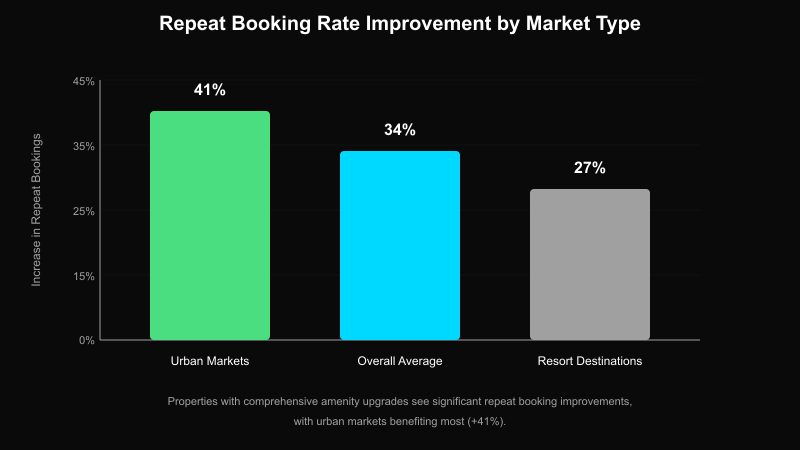
Better amenities = repeat bookings: Properties implementing comprehensive amenity upgrades experienced a 34% increase in repeat booking rates over 6 months
Urban advantage: The improvement is most pronounced in urban markets (41%) versus resort destinations (27%)
Stat
Properties implementing comprehensive amenity upgrades experienced a 34% increase in repeat booking rates over 6 months, with urban markets showing 41% improvement.
Your First Action Step
Getting Started: Inventory your current supplies using a standardized checklist. Identify gaps based on your property type and target demographic.
Focus on items with immediate guest impact and highest ROI.
Investment Overview: What You'll Spend
Before diving into specifics, here's your complete budget picture:
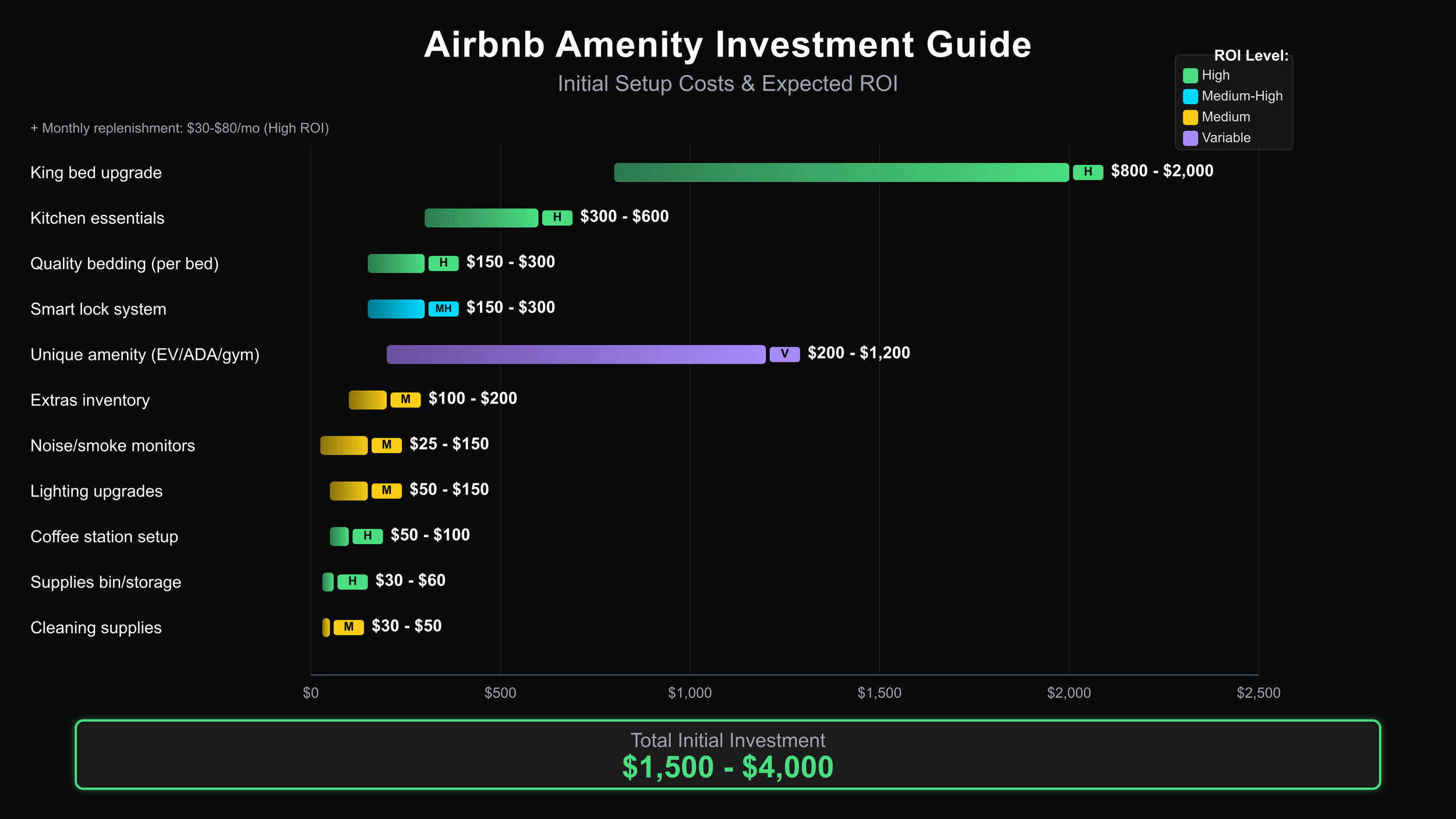
Total Initial Investment Range: $1,500-4,000 depending on property condition and implementation choices.
1. Quality Beds and Pillows: The Foundation of Five-Star Reviews
Sleep quality is the single most important factor in guest reviews, appearing in approximately one-third of all vacation rental reviews.
Superior bedding directly influences ratings, repeat bookings, and overall guest satisfaction.
Key Takeaway
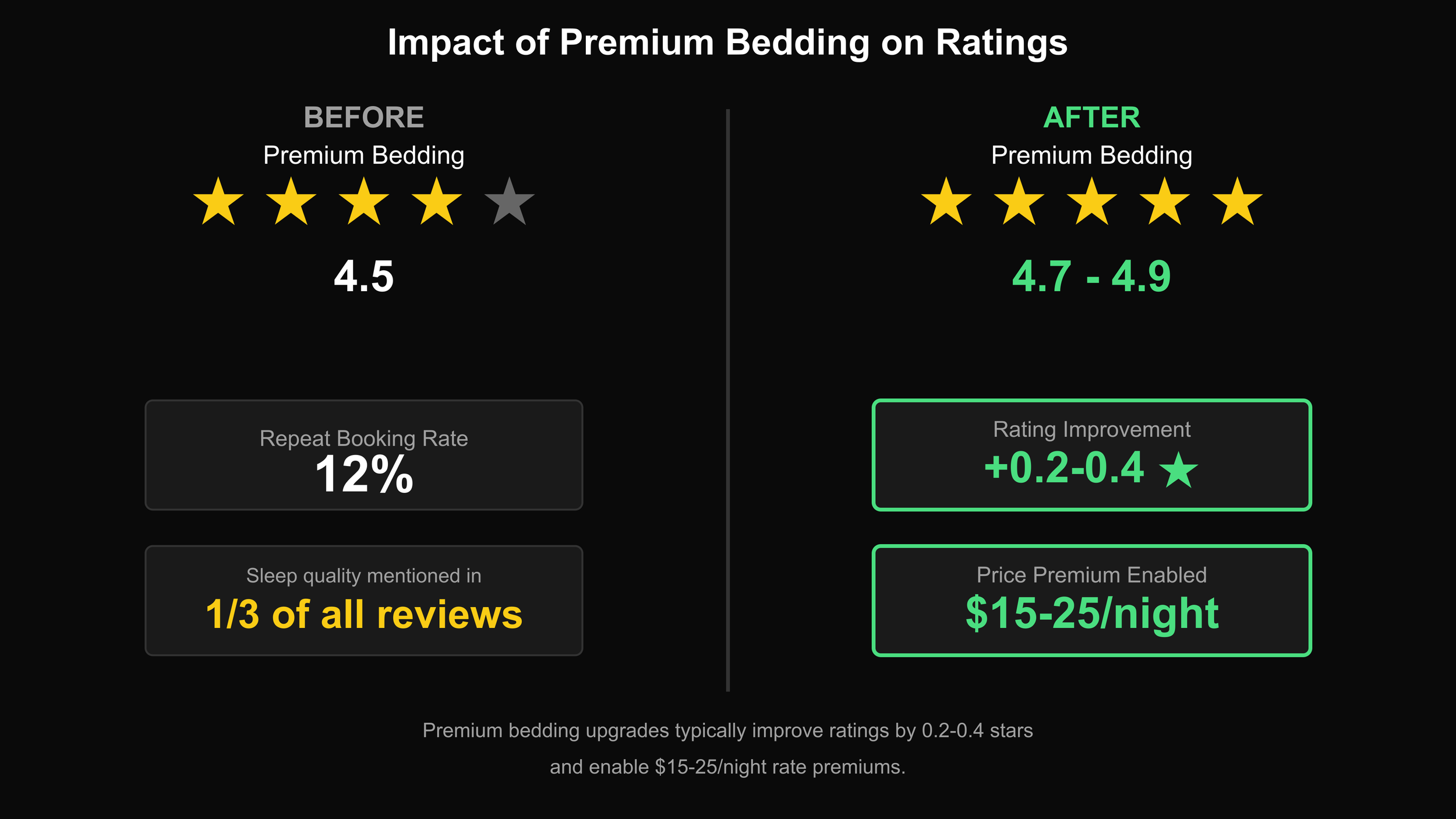
Sleep quality is the single most important factor in guest reviews, appearing in approximately one-third of all vacation rental reviews. Premium bedding upgrades typically improve ratings by 0.2-0.4 stars.
What Makes Hotel-Quality Sleep
Invest in high-quality mattresses meeting these standards:
Firmness: Medium-firm support appropriate for diverse body types
Depth: 10-12 inches with at least 2 inches comfort layer
Replacement cycle: Every 7-10 years for rental properties
Pillow Strategy
Provide multiple pillow options (2-4 per guest) in varying firmness levels:
Soft pillows for stomach sleepers
Medium pillows for back sleepers
Firm pillows for side sleepers
This accommodates different sleep preferences without requiring guest communication.
Complete Your Sleep Setup
Waterproof, hypoallergenic mattress protectors
Quality sheets (minimum 300 thread count; 400-600 preferred)
Adequate blanket options for different seasons
Breathable materials appropriate for local climate
Budget Breakdown
Quality mattresses: $400-1,200 per bed (size-dependent, 2026 pricing)
Pillows: $30-80 each for quality options (purchase 4-6 per bed)
Sheets: $40-120 per set
Mattress protectors: $30-60 each
The ROI You Can Expect
According to vacation rental industry research, hosts who upgrade to premium mattresses and quality bedding typically see rating improvements of 0.2-0.4 stars.
The most significant gains occur in properties previously rated below 4.7 stars.
Sleep quality improvements frequently enable hosts to command rate premiums of $15-25 per night while maintaining or improving occupancy rates.
Tip
Start with the bed that receives the most sleep-related complaints. A phased approach lets you test ROI before investing across all bedrooms.
Where to Start
Implementation Steps:
Evaluate current inventory for replacement needs (check for sagging, staining, or guest complaints)
Prioritize beds generating most sleep-related feedback
Budget for phased replacement if managing multiple properties
2. King Bed: Unlock a Powerful Search Filter
Airbnb introduced king beds as a dedicated searchable filter in 2023, fundamentally changing property discoverability.
This feature reflects growing guest demand for premium sleeping accommodations, particularly among couples and luxury travelers.
Why This Filter Changes Everything
Airbnb's amenity research shows king beds rank among the most frequently searched sleeping arrangements.
The visibility advantage is substantial: guests using the king bed filter see only qualifying properties, dramatically reducing competition.
This targeted exposure translates to:
Higher booking inquiry rates
Improved conversion rates
Premium pricing ability
Investment and Specifications
Cost: $800-2,000 for a quality king mattress and frame (2026 pricing)
Size: 76 inches wide by 80 inches long
Space needed: Minimum 10x12 feet recommended for comfortable movement
This upgrade is particularly essential for hosts in saturated markets where differentiation drives bookings.
Your Action Steps
Implementation Plan:
Measure your bedroom space to ensure adequate clearance
Highlight this feature prominently in your listing title and first paragraph
Monitor inquiries and bookings to measure ROI
Update photos to showcase the king bed as a focal point
3. Professional Lighting and Mirrors: Help Guests Look Their Best
Quality lighting transforms the guest experience, particularly for those preparing for weddings, business presentations, or special events.
Consider the guest who has a crucial job interview via video call, or the wedding attendee applying makeup for ceremony photos.
Inadequate lighting turns a minor preparation task into a source of stress and frustration.
The Science of Good Lighting
Proper grooming requires adequate illumination:
Minimum: 75-100 watts equivalent LED of front-facing light to minimize facial shadows
Color temperature: 5000-6500K (daylight spectrum) for accurate color representation
CRI (Color Rendering Index): 90+ for personal care areas
Mirror Placement Strategy
Position a full-length easel mirror (minimum 24x36 inches) near a window to utilize natural daylight.
Supplement with a clip-on ring light offering:
Adjustable brightness (500-1500 lumens)
Temperature control (3000-6000K range)
This combination allows guests to tailor lighting to their specific needs.
Bathroom Lighting Upgrade
Upgrade bathroom lighting to minimum 75 watts equivalent per vanity.
LED bulbs with high CRI (90+) provide accurate color representation, crucial for grooming tasks.
Tip
Position your easel mirror facing the window to maximize natural light. Add a $30-80 clip-on ring light with dimming capabilities for complete control.
Quick Setup Guide
Implementation Steps:
Position easel mirror facing the window to avoid backlighting users
Add clip-on ring light with dimming capabilities ($30-80)
Replace bathroom bulbs with high-CRI LEDs ($15-30 total)
This combination significantly improves visibility and guest confidence during preparations
4. Coffee Station: Small Investment, Big Impact on Reviews
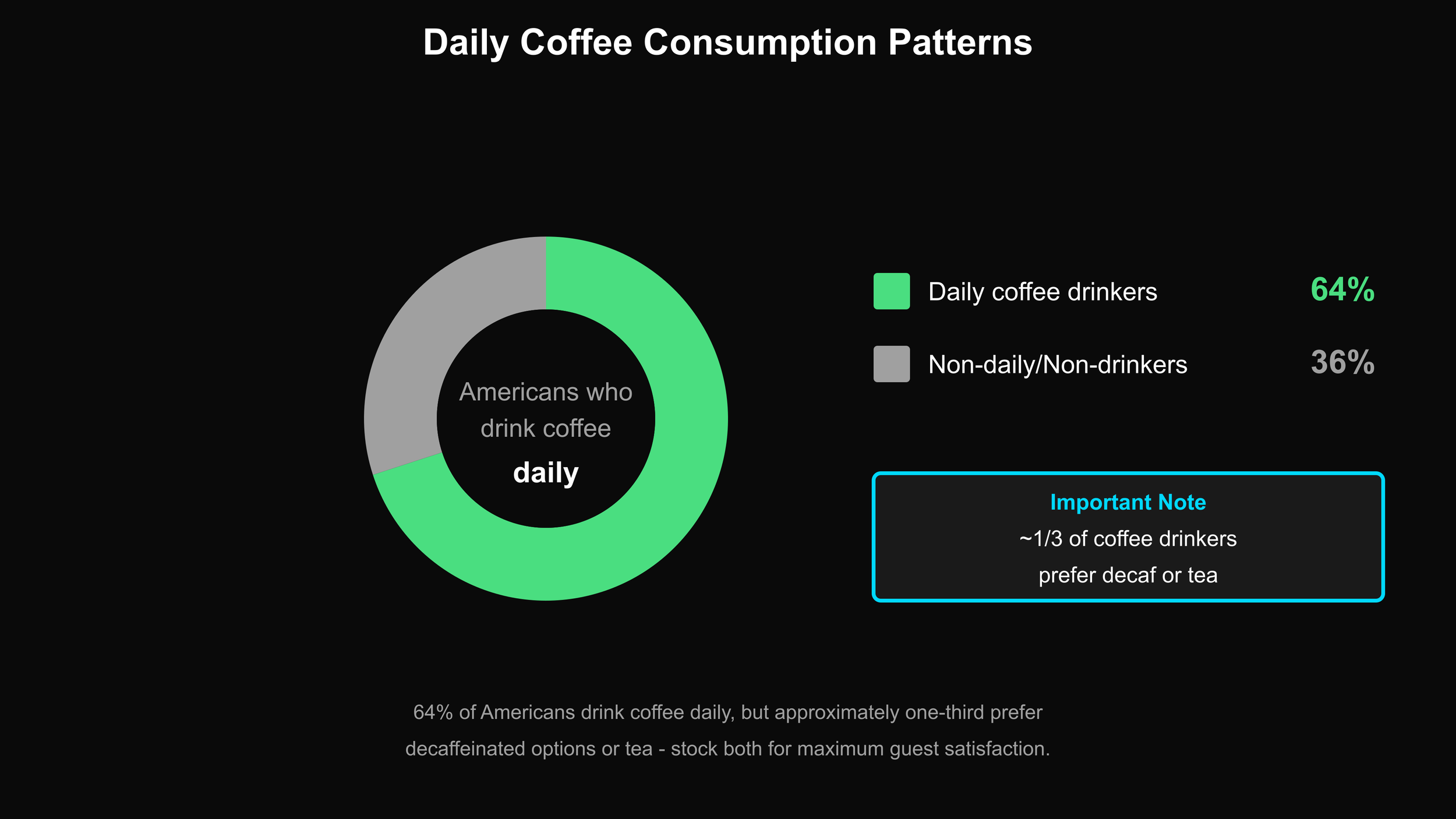
Coffee consumption patterns reveal an important hospitality insight: while 64% of Americans drink coffee daily, approximately one-third of coffee drinkers prefer decaffeinated options or tea, particularly during evening hours.
Properties stocking only regular coffee miss opportunities to fully satisfy a significant portion of guests.
Create a Complete Beverage Station
Use labeled storage containers (8-16 oz mason jars work well). Stock a complete selection:
Regular ground coffee: Medium roast offers broad appeal
Decaffeinated coffee: Essential for evening enjoyment
Tea varieties: 2-3 options (black, green, herbal)
Sweeteners: Sugar and artificial options
Cream alternatives: Dairy and plant-based
Include an electric kettle (1.7L capacity, 1500W for fast boiling) to streamline beverage preparation.
Why This Matters for Reviews
Guest reviews frequently highlight coffee station quality as a memorable amenity.
Vacation rental review analysis shows properties offering diverse beverage options receive positive mentions at rates 40% higher than properties stocking only regular coffee.
How to Set This Up
Implementation Steps:
Organize supplies in labeled jars for easy selection ($15-25 for containers)
Budget $50-100 total: electric kettle ($25-40), two-week supply of coffee and tea ($20-35), storage ($15-25)
Restock weekly to maintain freshness
Business travelers particularly appreciate morning beverage convenience
5. Fully Stocked Kitchen: Enable Longer, More Profitable Stays
A well-equipped kitchen substantially increases property appeal, particularly for families and extended stays.
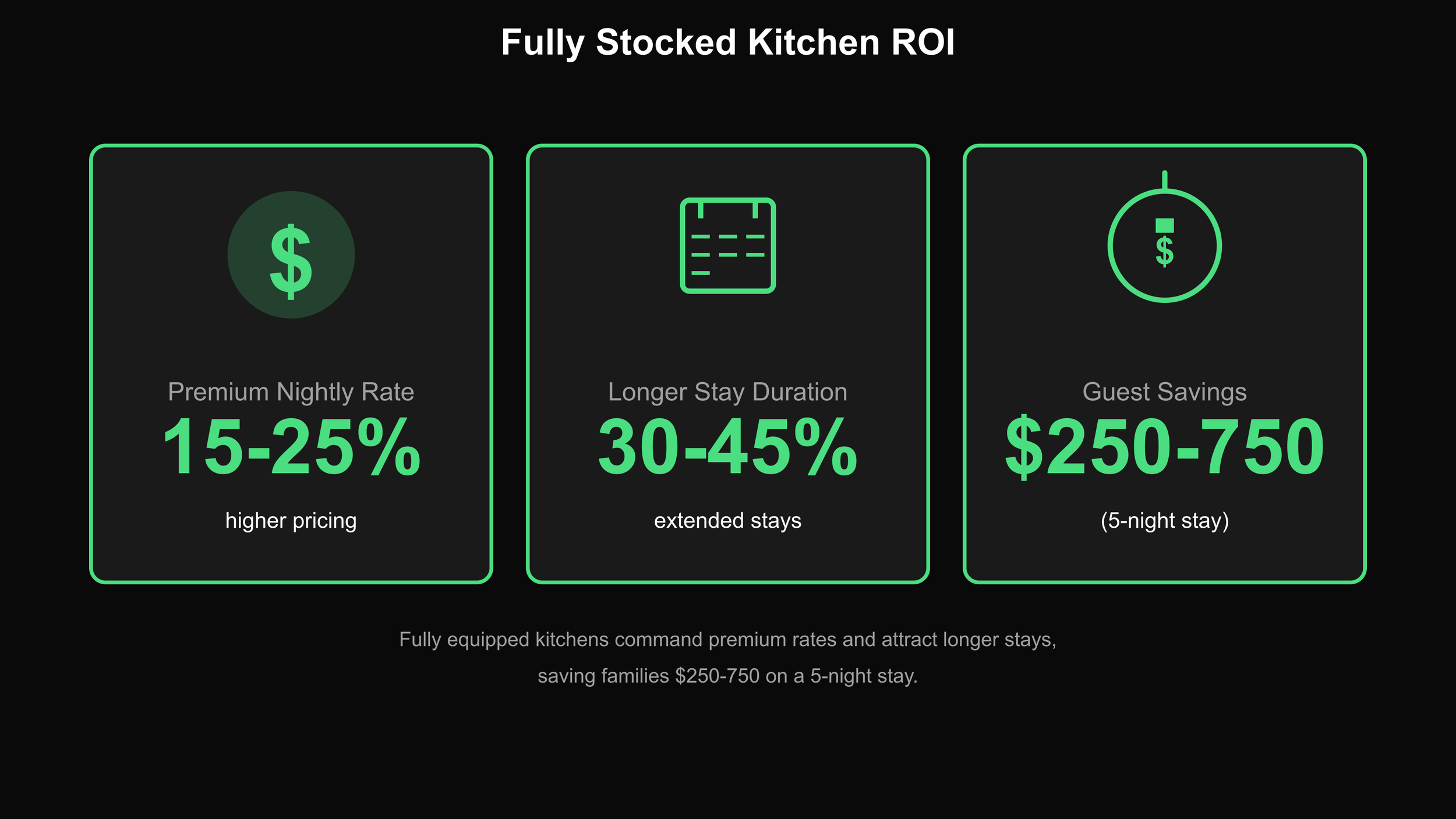
The financial math makes this clear for guests: restaurant dining costs families $50-150 daily, meaning a five-night stay could save guests $250-750 by preparing even half their meals.
The Premium Kitchen Commands
According to vacation rental pricing data from AirDNA and Transparent:
Properties with full kitchens command 15-25% premium nightly rates
Comprehensive kitchen amenities drive 30-45% longer average stay durations
Family travelers show the strongest preference for cooking facilities
Stat
Properties with fully equipped kitchens command 15-25% premium nightly rates and drive 30-45% longer average stay durations.
Essential Kitchen Equipment
Cookware:
10-inch skillet
2-quart saucepan
Stockpot
Bakeware:
9x13 baking dish
Cookie sheet
Cutlery:
8-inch chef's knife
3-4 inch paring knife
Utensils:
Spatula, whisk, ladle, tongs
Basics:
Mixing bowls, cutting boards, measuring tools
Budget $300-600 for complete kitchen setup following commercial kitchen guidelines adapted for vacation rental use.
Making It Happen
Implementation Steps:
Gather essential cooking tools using the checklist above
Photograph your kitchen with styling elements (fresh fruit, coffee setup) to showcase capabilities
Ensure adequate lighting in listing photos
Highlight kitchen amenities in listing description to attract families seeking home-like experiences
6. Smart Tech Suite: Streamline Operations and Impress Guests
Picture the guest arriving at midnight after flight delays - no awkward key exchanges, no waiting around, just a secure code that gets them inside immediately.
Smart technology streamlines operations while enhancing guest convenience and property security.
Keyless Entry: Your Most Valuable Tech Investment
Benefits:
Generates unique access codes for each booking
Eliminates physical key exchanges and coordination delays
Particularly valuable for late arrivals or early departures
Popular brands: August, Schlage Encode, Yale Assure ($150-300)
Security Monitoring That Respects Privacy
Noise and smoke monitors protect property while respecting guest privacy.
Devices like Minut ($150) or budget option Wyze ($25-50) monitor decibel levels (typically alerting above 70-80 dB) without recording conversations, maintaining privacy compliance.
Additional Smart Technology Options
Smart thermostats (Nest, Ecobee, $150-250): Energy management and guest comfort
Video doorbells (Ring, Nest Hello, $100-200): Security and package management
Smart lighting (Philips Hue, $50-150 starter kit): Convenience and energy efficiency
Investment and Returns
Total investment for basic smart tech package: $300-600.
Vacation rental pricing analysis shows tech-enabled properties often command 10-15% premium rates.
Rollout Process
Implementation Steps:
Install keyless entry compatible with Airbnb's integrated access code generation
Add noise and smoke monitors ensuring local privacy law compliance
Clearly disclose monitoring devices in listing to maintain trust and meet platform requirements
7. Organized Supply Storage: Your Operational Backbone
Efficient supply management reduces turnover time and operational stress.
Property management platforms report that well-organized storage systems can reduce cleaning time by 15-30 minutes per turnover.
For high-turnover properties (20+ bookings monthly), this time savings translates to 5-10 additional hours monthly - time that enables faster guest transitions and maximizes occupancy potential.
Storage Solutions by Property Type
Apartments:
Weather-resistant plastic bins (18-27 gallon capacity, $30-60 each)
Store in accessible location
Houses:
Keyless maid's closet for secure, easy access
Essential Supply Inventory
Linens:
2-3 complete sets per bed (sheets, pillowcases)
Towels:
2-3 sets per guest (bath towel, hand towel, washcloth)
Toiletries:
2-3 day supply per guest (travel-sized shampoo, conditioner, soap)
Paper products:
Toilet paper, paper towels, tissues
Maintenance items:
Light bulbs, batteries (AA, AAA, 9V)
Organizing Your System
Implementation Steps:
Designate lockable, weatherproof storage easily accessible for cleaning staff
Create standardized inventory checklist based on average turnover rate
Maintain par levels using labeled containers or shelving systems
Target turnover time: under 3 hours for studio/1BR, under 5 hours for 3BR+
8. Guest-Accessible Cleaning Supplies: Empower Self-Service
Imagine a guest accidentally spilling red wine on your countertop at 10 PM. If cleaning supplies are locked away or hidden, that small accident becomes a source of anxiety.
When guests can immediately address minor spills, they maintain property condition throughout their stay while feeling empowered rather than stressed.
Accessible cleaning supplies strengthen guest accountability and reduce cleanliness complaints.
Smart Presentation Strategy
Use clear, label-less bottles for cleaning products. Generic appearance discourages theft while maintaining functionality.
Stock These Essentials:
All-purpose cleaner
Glass cleaner
Disinfectant wipes
Paper towels
Sponges and scrub brushes
Budget $30-50 monthly for replenishment, varying by occupancy rates and property size.
Setup Recommendations
Implementation Steps:
Transfer products from branded containers to generic spray bottles ($8-15 for set) to reduce theft
Store in easily accessible under-sink storage or designated cleaning closets
Avoid locked storage that creates barriers to use
Monitor which products deplete fastest to optimize restocking schedules
Track guest feedback on cleanliness to adjust inventory as needed
9. Backup Inventory: Prevent Guest Frustrations Before They Happen
Maintaining backup inventory of frequently needed items prevents guest frustrations and reduces negative reviews.
A well-organized extras inventory creates seamless experiences when unexpected needs arise.
Negative reviews frequently cite missing basic supplies or equipment failures as sources of frustration, making proactive inventory management essential for maintaining high ratings.
Essential Extras Checklist
Parking passes: if applicable for your location
Batteries: AA, AAA, 9V for common devices (remotes, smoke detectors)
Phone chargers: USB-A and USB-C cables, universal adapters
Light bulbs: LED bulbs matching existing fixtures (keep 2-3 of each type)
Additional dishware: replacements for broken items
Linens: extra sets beyond minimum requirements
Basic toiletries: emergency backup supplies
Budget $100-200 for initial extras inventory. This investment prevents mid-stay emergency requests and maintains positive guest experiences.
Building Your Inventory
Implementation Steps:
Create master list of commonly requested items based on property type and guest demographics
Organize in labeled bins or drawers accessible to both hosts and cleaning staff
Check inventory regularly for high-turnover properties
Track which items deplete fastest to optimize replacement schedules
10. Stand Out with a Signature Amenity
Unique amenities substantially strengthen property visibility in search results.
Airbnb's algorithm reportedly gives preferential visibility to listings with unique, searchable amenities, particularly when guests use specific filters.
Identify a unique angle that aligns with your property's strengths and local demand.
Option A: ADA Accessibility
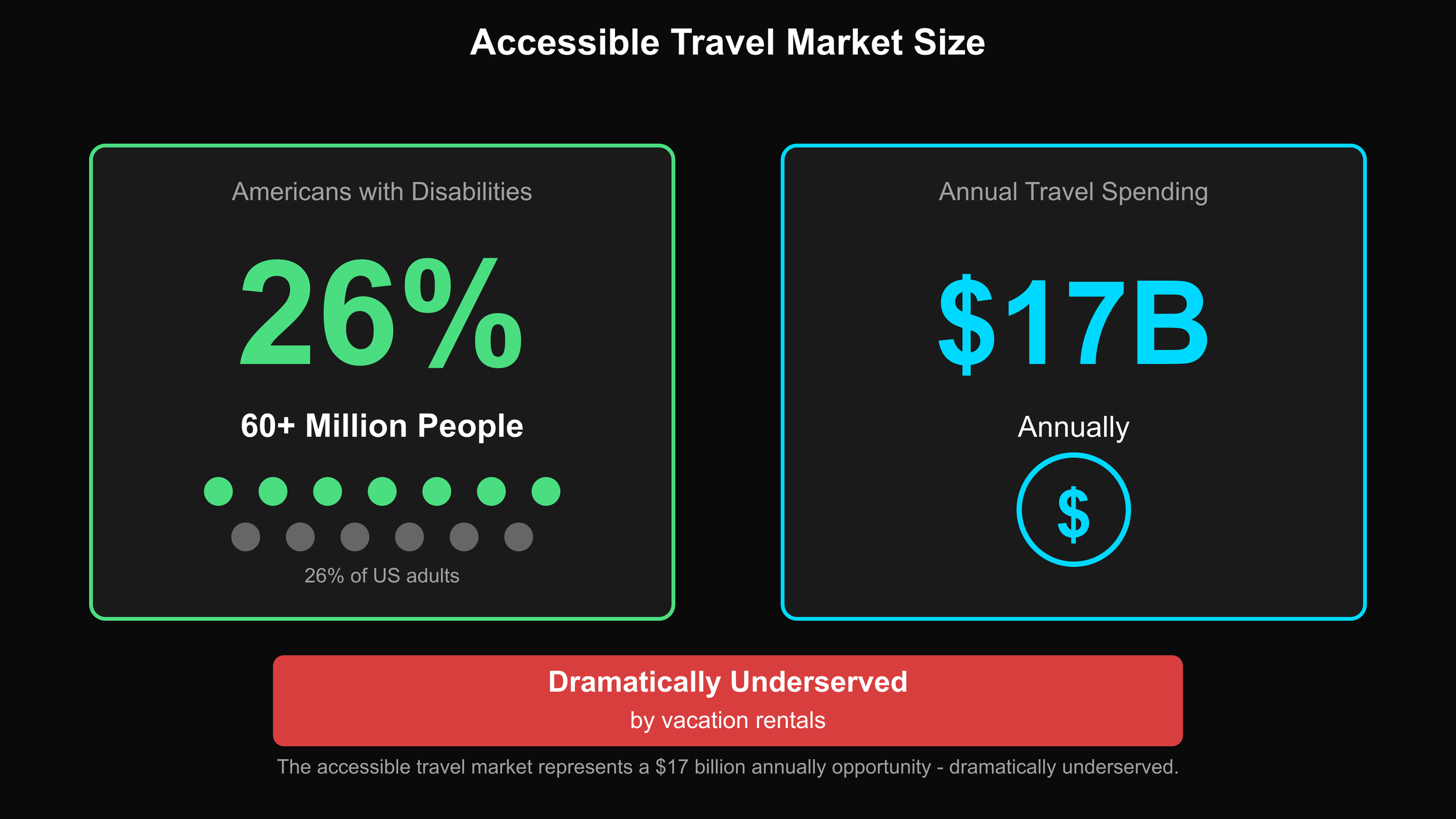
The opportunity: Approximately 26% of U.S. adults have disabilities.
When accounting for families and travel companions, this demographic represents over 60 million Americans generating $17 billion in annual accessible travel spending.
Stat
The accessible travel market represents over 60 million Americans generating $17 billion in annual spending, yet remains dramatically underserved by vacation rentals.
Key features:
Wheelchair ramps with proper slope ratios (1:12 maximum)
Widened doorways (minimum 32 inches clear width)
Roll-in showers with hand-held spray units
Grab bars at appropriate heights
Accessible parking spaces
Option B: Home Gym
The opportunity: Health-conscious travelers appreciate dedicated fitness space, especially for extended stays.
Basic setup ($200-400):
Resistance bands
Yoga mat
Dumbbells (adjustable set)
Exercise ball
Option C: EV Charging
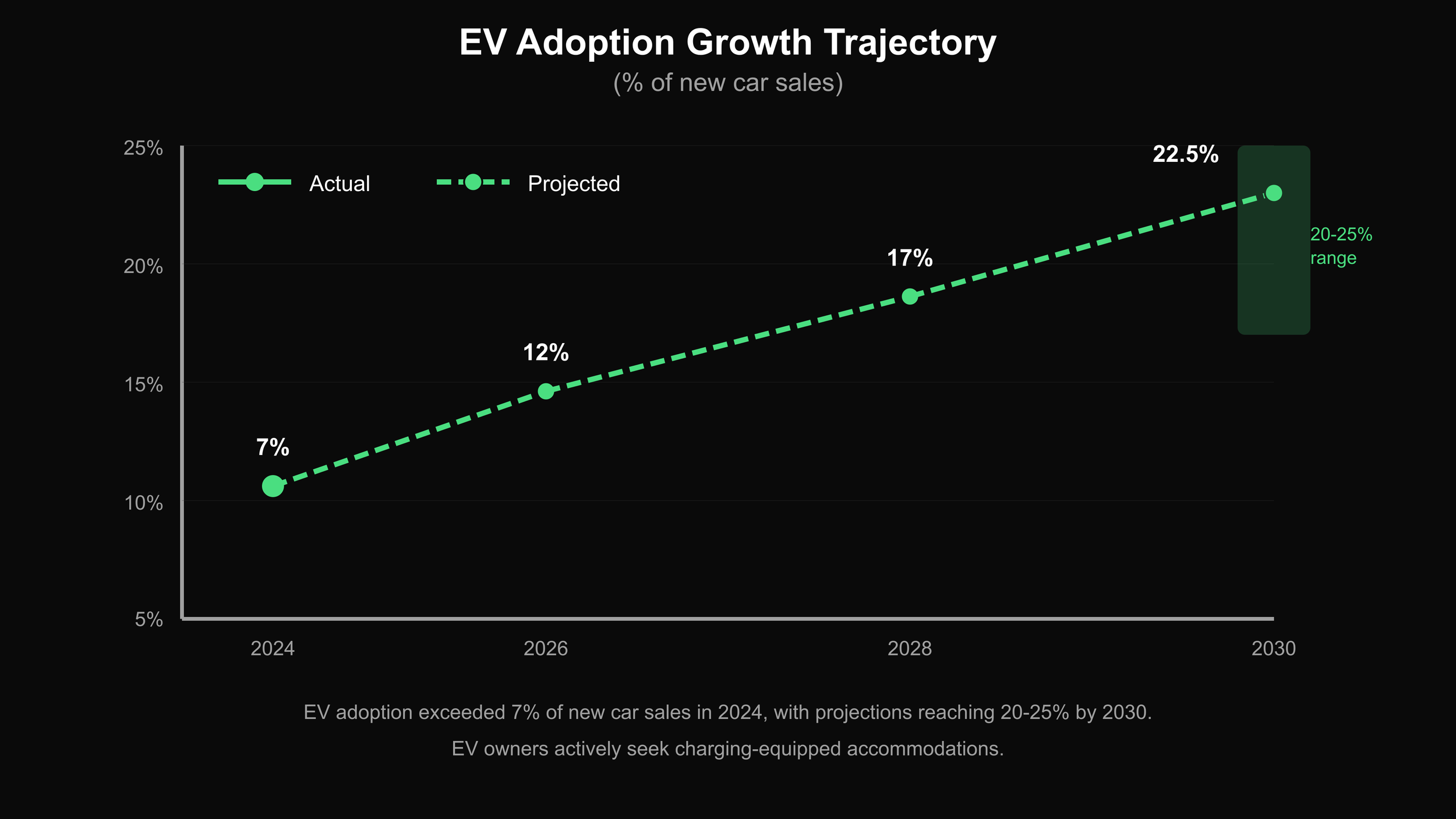
The opportunity: EV adoption exceeded 7% of new car sales in 2024, with projections reaching 20-25% by 2030.
EV owners specifically seek charging-equipped accommodations.
Investment: Level 2 chargers ($500-1,200 installed) provide 25-30 miles of range per hour of charging - adequate for overnight stays.
Option D: Dedicated Workspace
The opportunity: Approximately 35-40% of knowledge workers maintain hybrid or fully remote schedules as of 2024.
Many specifically filter for "dedicated workspace" when searching for stays longer than three nights.
Requirements:
Ergonomic office chair
Desk at standard height (28-30 inches)
Reliable high-speed internet (minimum 50 Mbps download)
Good lighting (task lighting with 3000-4000K color temperature)
Proximity to power outlets
Option E: Pet-Friendly Accommodations
The opportunity: Many travelers struggle to find quality pet-friendly rentals, creating opportunity for hosts willing to accommodate animals.
Strategic Deployment Plan
Implementation Steps:
Evaluate property feasibility and local building codes for structural modifications
Research local demand by analyzing competitor listings and search trends
Calculate potential ROI based on implementation costs versus premium pricing ability (typically 10-25% premium)
Use specific filter-friendly keywords in listings: "wheelchair accessible," "EV charger," "home gym"
Before You Invest: Real-World Constraints to Consider
Sustainable profitability requires addressing four operational realities that many new hosts overlook.
Key Takeaway
Before investing in amenities, verify regulatory compliance, tax obligations, insurance requirements, and operating costs. These factors can consume 30-40% of revenue and determine long-term profitability.
Regulatory Compliance
Research local short-term rental laws before listing. Major cities with restrictions include:
New York City: Minimum 30-day stays in most cases
San Francisco: Registration required, 90-day annual limit
Los Angeles: Registration required
Violations: Fines ranging from $1,000 to $20,000+ depending on jurisdiction
Tax Obligations
Multiple tax requirements apply to short-term rentals:
Occupancy taxes (8-15% typically, varies by location)
Income tax reporting requirements
Business licenses where applicable
Airbnb automatically collects and remits occupancy taxes in many jurisdictions, but hosts remain responsible for income reporting
Recommendation: Consult a tax professional familiar with short-term rental regulations.
Insurance Requirements
Standard homeowner policies typically exclude short-term rental activity:
Specialized short-term rental insurance: $1,000-2,500 annually (varies by property value and coverage)
Airbnb's Host Guarantee: Up to $1M property damage protection (significant limitations and exclusions apply)
Recommendation: Review policy exclusions carefully before relying on platform coverage.
Operating Cost Reality
Budget for substantial ongoing expenses consuming 30-40% of revenue:
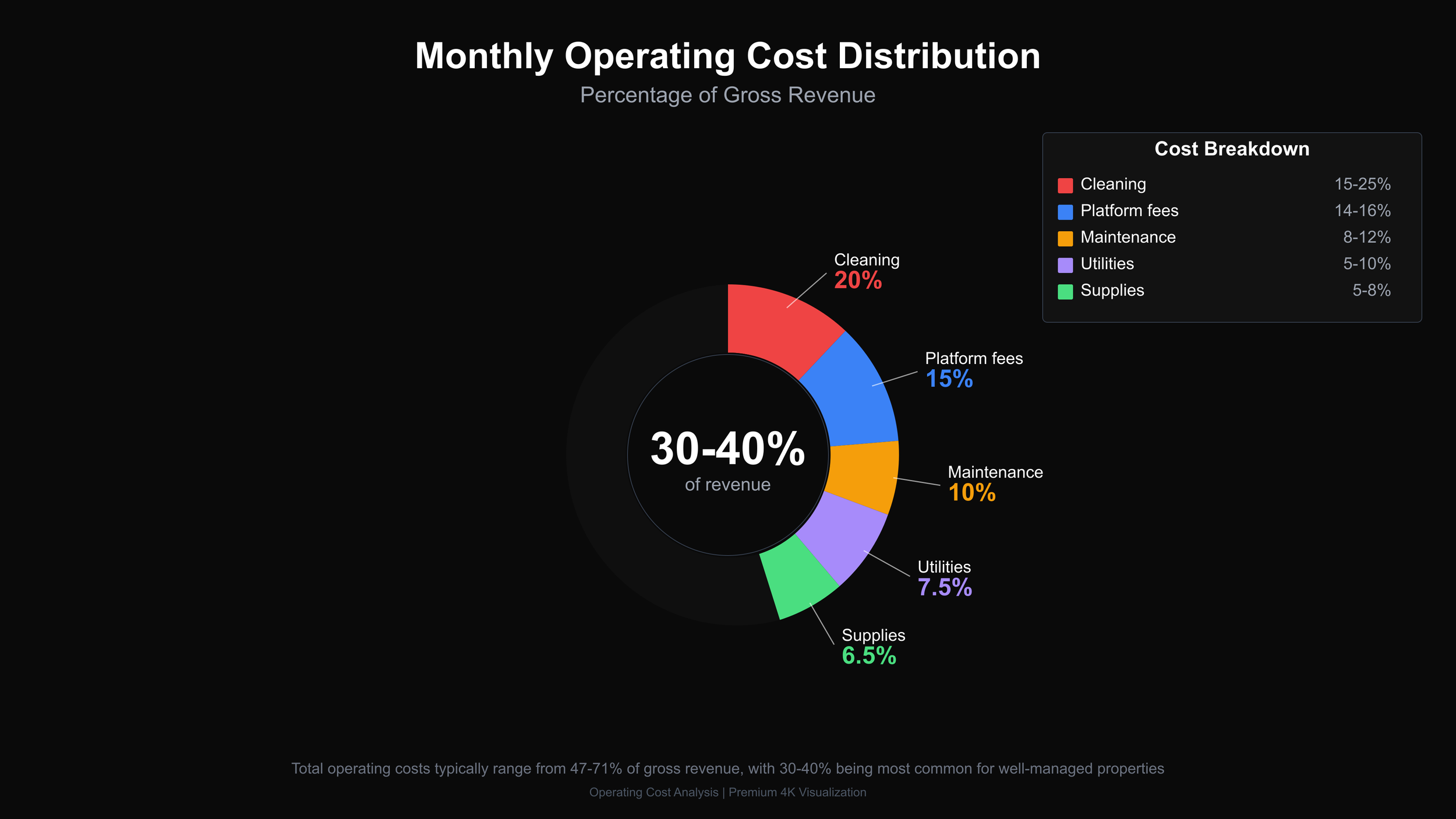
Ignoring these realities transforms potentially profitable hosting into financial losses.
How to Measure Your Progress
Track these four metrics monthly to assess performance and validate your investments.
Metric 1: Occupancy Rate
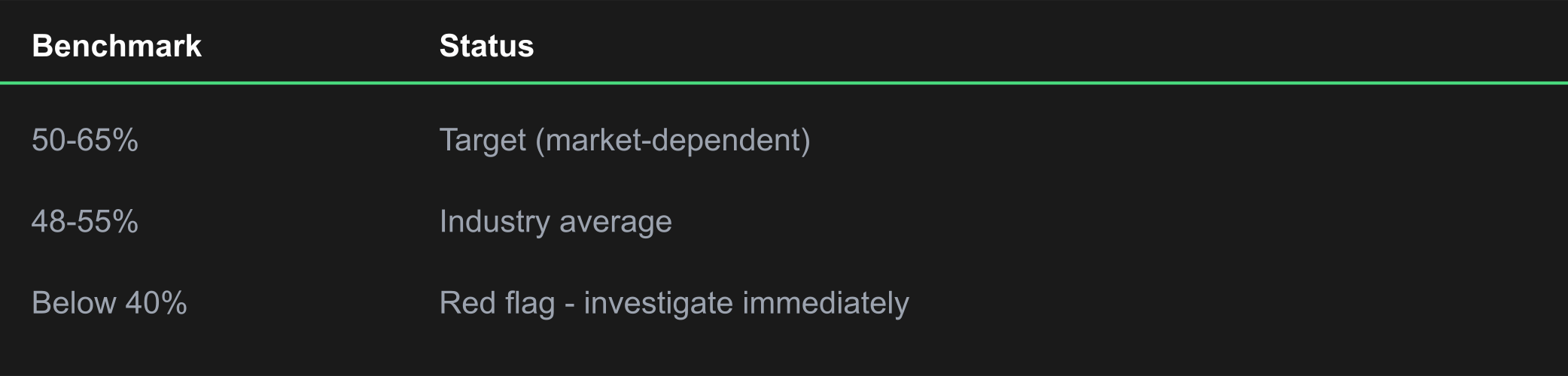
Calculate: (booked nights / available nights) x 100
Metric 2: Average Daily Rate (ADR)
Target: Within 10% of comparable listings in your area
Calculate: Total revenue / number of booked nights
Pro tip: Monitor competitive pricing using tools like AirDNA or PriceLabs.
Metric 3: Review Score
Score RangeStatus4.9+Top 10% of listings4.8-4.89Top 25% - Superhost territory4.7-4.79AverageBelow 4.7Below average - algorithm penalty likely
Critical threshold: Airbnb's algorithm appears to significantly penalize listings below 4.7 stars.
Metric 4: Response Rate
Target: 90% within 24 hours (required for Superhost eligibility)
90% response rate
10+ stays or 100+ nights completed
4.8+ overall rating
Less than 1% cancellation rate
Superhost Benefits:
Algorithmic boost in search rankings
Distinctive badge on listing
Priority customer support access
Exclusive promotional opportunities
Approximately 20% of active Airbnb hosts achieve Superhost status annually.
Diagnostic Framework
If missing multiple targets, diagnose the issue:
70% of cases: Pricing problem
20% of cases: Photo quality
10% of cases: Operational issues
Your Next Steps: Turn Knowledge into Bookings
When a guest messages you to say "This was the most comfortable bed I've ever slept in at a rental" or "Your coffee station made our mornings perfect," you're witnessing the direct result of strategic investment decisions that will attract your next dozen bookings.
The Compound Effect of Excellence
In competitive short-term rental markets, top-performing properties capture disproportionate booking volume.
According to AirDNA's 2024 Vacation Rental Performance Report analyzing 2.1 million properties:
Listings rated 4.8+ stars with comprehensive amenity profiles achieved 28% repeat booking rates
Properties rated 4.5-4.7 stars with basic amenities achieved only 12% repeat bookings
That's a 133% improvement that directly correlates with long-term revenue stability
Your Action Plan
Audit your property against this 10-item checklist
Identify your biggest gaps - where are guests most likely to be disappointed?
Prioritize high-impact, low-cost items first (coffee station, lighting, cleaning supplies)
Track metrics before and after each investment to validate ROI
Update your listing photos and description after improvements - guests can't book what they can't see
Common Mistakes to Avoid
Warning
Common Mistakes to Avoid:
Over-investing in aesthetic upgrades while neglecting functional essentials (guests prioritize comfort over decor)
Implementing all changes simultaneously without measuring individual impact
Focusing solely on visible amenities while ignoring operational essentials like supply management
Copying competitor amenities without considering your specific guest demographic needs
Neglecting to update listing descriptions and photos after improvements
Frequently Asked Questions About Airbnb Amenities
What are the most important amenities for an Airbnb listing?
The most important amenities are quality bedding (appearing in one-third of reviews), a well-equipped kitchen, reliable WiFi, a coffee station, and smart lock entry. Sleep quality is the single most important factor in guest reviews, with premium bedding upgrades typically improving ratings by 0.2-0.4 stars.
How much should I budget for Airbnb amenity upgrades?
Budget $1,500-4,000 for initial amenity investments depending on property condition. This includes quality bedding ($150-300 per bed), king bed upgrade ($800-2,000), kitchen essentials ($300-600), smart lock ($150-300), and coffee station setup ($50-100). Monthly supply replenishment costs $30-80.
Do experience-enabling amenities or luxury finishes increase bookings more?
Experience-enabling amenities (kayaks, board games, fire pits, outdoor grills) influence family booking decisions 2-3 times more strongly than luxury finishes (granite countertops, high-end appliances) when properties are priced similarly. Families mentally rehearse vacation activities when booking, prioritizing memory-creating amenities.
What unique amenities help an Airbnb stand out from competitors?
High-impact unique amenities include ADA accessibility features (serving 26% of US adults with disabilities and $17 billion in annual accessible travel spending), EV charging (EV adoption exceeded 7% of new car sales in 2024), dedicated workspace (35-40% of workers are remote/hybrid), and home gym equipment ($200-400 for basic setup).
Sources
Platform and Official Documentation
Airbnb Newsroom: Amenities Do Matter - Research on most-searched amenities and filter usage
Airbnb Help Center: Superhost Program Requirements - Official eligibility criteria and benefits
Airbnb Help Center: Host Response Rate Guidelines - Response time requirements and measurement
Airbnb Help Center: Host Guarantee Program - Property damage protection details
Industry Research and Data Analytics
Guesty: Airbnb Amenities For More Guests - 2024 research on amenity impact on repeat bookings
Guesty: The Host Checklist to Maximize the Airbnb Experience - Comprehensive amenity recommendations
Guesty: Airbnb Self Check-In Guide - Smart lock implementation strategies
PriceLabs: Vacation Rental Inventory Checklist - Standardized supply management system
AirDNA - Market data and vacation rental benchmarks (2024-2025)
AirDNA: 2024 Vacation Rental Performance Report - Analysis of 2.1 million properties
Transparent - Vacation rental pricing trends and analytics
Business and Strategic Guidance
Forbes: Top 5 Tips For Starting Your Airbnb Business - August 19, 2024
Forbes Personal Shopper: Guest Room Essentials - Quality benchmarks for guest accommodations
Forbes: Vacation House Rules for Summer Rentals - Guest perspective on essential amenities
Government and Statistical Data
U.S. Department of Justice: ADA Standards for Accessible Design - 2010 accessibility requirements
CDC: Disability and Health Data System - Disability statistics and demographics
U.S. Department of Energy: Alternative Fuels Data Center - EV adoption rates and charging infrastructure data
U.S. Bureau of Labor Statistics - Remote work trends and employment data (2020-2025)
Open Doors Organization: Accessible Travel Market Research - $17 billion annual accessible travel market analysis
Consumer Behavior and Market Research
National Coffee Association: Annual Coffee Drinking Trends Report - Coffee consumption patterns and preferences
Technical Standards and Specifications
Illuminating Engineering Society (IES) - Lighting standards, CRI, and color temperature specifications
International Sleep Products Association (ISPA) - Mattress replacement guidelines and safety standards
NSF International: Commercial Kitchen Guidelines - Adapted for vacation rental use
Further Reading
Forbes: Airbnb Builds Trust With These 3 Radical Design Choices - Platform design philosophy
Forbes: Airbnb's COVID-19 Cleaning Protocols - Enhanced cleaning standards
About the Author
Sean Rakidzich is an STR (Short-Term Rental) Expert specializing in vacation rental optimization, property management strategies, and host education. With extensive experience in the short-term rental industry, Sean helps property owners maximize their returns through data-driven amenity selection, operational efficiency, and guest experience design.
About Sean Rakidzich
© 2026 Sean Rakidizch. All rights reserved.
Disclaimer: This article provides general information for educational purposes. Hosts should consult local regulations, tax professionals, and insurance advisors before implementing recommendations. Market conditions, regulations, and pricing vary by location and change over time.