The 90 Days That Pay for the Other 275: An Airbnb Peak Season Playbook
TL;DR
Sean Rakidzich finds that 90 days of peak season generate 60–70% of annual revenue in most Airbnb markets.
The article compares the impact of underpricing peak season to the cost of not making money during slow months, emphasizing the leverage of peak days.
Sean recommends weekly price reviews during peak season and adjusting rates based on booking trends and competitor activity. By Sean Rakidzich, 155-property operator. Strategy session at rakidzich.com/book.
Key Facts
| Item | Value | Source |
|---|---|---|
| In most short-term rental markets, about | 90 days | — The Revenue Manager's Handbook, Chapte |
| The two to three weeks before peak act as a ramp-up phase that sets the tone for | see source | — The Revenue Manager's Handbook, Chapte |
| Sean reviews every open date in every property every | 7 days | — The Revenue Manager's Handbook, Chapte |

Photo: Terabass via Wikimedia Commons, CC BY-SA 3.0
- 90 days of peak season generate 60–70% of annual revenue in most markets.
- A soft ramp-up (2–3 weeks before peak) triggers software price-cutting that compounds through the whole peak.
- Review every open date weekly during peak — never leave a date unattended for more than 7 days.
- Peak season is not one decision. It is 45 decisions made week by week across the high-demand window.
Peak season is where I make or lose the year. Most hosts leave 20 to 30 percent of their possible peak revenue on the table. They do not mean to. They just price the season wrong. I used to be one of them. Here is what I learned to do instead.
The mistake I kept making every summer
For my first three summers I priced peak season like this. I looked at last year. I added 15%. I called it my peak price. I set it once. I left it alone.
That plan has a problem. The market never matches last year. Demand shifts. New listings open. Old ones close. A hotel next door renovates. A highway closes. Everything moves. Last year's 15% bump was almost never the right answer.
I realized I was treating peak season as a single decision. Peak season is not one decision. It is forty-five decisions, made week by week, across the high-demand window.
Peak season premiums should run 20 to 40 percent above your base price. Within that window, weekends carry an additional 25 to 50 percent premium above your base, and Thursdays warrant a 10 to 20 percent markup because they anchor the weekend booking. Weekdays are only as valuable as the weekends they are associated with — a strong Thursday pushes the whole weekend's revenue up.
The ramp-up nobody talks about
Peak season starts before peak season. This is the part new hosts miss. The two to three weeks before your high-demand window are the ramp. They set the tone for everything that follows.
Here is why. If you come into peak with a soft calendar, pricing software panics. It drops your rates. Guests book the cheap dates. Your first weekends of peak sell at low prices. Those bookings show up on your calendar as “sold out” and stop you from pricing up. You end peak at last year’s level, not this year’s.
The fix is to enter the ramp strong. A strong ramp means bookings coming in at healthy rates for the two weeks before peak. This signals confidence to both Airbnb’s algorithm and to guests looking ahead. Your calendar enters peak dressed for the occasion.
Shoulder season — the two to three weeks on either side of your peak window — should be priced 10 to 15 percent below peak rates, not at slow-season discounts. That distinction keeps the ramp strong and prevents software from reading soft shoulder bookings as a signal to drop peak rates prematurely.
My peak rule: never leave a date unattended for more than 7 days
Once peak starts, I check prices weekly. Not monthly. Not once. Every Monday I look at every property, every open weekend in the window, and I make a call. Raise, hold, or cut.
Most hosts think raising prices during peak is greedy. It is not. It is responsive. If a weekend is three weeks out and already 50% booked, that is a signal. Raise it. If a weekend is three weeks out and still empty, that is a different signal. Do not cut yet. Check views first.
When competitors in your market are 70 percent or more booked out, raise your prices 5 to 10 percent. When 50 percent or more of your competitive set is still empty at similar lead time, lower 3 to 5 percent. Those are the two calibration moves. Everything else is noise.
The pricing game my students play
To train hosts on peak, I built a simple game. Look at one open weekend 4 weeks out. Ask yourself: if I had to bet my own money on whether this weekend sells out, would I bet yes or no?
If yes, your price is too low. If no, your price is probably right. If you are not sure, your price is right but your listing needs help. Views or conversion.
This is the muscle peak season builds. Reading your own calendar like a betting line. I wrote about it in the book:
"You can look at competitors, hotels, pricing, and software to estimate what you could charge. Let’s create an example: You have a weekend that sells for $600 per night. You are booked nearly always at this price. $600 is your baseline."
— The Revenue Manager's Handbook, page 148
Once you know your baseline, everything above it is your peak premium. The question is not whether to raise. The question is by how much.
The 90 days that pay the year
In most markets I run, about 90 days of the year generate 60 to 70 percent of the revenue. That means every dollar left on the table during peak is three dollars I need to make back in the slow months. The math is brutal.
Getting peak right is not about being greedy. It is about realizing how much leverage these 90 days have on the other 275. Once you see the leverage, you stop treating peak season like a set-it-and-forget-it decision.
What I wish I knew on year one
Peak season is the most expensive time to be lazy. One bad week can cost more than a month of slow season. That sounds dramatic. It is not. It is the math of leverage. A 20% underpriced weekend in July costs more than a fully-booked week in February.
This is why I now run weekly peak reviews across my whole portfolio. It is the highest-return hour of my week.
How to Configure Dynamic Pricing Before Peak Season Starts
Dynamic pricing tools do not know when your peak season is. They infer it from booking pace and market data. That inference is almost always late. By the time a tool sees enough booking acceleration to raise your rates aggressively, the guests who plan furthest ahead — and pay the most — have already booked. You need to pre-configure your pricing before the algorithm catches up.
The setup I use comes from the framework in the dynamic pricing guide. A 2025 study tracking 541 listings across 34 countries measured a 36% revenue increase after switching from static to dynamic pricing, according to StaySTRA. The industry benchmark is 20 to 40% annual improvement. Those numbers assume you are using the tool with a configured seasonal strategy — not running it on factory defaults.
Ninety days before peak season, I set floor prices manually for every weekend in the window. Peak season premiums should run 20 to 40% above base price. Within peak, weekends carry an additional 25 to 50% premium above base. Thursdays warrant a 10 to 20% markup because they anchor the weekend booking pattern and often book first.
PriceLabs charges $19.99 per listing per month flat and connects to 150+ PMS and channel manager integrations. For a portfolio of 3 or more listings, granular control over seasonal floors is worth the cost many times over. Leaving the tool on default settings through peak is the same as leaving your peak revenue on the table for competitors.
Length-of-Stay Rules That Protect Peak Revenue
Peak season is when minimum-stay rules pay the biggest dividend. A guest booking a 4-night peak stay is worth more than two guests booking 2-night stays for the same dates — not just in nightly rate but in turnover cost, cleaning time, review risk, and operational complexity. Longer stays produce fewer check-ins, less wear, and more predictable operations.
As I detail in the complete pricing strategy guide, length-of-stay discounts of 10 to 15% for weekly stays and 25 to 30% for monthly stays attract lower-maintenance guests with longer bookings. During peak season, these discounts lock in your best dates early. A guest who books the first two weeks of your peak window at a 10% weekly discount secures your calendar and removes the risk of those dates sitting empty.
Airbnb highlights 10% or greater discounts in search results. That visibility boost during peak season — when search volume is highest — can fill your calendar faster than any price drop. The guest sees the discount and the saving. You see a full calendar at a rate that still clears your peak-season floor.
The 90 days of peak season that generate 60 to 70% of annual revenue in most markets are not protected by luck. They are protected by rule sets built before the season starts. Minimum stays, floor prices, length-of-stay discounts, and ramp-up pricing all need to be in place before the first peak-season guest searches your market. The hosts who configure in advance capture the full premium.
Key numbers behind this story
All stats below are from the source book, verified from the original manuscript.
- In most short-term rental markets, about 90 days of peak season generate 60 to 70 percent of annual revenue — making peak pricing the single highest-leverage operational decision of the year. — The Revenue Manager's Handbook, Chapter 10 (p. 99)
- The two to three weeks before peak act as a ramp-up phase that sets the tone for the entire window — a soft ramp triggers price-cutting by software that compounds through the whole peak. — The Revenue Manager's Handbook, Chapter 16 (p. 123)
- Sean reviews every open date in every property every 7 days during peak, and makes one of three calls: raise, hold, or cut. Never leave a date unattended longer than a week during peak. — The Revenue Manager's Handbook, Chapter 10
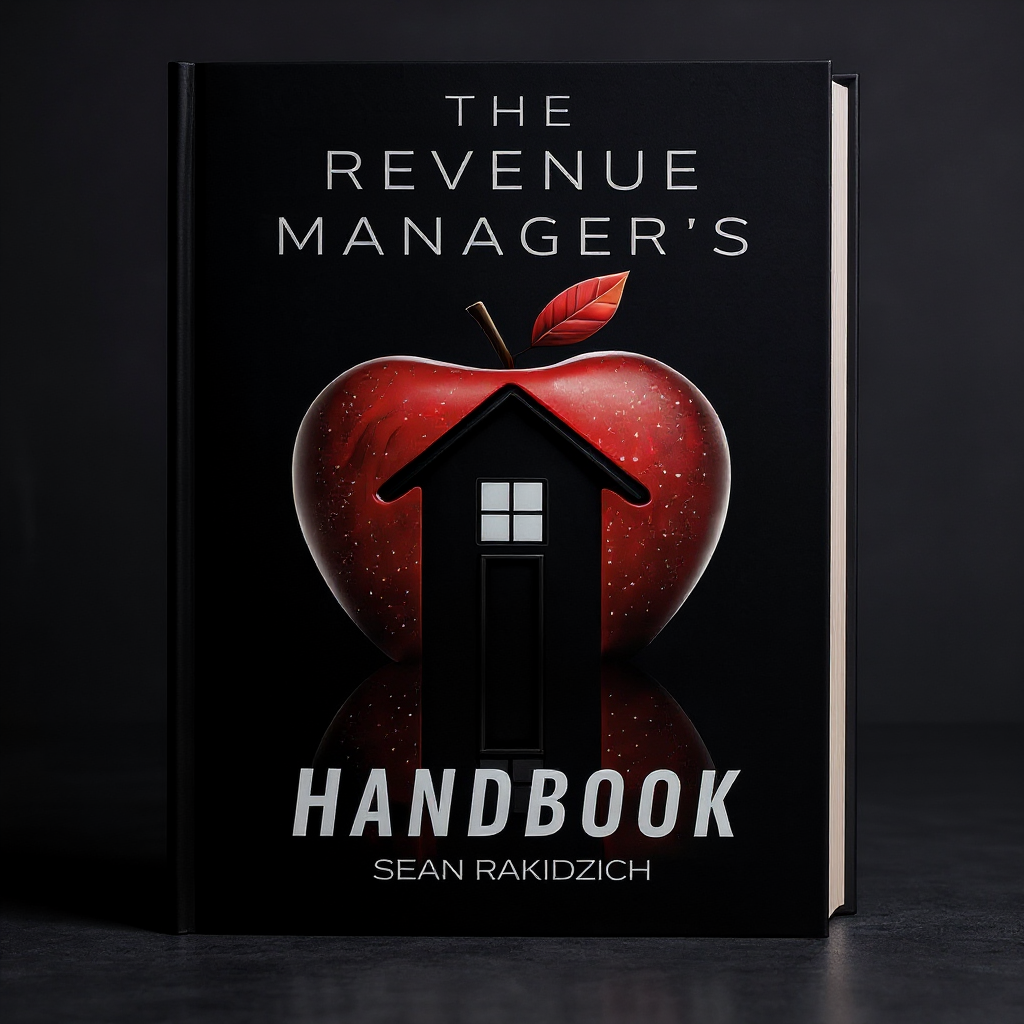
Get The Revenue Manager's Handbook
Sean Rakidzich's complete system for Airbnb pricing, revenue management, and scaling — available now.
Get the BookFrequently Asked Questions
How much of Airbnb annual revenue comes from peak season?
In most short-term rental markets, about 90 days of peak season generate 60 to 70 percent of annual revenue. That makes peak pricing the single highest-leverage operational decision of the year. Every dollar left on the table during peak requires three dollars of slow-season revenue to replace.
What is the peak season ramp-up strategy for Airbnb?
The two to three weeks before your high-demand window set the tone for the entire peak. If your calendar enters peak soft, pricing software panics and drops your rates. The fix is to enter the ramp with bookings coming in at healthy rates, which signals confidence to both the Airbnb algorithm and forward-looking guests.
How often should I review Airbnb prices during peak season?
Every 7 days at minimum. Sean Rakidzich reviews every property's open weekend dates every Monday during peak and makes one of three calls: raise, hold, or cut. Never leave a date unattended longer than a week during peak season. A 20% underpriced weekend in July costs more revenue than an entire slow-season month.
What is the peak pricing baseline strategy?
Find your baseline — the rate where your listing books reliably at healthy pace. Once you know that baseline, everything above it is your peak premium. The question is not whether to raise during peak but by how much and at what lead time. Weekly reviews let you capture demand as it builds rather than guessing in advance.
About the Author
This analysis is by Sean Rakidzich, an 11-year short-term rental operator who manages 155 Airbnb properties generating $1M+/month in revenue. Sean has trained 5,000+ students across 76 countries with $1.4B+ in collective student results and is the author of The Revenue Manager's Handbook.
For Sean's framework on 90 days of peak season generate 60–70% of annual revenue in most Airbnb markets, see his full content library at rakidzich.com or book a 30-minute strategy session at rakidzich.com/book.
Sources & Resources
Sean Rakidzich
- The Revenue Manager's Handbook — Available in Paperback & Hardcover
- Airbnb Automated YouTube — 300,000+ subscribers
- Cracking Superhost Course Suite — RE:Algorithm, Target Price, Pricing Masterclass