The Orange House: What One Weird Listing Taught Me About Every Airbnb Market
TL;DR
Sean Rakidzich finds that every Airbnb market splits into three distinct price pools—cheap, middle, and luxury—with minimal crossover between guests.
The Orange House, a listing that initially defied his pricing strategies, demonstrated that markets are not one pool but three, with guests shopping in different "stores" even within the same city.
Sean recommends identifying which pool your listing belongs to and committing to that tier, as the fix for a stuck listing is identity, not price. By Sean Rakidzich, 155-property operator. Strategy session at rakidzich.com/book.
Key Facts
| Item | Value | Source |
|---|---|---|
| Airbnb markets split into three price tiers with near-zero crossover between the | see source | — The Revenue Manager's Handbook, Chapte |
| Pricing software applies asymmetric pressure : it lifts cheap listings during de | see source | — The Revenue Manager's Handbook, page 1 |
| Sean repositioned the Orange House from middle tier to luxury tier over | 90 days | — The Revenue Manager's Handbook, Chapte |

Image via Dreamstime.com
- Every Airbnb market splits into three price pools — cheap, middle, and luxury — with near-zero crossover between guests.
- The middle tier is the hardest: software lifts cheap listings into it during peaks while luxury stays protected.
- If your listing is stuck, the fix is identity, not price — pick a tier and commit to it.
- The Orange House went from problem listing to top-5 performer in 90 days after moving up to luxury.
I call it the Orange House. For three straight years it refused to behave like my spreadsheet said it should. I fought with it. I changed prices. I changed photos. Nothing worked the way I thought it would. Until I figured out why. Then it changed how I see every Airbnb market.
The listing that broke my model
I had a system. I priced low when demand was soft. I priced high when demand was strong. This worked on most of my properties. It did not work on the Orange House.
When I dropped the price, bookings did not come in faster. When I raised the price, they did not slow down. The Orange House seemed to have its own rules. I thought maybe it was bad luck.
It was not bad luck. It was a signal I had not learned to read yet.
The thing no one told me about markets
I used to think a market was one pool. Guests come in. Listings fill. If you are cheaper than the guy next door, you book first. If you are more expensive, you wait.
The Orange House taught me something different. A market is not one pool. It is three.
There is a cheap pool. A middle pool. A luxury pool. Guests do not mix between the pools. A guest looking for a $70 night does not look at $300 listings. A guest looking for a $300 listing does not look at $70 ones. They are shopping in different stores, even if every listing is in the same city.
I saw this pattern repeated across 155 properties in 8 cities. Every market had the same three pools. The names on the map changed. The structure did not.
The thresholds that separate a workable market from a dead one hold across every pool. A viable market runs at RevPAN above $100 per night, occupancy above 65 percent, and annual supply growth below 20 percent. Nashville clocks in at $148 RevPAN with 71 percent occupancy. Scottsdale runs $162 RevPAN at 68 percent. Savannah runs $131 at 74 percent. When a city's supply growth crosses 30 percent, the pool structure collapses into a price war and the middle pool disappears first.
What pricing software quietly broke
Pricing software pushes listings up when events happen. That is the feature. On a Super Bowl weekend, every listing moves higher. Even the cheap ones. Cheap listings can suddenly charge hotel-level rates because guests are desperate.
But this is where it gets interesting. Pricing software does not push luxury listings down on low weekends. Why? Because luxury guests are not price-sensitive. They still want the fancy place. They pay whatever the fancy place asks.
I wrote this in the book because it changed my whole model:
"Now, with the introduction of pricing software, markets are buoying up for events, allowing cheap listings to capture higher rates in times of high demand. But it doesn't put negative pressure on luxe listings because when the entire supply of an area has an oversized demand, guests will still book the most expensive listings based on necessity alone. (Imagine having Super Bowl tickets and you have to look for an Airbnb.)"
— The Revenue Manager's Handbook, page 117
So what happened with the Orange House
The Orange House was sitting in the middle pool. Not cheap. Not luxury. Middle is the hardest place to be. The middle pool gets squeezed. Cheap pools rise to fight for middle guests. Luxury pools stay protected. The middle has competition on both sides.
Once I understood this, I knew what to do. I had two choices. I could pull the Orange House down into the cheap pool. Or I could push it up into the luxury pool. But I could not leave it in the middle and expect anything to be easy.
I chose up. New photos. Better furniture. Higher baseline rate. It took 90 days. But the Orange House stopped being a problem. It became one of my best-performing listings.
Operating costs run at roughly 33 percent of gross income across a well-run short-term rental portfolio. When you move a listing into the luxury tier, that cost ratio stays the same — but the gross income it is a percentage of goes up. The margin improvement is real and immediate.
Why this matters for your listing
If your listing is stuck, ask yourself one question. Which pool am I in? If you are in the middle, you are in the hardest place. The fix is almost never price. The fix is identity. Pick a side.
The Orange House taught me that a market is not a fair fight. Cheap listings get help from software. Luxury listings get help from guest psychology. The middle gets neither.
I teach this three-pool framework to students in 43 countries. The pool structure holds in coastal beach markets, mountain ski towns, and urban apartment markets alike. Pick your pool deliberately. Do not let your listing drift into the middle by accident.
One underwriting rule sits beneath all three pools. Rent plus operating costs must stay below 65 percent of the floor revenue — the worst listing that still gets booked in slow season. If the ugliest booked listing in your market earns $2,700 in January, your break-even expenses cannot exceed $1,755 per month. The worst listing that still gets booked is your revenue floor. It sets the underwriting ceiling for every pool, not just the cheap one.
How to Read Market Saturation Before It Reads You
The three-pool structure I found in the Orange House's market shows up in every city I have operated in. But the pools are not static. They shift as supply grows. A market that had healthy separation between the cheap, middle, and luxury tiers two years ago can compress all three pools together when new listings flood in — and when that happens, the middle tier gets squeezed hardest.
As I cover in the market saturation guide, saturation is measurable, not a feeling. The two quantitative signals are occupancy below 55% and supply growth above 25% per year. US average Airbnb occupancy rate sat at 54.3% in 2025, down from approximately 57% in 2024. Supply growth slowed to 4.5% in 2025, down from 9.5% in 2024. That deceleration is the first sign the market is finding its floor.
The Orange House's market was not uniformly saturated. The cheap tier was drowning — too many listings chasing the same budget guests. The luxury tier was protected — high barriers to entry kept competitor count low. The middle tier was getting eaten from below by software that lifted cheap listings up during demand spikes. Understanding which tier your listing lives in is the first diagnostic step before any pricing change.
Secondary cities are less saturated than primary markets. Most amateur hosts chase famous cities and leave secondary markets underserved. Fewer than 50 reviews per top listing in a market means you can establish dominance faster — there is no entrenched competitor to fight. That signal — low review counts among the top performers — is worth more than occupancy data when evaluating a new market entry.
The Five Filters That Tell You Whether a Market Is Worth Entering
After scaling to 100+ properties across 8 cities, I use the same five-filter test on every market I consider. Every market where I have watched others fail skipped at least one of these filters. The filters do not predict success. They eliminate the worst mistakes before you sign a lease or buy a property.
Filter one: RevPAN threshold. Market RevPAN for your bedroom count must be above $100 per night. Below that, margins get too thin when rent runs $1,500 to $2,500 per month. Filter two: occupancy floor. Market occupancy must average above 65% for your bedroom count. Filter three: supply growth check. Annual supply growth must be under 20%. Markets above 30% are flooded with new competitors who will compress your revenue within 12 months.
As detailed in the best cities for Airbnb arbitrage rankings, Gatlinburg, Tennessee leads US rental arbitrage profitability at +$698 per month margin after rent and operating costs in 2026. San Antonio, Austin, and Myrtle Beach now lose money on arbitrage after operating costs. The rent-to-revenue ratio required for healthy margins is 1:3 or better.
Filter four: regulatory stability. Verify local STR ordinances before committing. One regulatory change can eliminate a market overnight. Filter five: demand-side growth. A market with 20% supply growth but 30% tourism growth is still healthy — demand is outpacing supply. The Orange House's market failed filter three at the time I bought it. That was the real root of its three-year underperformance. The listing was not the problem. The market signal I missed was.
Key numbers behind this story
All stats below are from the source book, verified from the original manuscript.
- Airbnb markets split into three price tiers with near-zero crossover between them — a guest shopping the cheap tier does not consider the luxury tier even in the same city. — The Revenue Manager's Handbook, Chapter 14 (p. 115)
- Pricing software applies asymmetric pressure: it lifts cheap listings during demand spikes but does not lower luxury listings during demand troughs, compressing the middle tier from both sides. — The Revenue Manager's Handbook, page 117
- Sean repositioned the Orange House from middle tier to luxury tier over 90 days using new photos, upgraded furniture, and a higher base rate — turning a problem listing into a top-5 performer in his portfolio. — The Revenue Manager's Handbook, Chapter 14
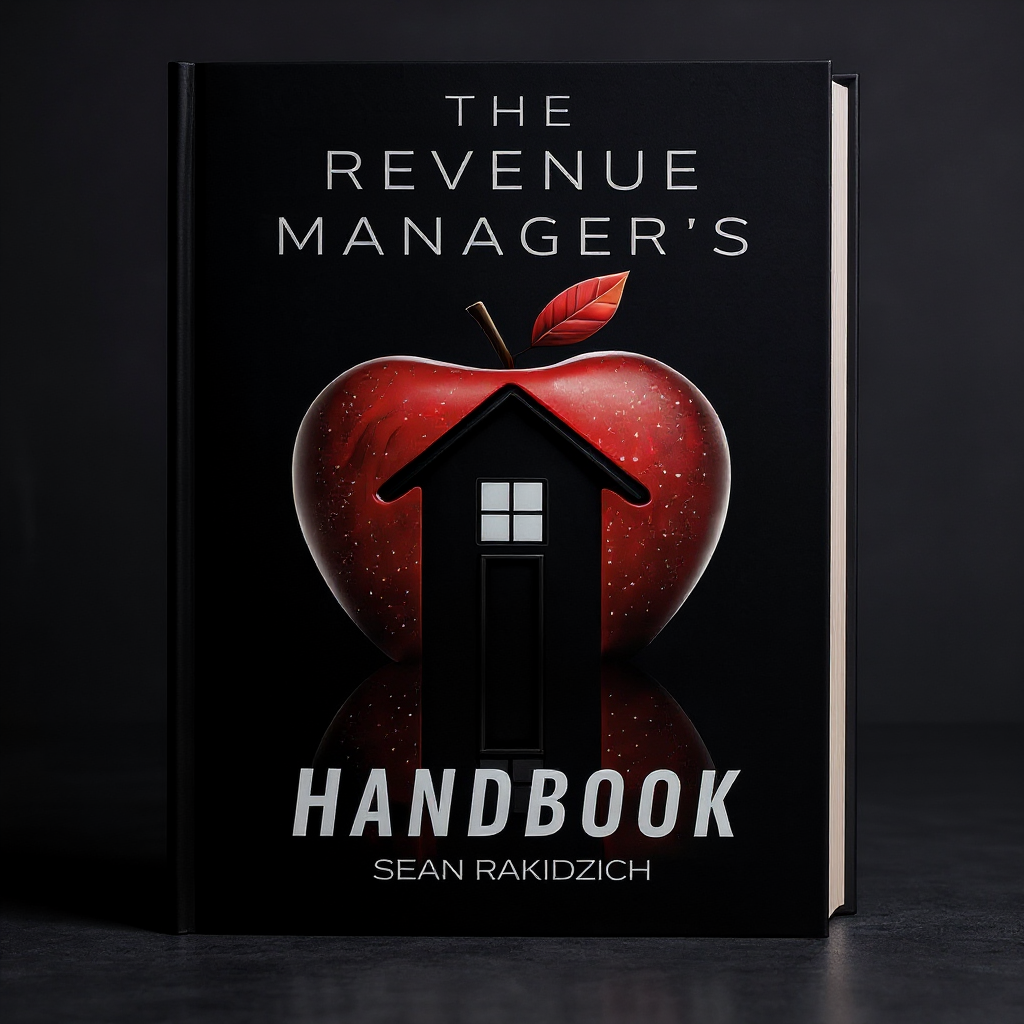
Get The Revenue Manager's Handbook
Sean Rakidzich's complete system for Airbnb pricing, revenue management, and scaling — available now.
Get the BookFrequently Asked Questions
What are the three Airbnb market price tiers?
According to Sean Rakidzich, every Airbnb market splits into three pools: cheap, middle, and luxury. Guests do not mix between pools — a guest looking for a $70 night does not look at $300 listings, and vice versa. They are shopping in different stores even if every listing is in the same city.
Why is the middle Airbnb price tier the hardest?
The middle tier gets squeezed from both sides. When events create demand spikes, pricing software lifts cheap listings up into middle-tier pricing, increasing competition from below. Luxury listings stay protected because high-budget guests are not price-sensitive. The middle has competition on both sides and the fewest natural advantages.
How does pricing software affect Airbnb market tiers?
Pricing software applies asymmetric pressure. It lifts cheap listings during demand spikes, allowing them to capture higher rates. But it does not push luxury listings down during slow periods, because luxury guests still book the premium listing regardless of price. This compresses the middle tier from below during peaks and leaves it exposed during troughs.
What should I do if my Airbnb listing is stuck in the middle tier?
Pick a direction and commit. You can either pull your listing down into the cheap tier by reducing your rate and amenities, or push it up into the luxury tier with better photos, upgraded furniture, and a higher base rate. The Orange House took 90 days to reposition from middle to luxury and became one of Sean's best-performing listings. Staying in the middle with no identity is the most difficult position.
About the Author
This analysis is by Sean Rakidzich, an 11-year short-term rental operator who manages 155 Airbnb properties generating $1M+/month in revenue. Sean has trained 5,000+ students across 76 countries with $1.4B+ in collective student results and is the author of The Revenue Manager's Handbook.
For Sean's framework on every Airbnb market splits into three distinct price pools—cheap, middle, and luxury—with minimal crossover between guests, see his full content library at rakidzich.com or book a 30-minute strategy session at rakidzich.com/book.
Sources & Resources
Sean Rakidzich
- The Revenue Manager's Handbook — Available in Paperback & Hardcover
- Airbnb Automated YouTube — 300,000+ subscribers
- Cracking Superhost Course Suite — RE:Algorithm, Target Price, Pricing Masterclass