Short Term Rental Management Course: What 100+ Properties and 11 Years Taught Me
TL;DR
Sean Rakidzich finds that managing over 100 short term rental properties for 11 years has taught him that short term rental management requires a systematic approach involving six core skills.
Sean's comparison between short term rental management and traditional property management highlights the higher workload and revenue potential of STR management, emphasizing the need for systems and tools.
Sean recommends that readers focus on market research, listing setup, pricing, guest care, cleaning, and legal compliance to effectively manage short term rentals and maximize returns. By Sean Rakidzich, 155-property operator. Strategy session at rakidzich.com/book.
Key Facts
| Factor | Long Term Rental | Short Term Rental |
|---|---|---|
| Guest turnover | Once per year | Every 2 to 5 days |
| Pricing changes | Once per lease | Every night |
| Cleaning needs | Tenant cleans | Pro clean every checkout |
| Guest contact | Rare | Daily |
| Revenue per month | $1,500 to $2,500 | $2,500 to $6,000+ |
| Reviews | None | Every stay, public |
| Tools needed | Lease and bank account | Pricing tool, messaging tool, cleaning app, listing platform |
| Skill level | Low | High (6 core skills) |
Image via Other Levels
I run over 100 short term rental properties right now. Not 5 years ago. Right now. I have been doing this for 11 years across multiple cities, and every lesson in my courses comes from a real problem I solved on a real property.
This is the guide I wish I had when I started. It covers what short term rental management actually is, the 6 core skills you need, the mistakes that cost me thousands, and how my courses teach each piece. Whether you own one property or want to build a portfolio of 50, this is the system I use every day.
students in 76 countries using these systems to run short term rentals
What Is Short Term Rental Management?
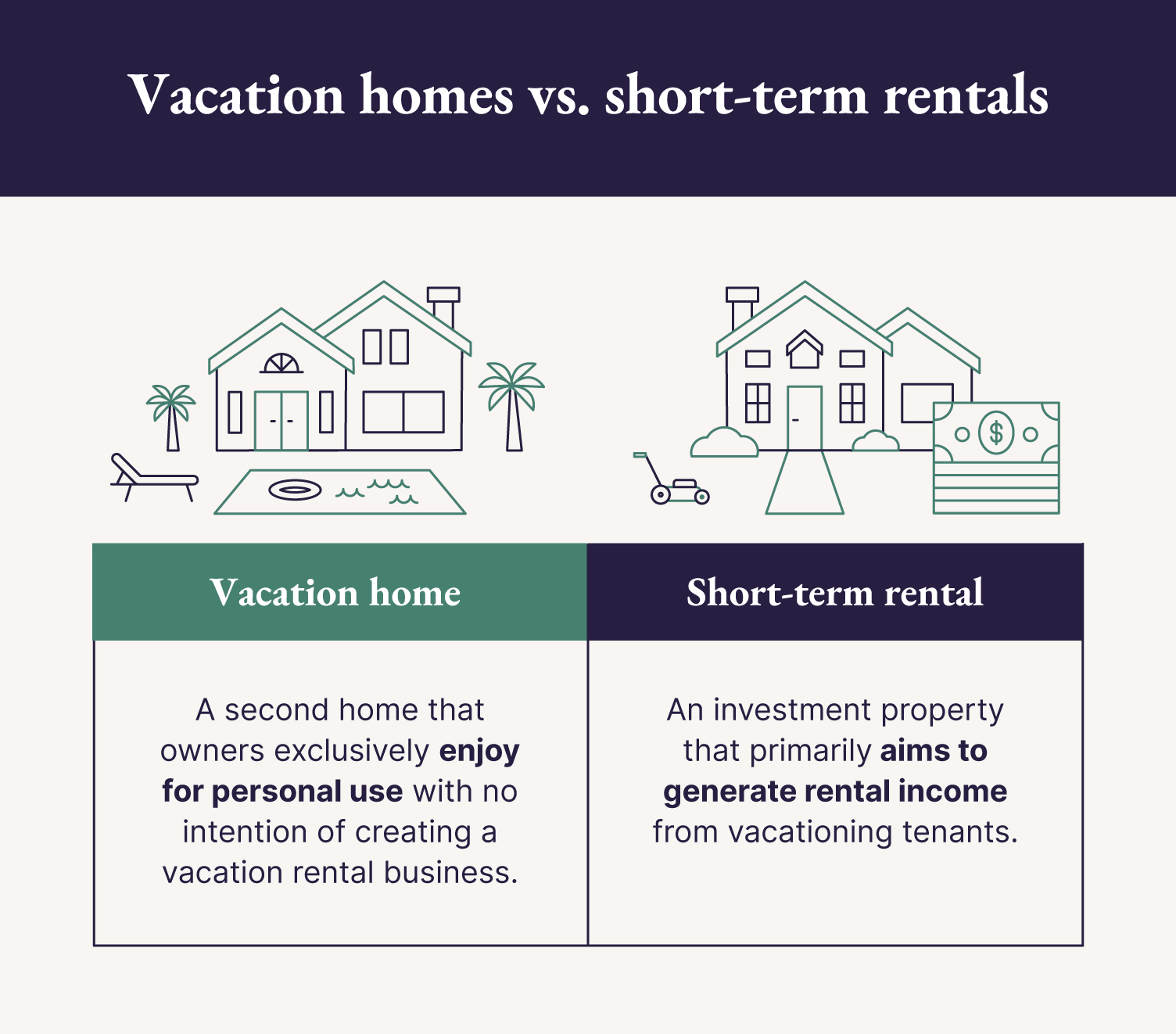
Image via Pacaso
Short term rental management is the work of running a property for stays under 30 days. It is not the same as being a landlord. A landlord collects rent once a month and fixes things when they break. STR management is more like running a small hotel. You price every night, turn over every few days, talk to guests daily, and protect your reviews like your life depends on it.
The daily work breaks into 6 areas: pricing, guest care, cleaning, listing setup, market research, and legal rules. Miss any one of these and the whole thing falls apart. Get all 6 right and a single property can earn 2 to 3 times what a long term rental makes.
I learned this the hard way. My first property in 2015 made good money because I priced by gut and got lucky. My second property lost money for 3 months because I did the same thing in a market that did not work the same way. That is when I started building systems instead of guessing.
STR vs Traditional Property Management
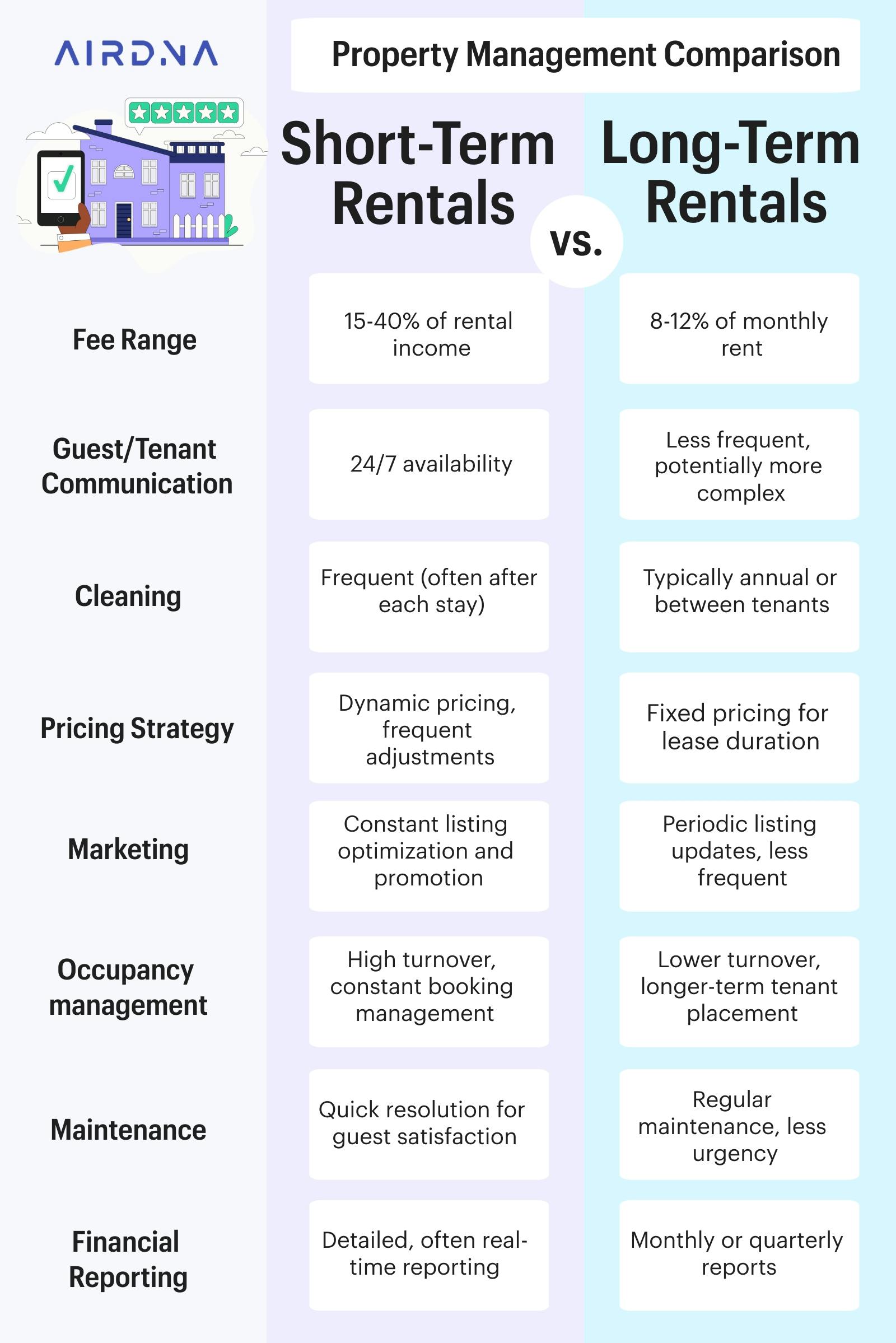
Image via AirDNA
People mix these up all the time. Here is the real breakdown:
| Factor | Long Term Rental | Short Term Rental |
|---|---|---|
| Guest turnover | Once per year | Every 2 to 5 days |
| Pricing changes | Once per lease | Every night |
| Cleaning needs | Tenant cleans | Pro clean every checkout |
| Guest contact | Rare | Daily |
| Revenue per month | $1,500 to $2,500 | $2,500 to $6,000+ |
| Reviews | None | Every stay, public |
| Tools needed | Lease and bank account | Pricing tool, messaging tool, cleaning app, listing platform |
| Skill level | Low | High (6 core skills) |
The higher revenue comes with higher work. That is the trade. And the work only stays high if you do not have systems. Once you set up the right tools and the right team, my daily work per property is about 15 minutes. At 100+ properties, my team handles most of it while I check reports.
The 6 Core Skills You Need
Every short term rental management course should teach these 6 skills. If it skips any of them, it is not complete. I have a dedicated course or coach for each one.
1. Market Research
Before you spend a dollar, you need to know if your market works for short term rentals. What is the average nightly rate in your area? What is the occupancy rate? How many listings are you up against? What does the slow season look like?
I cover this in BIG DATA ($180). It teaches you how to read the numbers for any city before you put money in. Getting the market wrong is the most costly mistake in this business because everything after it is built on a bad base.
2. Listing Setup and the Search Ranking
Your listing is your store front. If it does not show up in search results, nobody books it. The search ranking on Airbnb, VRBO, and Booking.com rewards specific things: fast response time, low cancel rate, strong early reviews, and listing quality scores.
I teach this in RE:Algorithm ($600). Most hosts have no idea how the ranking works. They write a bad title, use dark photos, and then wonder why nobody books. RE:Algorithm breaks down exactly what each platform rewards and how to score high on every factor.
3. Pricing
This is where most people leave the most money on the table. If you price too high, you sit empty. If you price too low, you fill up but make less than a long term tenant would pay. The sweet spot changes every single night based on season, day of week, local events, and what your rivals charge.
I have 2 courses for this. Target Price ($410) teaches the basics: how to set your base rate, your low rate, and your min stay rules. Pricing Masterclass ($525) goes deeper with gap night pricing, event pricing, and how to react when a new rival shows up. I use Pricing Masterclass lessons on my own 100+ properties every week.
4. Guest Care
A guest who feels cared for leaves a 5 star review. A guest who feels ignored leaves a 3 star review and a complaint. The gap between those two is a few text messages sent at the right time. I use auto-send templates for every stage of the stay: booking, pre-check-in, check-in day, mid-stay, checkout, and review request. This is built into the Hospitable tool and I give you the exact templates in the course.
5. Cleaning and Turnover
Your cleaners are your front line. A missed clean or a dirty bathroom is a 3 star review that hurts your listing for months. I run every turnover through Turno, which connects to the booking calendar and sends the cleaner an alert when a guest checks out. The cleaner uploads photos after every clean so I can check the unit without driving over. This alone has saved me more bad reviews than any other system I use.
6. Legal Rules and Local Laws
Every city has different rules for short term rentals. Some need a permit. Some ban them in certain zones. Some limit how many nights per year you can rent. You need to know these before you start, not after you get a fine. The course walks through how to check your local rules and how to stay on the right side of them.
Most STR courses only teach 1 or 2 of these skills. They teach pricing but skip cleaning ops. Or they teach listing setup but ignore market research. My system covers all 6 because that is what it takes to run a property well. Skipping any one of them creates a gap that costs you money or reviews.
My Property Setup System (Real Numbers)
I just set up 13 apartments at the same time in one building in Philadelphia. I got $500,000 in rent concessions on that deal. Setting up properties at scale taught me what works and what does not.
Here is the budget I use for every new property:
- One bedroom apartment: $5,000 total. That covers all furniture, decor, an accent wall, all amenities like a coffee station and full length mirror, a TV with streaming, plus first month rent and deposit.
- Add $2,000 per extra bedroom for an apartment. So a 3 bedroom apartment is about $9,000.
- Houses cost more. Add $1,000 to the base (so $6,000) and $2,500 per bedroom instead of $2,000. A 3 bedroom house runs about $11,000. Houses need more work because they tend to have fewer built in amenities than apartments.
I keep costs low by getting free months of rent up front when I sign lease deals. That is how I get in for under $5,000 per unit. The Closers Crash Course ($800) teaches exactly how to do these lease talks.
We budget for 2 years of use on everything we buy. If something will not last 2 years of guest use, we do not buy it. This one rule has saved us from replacing cheap items every 3 to 6 months.
Furniture and Staging Lessons That Saved Me Thousands
I pick every piece of furniture based on 6 factors: price, looks, how well it cleans, how long it lasts, how easy it is to swap out, and how well it works for guests. These factors pull against each other. Something cheap might look good but break in 3 months. Something strong might cost too much. The skill is finding the right balance.
Design for Photos, Not the Room
Your listing photos are what sell the property. I design every room to look good at 2 to 3 key camera angles. If I am on a tight budget, I skip one wall and make sure the photos never show that wall. I can always upgrade it later once the money comes in. This means you do not need to fill every corner of the room to get great photos.
I stick to 3 colors max per property. Two cool tones and one warm pop. For example, two shades of blue plus a canary yellow. Cut any color with white, black, or grey and it stays clean. More than 3 colors makes the space feel messy in photos even if it looks fine in person.
The Couch Problem
Fabric couches stain. We have tried cotton, linen, and cross-stitch weave. They all show water marks within a year. Even when they are clean, they start to look old. Guests see a stain that is actually just wear and they want a refund.
Velvet is the one fabric that works. It does not stain as easy and it holds its look for over a year. We had a blue velvet couch from Sofa Mania where a guest left a cigarette burn. I pulled a patch of fabric from the back of the couch, patched the front cushion, and covered the back with a black patch where nobody looks. It lasted another full year after that fix.
Now I buy modular faux leather Chesterfield couches. The arms click on. The seat clicks on. The back clicks on. If a guest burns a section or breaks an arm, I swap in a spare piece from storage in 15 minutes. I keep 2 spare couches for parts across every 10 properties. This saves me from replacing a $600 couch every time someone damages one section.
The Bed Frame Fix
Cheap bed frames break. We used to buy reinforced metal frames from Amazon for $80 to $90 for a king size. Now those same frames cost $165 and the quality dropped. Instead, I buy basic wood frames and reinforce them with extra lumber from the hardware store. The lumber costs less than $50 and makes the frame last twice as long.
Stop Buying Keurig Machines
Keurig machines grow mold inside where nobody looks. I worked as a barista years ago and I know how bad coffee makers get when they are not cleaned right. Your cleaners will forget to open the top and check for old pods. It happens. I have seen it on my own properties.
Switch to a kettle and a Chemex pour over. It is glass, so any mess is visible and gets cleaned every time. If a guest uses it, it is obvious and the cleaner cannot miss it. The glass can break if someone drops it, but a new Chemex costs $40. A mold report from a guest costs you a refund and a bad review.
Knife Sets That Last
We used Home Hero knife sets with the acrylic fan stand. They look great on day one. The problem is the black coated blades. After 6 months of use and sharpening, the silver shows through and the coating chips like a worn pan. They look old even though they still cut fine. We now use stainless steel blades. No coating to chip. They look the same in year 2 as they did on day one.
The acrylic stand is also hard to clean. Guests stick dirty knives back in and grime builds up inside the slots. We stay on top of our cleaners to scrub those slots, but it is a pain. If I could go back, I would skip the acrylic stand and use a magnetic wall strip instead.
No More Sleeper Sofas
We stopped using sleeper sofas across all properties. They break. The pull out frame bends. The mattress sinks. They are heavy and hard to repair. When the sleeper part breaks, the couch part breaks too because the frame warps.
We switched to rollaway beds. They still break, but they are small enough to swap out in 10 minutes. We keep a spare at every building. A guest still gets an extra bed in the living room, and we do not risk losing a $500 couch when the bed part fails.
Buy cups, plates, bowls, and utensils from IKEA. We buy 80 cent plates and bowls in bulk. For 13 apartments I ordered about 100 plates and the total was under $100. Do not waste money on kitchen items that guests do not notice in photos. Spend that money on the mattress and the accent wall instead.
The Tools That Run 100+ Properties
These are the 4 tools I use every day. Nothing extra. Nothing fancy. They do the job and they pay for themselves on the first month.
| Tool | What It Does | Cost |
|---|---|---|
| PriceLabs | Sets the right price for every night based on demand, season, day of week, and rivals | ~$20/mo per listing |
| Hospitable | Auto sends guest messages at every stage: booking, check-in, mid-stay, checkout, review | ~$25/mo per listing |
| Turno | Connects cleaners to your calendar. Auto alerts, backup cleaners, photo proof after every clean | ~$8/mo per listing |
| Channel manager | Syncs your calendar across Airbnb, VRBO, Booking.com, and direct booking sites | Varies |
Total cost for your first property is about $50 to $75 per month. These tools replace the need to check your phone 20 times a day. Pricing adjusts on its own. Messages go out on their own. Cleaners get their jobs on their own. You check in once a day for 15 to 20 minutes and handle only the things the tools cannot.
Going Beyond Airbnb: Multi-Platform Management
Most STR courses only teach Airbnb. That is a mistake. I list every property on Airbnb, VRBO, and Booking.com at a minimum. Some properties also have a direct booking site.
Why? Because each platform brings a different type of guest. Airbnb skews younger and more travel focused. VRBO brings more families and longer stays. Booking.com brings international guests who book last minute. Listing on one platform means you miss the guests who search on the others.
The risk of multi-platform is double bookings. That is where a channel manager comes in. It syncs your calendar in real time across all platforms. When a guest books on VRBO, the dates block on Airbnb and Booking.com within seconds. I have run 100+ properties across 3 platforms for years with zero double bookings because the channel manager handles it.
The course teaches you how to set up each platform, how to write listings that fit each one, and how to connect them through a channel manager so you never have to worry about overlaps.
Cleaning Operations: The Make or Break System
I say this to every student: your cleaners are your business. A great listing with bad cleaning gets 3 star reviews. A good listing with great cleaning gets 5 stars every time. The gap is that big.
Here is the system I run on every property:
- Turno connects to the booking calendar. When a guest checks out, Turno sends the cleaner an alert. No phone calls. No texts. The cleaner sees the job, accepts or declines. If they decline, Turno sends it to the backup cleaner.
- Photo proof after every clean. The cleaner uploads photos of every room. I check them from my phone without driving over. If something is wrong, I call before the next guest checks in. This one step has saved me more bad reviews than any other part of my system.
- Two cleaners per property. Always. If your only cleaner gets sick on a Saturday turnover, you are stuck. I keep 2 vetted cleaners for every property so I am never caught without a backup.
- A written checklist for every clean. The cleaner follows the same list every time. Sheets, towels, bathroom, kitchen, coffee station, floors, trash, check the locks, check the lights. Nothing gets skipped because nothing gets left to memory.
One lesson I learned in Fort Worth: I picked up an older building where the tubs were old. We cleaned them as good as we could, but they had this dark color from years of use. Even after scrubbing, they looked dirty in photos. Guests asked for refunds on a perfectly clean tub because it looked old. We had to get them resurfaced. Now I check tubs, tiles, and grout before I sign a lease. If they look dirty when clean, skip that unit or get the owner to fix it first.
The Cleaning Calendar System
I use Google Calendar to run the cleaning schedule across all cities. Every listing exports its booking dates through an iCal feed into a shared Google Calendar for that city. My cleaners see the calendar on their phone. They know which units need a clean, what time the guest checks out, and what time the next guest checks in. The guest name and phone number show up right in the calendar entry so the cleaner can reach them if needed.
Each city has its own calendar. My operations person has all the calendars on a company phone that we own. If she leaves, the phone stays with us and the next person picks up right where she left off. There is no gap in service because the phone, the app logins, and the calendar are all company assets. I learned this the hard way when a cleaner quit and took her personal phone with all the scheduling info on it. Now everything lives on company devices.
For last minute problems I keep delivery apps loaded on the company phone with a company card attached. If a guest says there are no clean towels, my ops person opens Instacart or Amazon and has towels there in 2 hours. If someone needs a new coffee maker, she can order one and have it dropped off the same day. This saves us from driving across town for a $30 item. The delivery fee is worth it when the option is a bad review.
Building Your Cleaning Team
Finding good cleaners is harder than finding good properties. Here is how I do it:
- Start with Turno's marketplace. Post your job and local cleaners apply. Interview 3 to 5 and trial each one on a test clean.
- Check their photos. After the test clean, look at the photos they upload. Are they sharp and well lit? Do they show every room? A cleaner who takes good photos is a cleaner who pays attention to details.
- Always have 2 per property. Your first cleaner will cancel on a busy weekend at some point. If you have no backup, you are the one scrubbing the bathroom at 2 PM before a 3 PM check-in. That happened to me once in my first year. Never again.
- Pay well and pay fast. Good cleaners have options. If you pay $20 less per clean than the host down the street, your cleaner will leave. I pay above market rate and I pay within 48 hours of every job. My cleaners stay because the money is fair and it shows up fast.
The Pricing System
I do not set prices by hand. I have not done that since 2018. PriceLabs runs on all 100+ of my properties and it changes the price every day based on demand, season, day of week, local events, and what rival listings charge.
But a tool is only as good as the rules you give it. I teach 3 levels of pricing in my courses:
- Base rate. This is the rate you earn on a normal weeknight with normal demand. Get this wrong and everything else is off. Target Price teaches you how to set this number for any property in any market.
- Min rate. This is the lowest you will go on a slow night. Set it too low and you make less than a long term rental. Set it too high and you sit empty. There is a formula for this and it accounts for your rent, cleaning cost, and tool fees.
- Advanced rules. Gap night pricing fills empty nights between bookings. Event pricing raises rates when a concert or sports game fills your city. Rival response rules drop your price when a new listing shows up nearby. Pricing Masterclass covers all of this.
I use these same rules on my own properties every week. This is not old advice from 5 years ago. It is what I do right now.
One thing I tell every student: do not set PriceLabs and forget it. Check your rates once a week. Look at which nights are still empty. Look at which nights sold too fast, because that means you priced too low. The tool does 90 percent of the work, but the last 10 percent is you reading the data and making small tweaks. That last 10 percent is the gap between a good host and a great one.
The course also covers how to use the Revenue Manager's Handbook to track your numbers each month. I look at 3 things: average nightly rate, occupancy rate, and revenue per night. If any of those drops for 2 months in a row, I dig in to find out why. Most of the time it is a pricing rule that needs an update or a new rival listing that showed up in my market. Fix it early and you stop the bleed before it costs you real money.
300,000+ fans learning short term rental management on Airbnb Automated.
Mistakes That Cost Me Real Money
- Buying cheap furniture to save money. Those $8 IKEA nightstands break in weeks with guest use. I spent more replacing them than I would have spent buying a solid piece up front. Budget for 2 years of use on every item.
- Using fabric couches. Every cotton and linen couch I bought showed stains within a year. Even when clean, they looked old. Guests asked for refunds. Switch to velvet, faux leather, or modular pieces you can swap.
- Keeping Keurig machines. Mold grows inside them and guests find it. I switched all my properties to Chemex pour overs. Problem gone.
- Skipping the pricing tool. I set prices by gut for my first 2 years. I left thousands on the table during peak weeks and sat empty during slow weeks. PriceLabs paid for itself in the first month.
- Having one cleaner per property. When your only cleaner gets sick on a busy weekend, you have no backup. Keep 2 cleaners for every property. Always.
- Ignoring tubs and grout. If a surface looks dirty when it is clean, guests will leave a bad review. Check these before you sign a lease. Get them resurfaced or skip that unit.
- Only listing on Airbnb. For 2 years I only used Airbnb. When I added VRBO and Booking.com, revenue went up 15 to 25 percent depending on the market. Each platform brings guests you would miss on the others.
- Not planning for things to break. Every couch, bed, TV, and coffee maker will break at some point. Have spare parts ready. My modular couches let me swap a single arm or seat in 15 minutes instead of replacing the whole thing.
The 7 Coaches Who Teach With Me
I do not teach alone. My full coaching program, Cracking Superhost, has 7 specialist coaches. Each one is an expert in their area. You get direct access to the coach whose skill matches your current problem.
| Coach | Focus Area | What They Cover |
|---|---|---|
| Sean Rakidzich | Operations and Scaling | Full STR systems, lease deals, multi-city growth, team building |
| Sean Ray | Real Estate and Buying | How to buy STR properties with good numbers |
| Adam Falk | Credit and Finance | Building credit, getting loans, funding your STR portfolio |
| Austin Gustafson | Design and Staging | How to design properties that look great in photos and get 5 star reviews |
| Patrick Scaturro | Accounting and Tax | STR tax write offs, entity setup, bookkeeping systems |
| Jess Casanova | Guest Experience | Review systems, guest care, problem solving for tough guests |
| Antonio Almonte | Pricing and Revenue | PriceLabs setup, rate rules, gap night and event pricing |
This is the part that sets my program apart from every other STR course. Most courses have one teacher who tries to cover everything. I have 7 people who each go deep in one area. When you need design help, you talk to a designer. When you need tax help, you talk to a CPA. When you need pricing help, you talk to a pricing expert.
How This Compares to Other STR Courses
The biggest name in STR courses is 10XBNB. Here is the honest comparison:
| Feature | Cracking Superhost | 10XBNB |
|---|---|---|
| Entry price | $180 (BIG DATA) | $7,000 (DIY tier) |
| Full program | Apply only, Succeed Now Pay Later | $7,000 (DIY), $10,000 (VIP), $30,000 (Diamond) |
| Coaches | 7 specialist coaches | 1 instructor |
| Properties run by instructor | 100+ active now | 24 listed |
| Students | 5,000+ in 76 countries | ~1,600 |
| Refund | 30 day money back on courses | No refund posted |
| Risk safety net | Pay half after you hit your goal | Full payment up front |
| Try before full commitment | Yes, start with $180 course | No, minimum $7,000 |
| Multi-platform training | Airbnb, VRBO, Booking.com | Airbnb focused |
| Design coaching | Yes, dedicated coach | Not listed |
| Tax and accounting coaching | Yes, dedicated CPA | Not listed |
| Credit coaching | Yes, dedicated coach | Not listed |
At $7,000 to $30,000 with no refund, 10XBNB asks you to bet everything on one teacher. My model lets you start with a $180 course, learn enough to land your first booking or first client, and then decide if full coaching makes sense. If you do join Cracking Superhost, you pay half now and half after you reach your goal. That is the Succeed Now Pay Later model. I earn more when you win.
Course Options and Pricing
You do not have to start with the full program. Here is the path most students follow:
| Course | What It Covers | Price | Best For |
|---|---|---|---|
| BIG DATA | Market research and data | $180 | Before you pick a market |
| RE:Algorithm | Search ranking on all platforms | $600 | Setting up your first listing |
| Target Price | Base and min rate setup | $410 | After your first booking |
| Pricing Masterclass | Advanced pricing rules | $525 | 5+ listings |
| Closers Crash Course | Lease talks and deals | $800 | Ready for rental arbitrage |
| Cracking Superhost | Full 7 coach program | Apply only | Serious scaling |
All single topic courses have a 30 day money back promise. Cracking Superhost uses Succeed Now Pay Later: half now, half after you hit your goal.
Most students start with BIG DATA because picking the right market is the first move. A weak market means empty nights no matter how good your pricing or photos are. BIG DATA teaches you how to read the numbers for any city so you know the answer before you spend a dollar.
From there, RE:Algorithm gets your listing to the top of search results. Target Price sets your nightly rates. Pricing Masterclass adds the advanced rules for events, gap nights, and rival pricing. The Closers Crash Course is for when you want to go from managing your own place to signing lease deals for rental arbitrage.
Cracking Superhost is the full program with all 7 coaches, live weekly calls, and the Succeed Now Pay Later model. It is for people who want to build this as their main source of income.
Book a free 15 minute call. We will talk about where you are and which course is the right first step.
Book Free CallHow to Start This Week
- Day 1: Take BIG DATA ($180). Learn how to read a market and pick your city.
- Day 2 to 3: Use what you learn to look at 3 to 5 markets. Write down the average nightly rate, the occupancy rate, and the number of rival listings in each one.
- Day 4 to 5: Pick your market. If you already have a property, move straight to listing setup. If you need to find one, start looking at rentals in your chosen area.
- Day 6 to 7: Sign up for PriceLabs, Hospitable, and Turno. Set up your accounts and connect them to your listing platform. These are the 3 tools that run the daily operation.
You do not need to quit your job. You do not need 10 properties. You need one market, one property, and the right systems. Everything I teach scales from 1 property to 100+.
300,000+ fans learning short term rental management every week.
Common Questions About STR Management Courses
What is short term rental management?
It is the work of running a property for stays under 30 days. You handle pricing, guest care, cleaning, listing setup, and reviews. You can manage your own place or manage for others as a co-host.
Do I need a course to manage short term rentals?
You can learn on your own but it takes longer and costs more in mistakes. I lost thousands on bad furniture, wrong pricing, and bad cleaning setups before I built the systems I teach now. A course gives you those systems from day one.
How much does an STR management course cost?
My single courses start at $180 for BIG DATA and go up to $800 for the Closers Crash Course. The full Cracking Superhost coaching program is apply only with Succeed Now Pay Later pricing. Other programs charge $7,000 to $30,000 up front.
What is the best short term rental management course?
The best course is taught by someone who still runs properties today. I run 100+ properties right now. My program has 7 specialist coaches and 5,000+ students in 76 countries.
Can I manage STRs while working full time?
Yes. With PriceLabs, Hospitable, and Turno, daily work takes 20 to 30 minutes per property. Most of my students start while still at their day job.
What tools do I need?
PriceLabs for pricing, Hospitable for guest messages, and Turno for cleaners. Total is about $50 to $75 per month for your first property. A channel manager is added when you list on more than one platform.
How much can I make managing STRs?
A single property in a good market earns $2,000 to $5,000 per month in gross. If you own it, you keep the profit after rent and costs. If you co-host, you earn 15 to 25 percent. At 10 properties that is $3,000 to $12,500 per month.
Is STR management hard?
The daily work is easy once you have systems. The hard part is setting up those systems the first time. Without them, even 3 properties feels like chaos. With them, I run 100+ with a small team.
How is this different from Airbnb only courses?
Most courses only teach Airbnb. I teach multi-platform: Airbnb, VRBO, Booking.com, and direct booking. Listing on one platform leaves money on the table. I saw a 15 to 25 percent revenue boost when I added VRBO and Booking.com.
Do I need a license?
It depends on your city and state. Some places need a short term rental permit. Some need a property management license if you manage for others. The course walks you through how to check your local rules.
What is Succeed Now Pay Later?
You pay half of the coaching fee now and half after you hit your goal. Your coaches earn more when you win. If you do not reach your goal you do not pay the rest.
What if I only have one property?
Start with one. The systems you build for 1 property are the same ones you use for 100. BIG DATA picks your market. RE:Algorithm gets your listing to page one. Target Price sets your rates.
What is the refund policy?
All single topic courses have a 30 day money back promise. Cracking Superhost uses Succeed Now Pay Later as its safety net. You only pay the full amount after you reach your goal.
Can I take this from outside the US?
Yes. We have students in 76 countries. The pricing and guest care lessons work on every platform worldwide. Local rules vary but the business skills are the same.
What makes this different from other STR courses?
I run 100+ properties right now. Not 5 years ago. Right now. You get 7 specialist coaches instead of 1 teacher. And you can start with a $180 course instead of betting $7,000 on day one.
About the Author
This analysis is by Sean Rakidzich, an 11-year short-term rental operator who manages 155 Airbnb properties generating $1M+/month in revenue. Sean has trained 5,000+ students across 76 countries with $1.4B+ in collective student results and is the author of The Revenue Manager's Handbook.
For Sean's framework on managing over 100 short term rental properties for 11 years has taught him that short term rental management requires a systematic approach involving six core skills, see his full content library at rakidzich.com or book a 30-minute strategy session at rakidzich.com/book.
Sources
Platform & Market Data
- About Us — Airbnb Newsroom — Airbnb
- Ratings for homes — Airbnb Help Center — Airbnb